


A Decision’s opening sets the grim and philosophical tone for this documentary, with a upbeat doctor asking his paralyzed 24-year-old patient: “For those who rely on a ventilator just to live, is it worse to be conscious or unconscious?” The young man looks at him and says, “If I really had a choice, I’d prefer to die. I don’t want to be a burden.”
This doctor is Wu Yu-cheng (吳育政), an anesthesiologist at Dalin Tzuchi General Hospital (大林慈濟醫院) who was once attending physician at the intensive care unit at Changhua Christian Hospital (彰化基督教醫院). Appalled by patients who were essentially forced to stay alive with no hope of recovery and the financial and emotional burden on their loved ones, Wu started advocating against futile medical care. Wu believes that Taiwan’s excellent healthcare system has actually exacerbated the situation as more people could afford such life sustaining treatment whereas in other countries, financial concerns may overshadow ethics and feelings. After submitting numerous articles and op-eds, he reached out to director Maso Chen (陳志漢) to make a documentary for more impact.
It’s a timely subject — suffering from terminal pancreatic cancer, renowned sports anchor Fu Da-ren (傅達仁) underwent voluntary euthanasia in Switzerland last year, while Taiwan just implemented in January the Patient Autonomy Act (病人自主權利法), which allows people under certain conditions who have made an advance decision to ask doctors to terminate their life sustaining treatments.
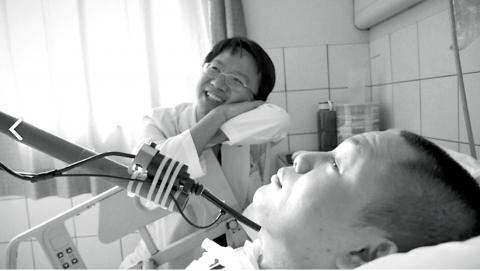
Photo courtesy of atmovies.com
There are about 4,000 patients per year in Taiwan who are on ventilators with little hope of recovery, and while not all of them want to die, Wu believes that they should have the choice. Despite the new law, the emotional and moral struggles of the doctors and loved ones do not just disappear. The film’s title is apt, as it often boils down to a decision — without the ventilator, the patient will die in a few hours and there’s no turning back.
The film has two storylines: Wu regularly visits the paralyzed young man and tries to improve his quality of life while finding a way to let him breathe on his own, while at Wu’s former intensive care unit another young man struggles whether to keep his suffering mother — who prefers to die peacefully — on life support while trying to balance his personal life. The mother is lucid and even able to walk sometimes, adding to the difficulty of the decision and returning to the question: is it better to be conscious or unconscious?
This is Chen’s second full-length documentary revolving around death. His 2017 work, The Silent Teacher (那個靜默陽光午後), is a heart-wrenching tale about a man and his late wife who had donated her body for students to dissect at Fu Jen Catholic University’s medical school. Chen had a complex and likable protagonist and a rather surreal topic, as traditional belief in keeping the corpse whole after death has made people reluctant to donate.
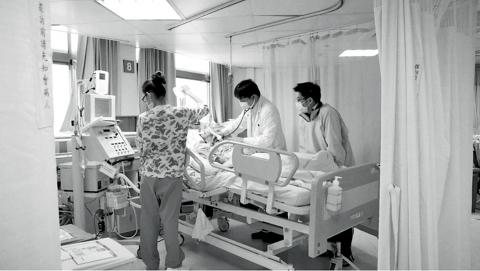
Photo courtesy of atmovies.com
A Decision doesn’t have such a unique story nor is it much of a tearjerker, but rather it cuts straight to the heart. Caring for a bedridden or dying loved one is something most people will inevitably face one day, a fact so unbearably real that Chen edited the entire film in black and white to make it less realistic. While it works, the resulting grim tone makes the film even bleaker, matching the despair and silent anguish of the patients and their loved ones.
Chen employs a number of cinematic devices throughout the film to augment this helplessness, for example miking the patient breathing through the ventilator and beeps of the medical machines as part of the soundtrack. Another scene shows the patient spending almost five minutes going back and forth with a volunteer to get his computer to where he wants, something able-bodied people can accomplish themselves in five seconds. The most poignant shot of the film occurs when nothing is said, the camera fixed on a window revealing the sunny weather outside. The curtains move with the wind, and the patient lies quietly, almost invisible, in the corner, just breathing, unable to do anything.
A Decision is not going to get as much praise as its predecessor — which is a hard act to follow — and it isn’t close to material that would usually be featured in major theaters, but kudos to Chen for taking the leap despite low hopes of box office success. Almost every person this reviewer spoke to about the movie responded with something along the lines of “I can’t bear to watch something that depressing.”
But it actually wasn’t as depressing as expected. Perhaps it’s how honest Chen’s subjects are, how brave and candid they are about their situations. Instead of feeling sorry for these people, it’s actually fascinating to listen to them talk about death, letting go and other topics that Taiwanese generally consider taboo or morbid. It’s a rare look into the minds of people to whom we would dare not broach the topic in real life. This speaks to Chen’s ability to follow people around during such private and emotional times, and the ability to get them to open up about a difficult topic as well. It’s superb documentary filmmaking, and it makes up to a certain degree for the lack of drama and complex and unique protagonist.
It’s a very uncomfortable topic, but someone had to tackle it in this age where people prefer to either play it safe with heartwarming or inspiring tales or go for the shocking and extreme.
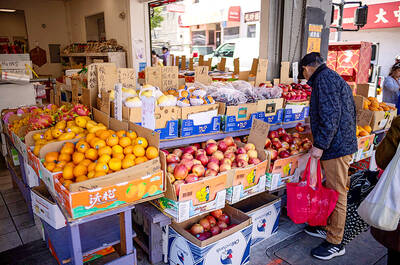
Ajay Verma, a consultant gastroenterologist at Kettering general hospital in Northamptonshire, says our gut is a “complex machine.” “It is constantly providing us with the nutrition we need, initially to grow and develop, and then for us to survive, thrive and repair from injury and illness.” How can we keep it functioning well? Put simply: “Make sure what you put into it is balanced, and that you clear out its waste products adequately,” Verma says. “In a general gastroenterology clinic, the most common conditions we see are irritable bowel syndrome (IBS), gastroesophageal reflux disease, inflammatory bowel disease and constipation,” says Nisha
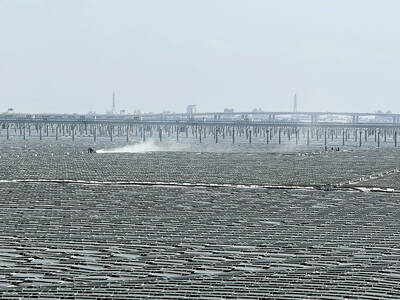
The arithmetic is straightforward and uncomfortable. By the end of 2025, Taiwan had committed itself to a 50-30-20 electricity mix — half natural gas, 30 per cent coal, 20 per cent renewables. The Ministry of Economic Affairs’s (MOEA) own monthly energy reports tell a different story. Natural gas reached 47.8 per cent of generation last year. Coal stood at 35.4 per cent, comfortably above its target ceiling. Renewables came in at 13.1 per cent, well short of the 20 per cent Taipei had pledged a decade earlier. Installed renewable capacity reached roughly half of the 12 gigawatts (GW) the government

Last week US President Donald Trump was asked by a reporter whether he would speak on the phone to the President of Taiwan. “l’ll speak to him. I speak to everybody. We have that situation very well in hand,” Trump said. This marked the second time in a couple of weeks he had said he would talk to the President of Taiwan. In 2016 he famously took a call from then-president Tsai Ing-wen (蔡英文), when he was president-elect. Despite warnings that the apocalypse was nigh because of a phone call, the world quickly forgot about the conversation between two democratically-elected presidents.
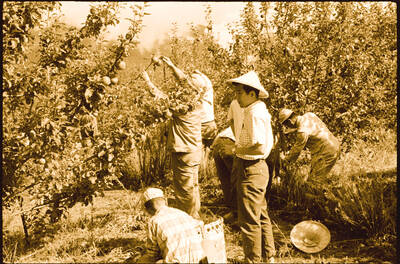
May 25 to May 31 Few believed that apples could be cultivated on a commercial scale in Taiwan’s high mountains. When horticulturalist Cheng Chao-hsiung (程兆熊) first proposed the idea in 1955, both American and Taiwanese colleagues dismissed it as implausible, arguing that temperate fruit could not be reliably grown on a subtropical island, especially on rugged terrain. However, it was this terrain in the Central Mountain Range where many Chinese Civil War veterans were resettled in the late 1950s. With limited job prospects and no family in Taiwan, they were placed on cooperative farms aimed toward self-sufficiency. Some say the conditions


 RSS
RSS