


Summer is always a hard time for those who enjoy local vegetables as the hot, humid weather makes “natural” cultivation of those delicate plants that are the mainstay of supermarket fresh produce aisles difficult and buyers instinctively reach for foreign imports, hothouse cultivation and worst of all, heavily sprayed crops that have been toughened up against the climate by large doses of chemical supplements.
Visits to the local farmers market generally turns up large quantities of sweet potato leaves and orka, various types of fern, unloved bitter gourd leaves and goji berry leaves. There are also a wide variety of melons or gourds, which are also well adapted to the hot, humid conditions of the summer months and these can add much to the dinner table.
The bottle gourd (蒲瓜) is currently in season and is an excellent vegetable for the hot weather, both from a nutritional and culinary perspective. The bottle gourd has gained some traction on the western food scene for its use as a healthy beverage that aids weight loss, often referred to by its Hindi name lauki. Its culinary uses in Asia are widespread and in Taiwanese cuisine it is most commonly served up as a rather bland stir fried veg. Nothing wrong with that, as the sweet flavored flesh of the bottle gourd is lightly refreshing, if not over seasoned.
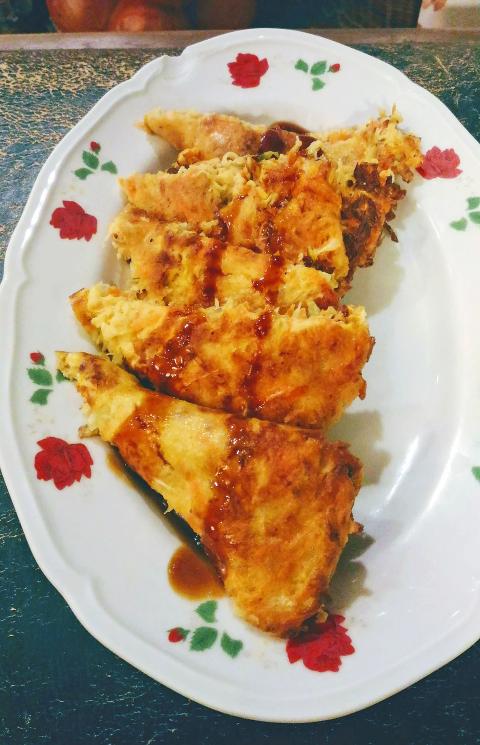
Photo: Ian Bartholomew
The bottle gourd is so-called because while the young fruit is tender and delicious, it becomes so hard and fibrous as it matures that it can be hollowed out to serve as a storage vessel, and in some parts of the world, this is its primary function. It can also be turned into a musical instrument. In this respect it is similar to the sponge gourd, which can be eaten when young, but when left to mature on the vine, can then be dried and turned into loofahs.
It should be noted that the bottle gourd is sometimes also called a calabash, but it is unrelated to the fruit of the calabash tree, which confusingly is also used as a storage vessel, but does not have the same culinary advantages.
The bottle gourd, it should also be noted, comes in a variety of shapes, the most iconic being a fruit with twin bulges and a slender waist, used as a symbol of health and long life in Chinese religious iconography.
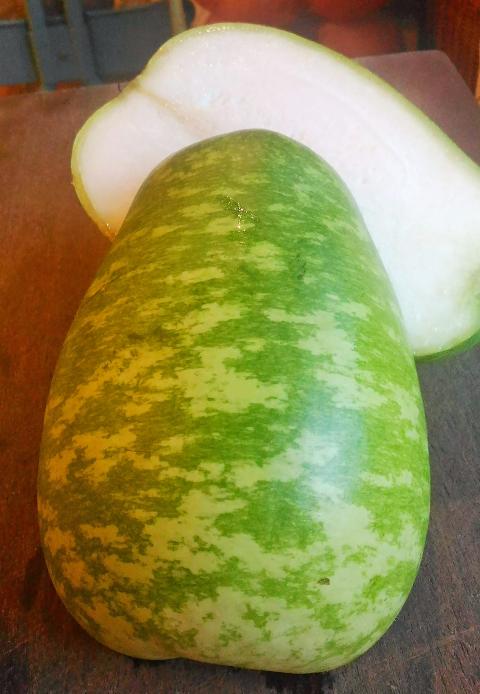
Photo: Ian Bartholomew
You are more likely to find bottle gourds in elongated shapes, rather like a thick Lebanese aubergine, or a pear-like shape rather like that of a pomelo. The flesh is a dense white with seeds barely visible in a slightly spongy center. For its stir fry preparation it is generally roughly julienned. The firm mottled green skin can be shaved off easily with a knife and there is no need to remove the seeds, as the whole mass of white flesh is edible.
The bottle gourd, so useful in summer, is from the standpoint of Chinese medicinal lore, also a sovereign remedy for many of the ills of the hot weather, helping to cool the body and keep it well hydrated. It is low in calories and rich in good dietary fiber, providing a sense of satiety, along with a solid payload of vitamins and minerals, without adding significantly to our caloric intake. It has all the usual antioxidant and anti-inflammatory properties that are so beloved of nutritionists.
But ultimately, the main appeal of the bottle gourd is that of the wide variety of melons and gourds that make their appearance during the heat of summer and the fact that it has an easily accessible taste and texture. My own barometer for measuring such things is how easy it is to get children to eat it, and the bottle gourd scores high, generally more readily consumed by children than other summer gourds such as sponge gourd and bitter gourd, both excellent foods but which might be seen as challenging on the textural or flavor fronts.
Bottle gourd, with its slightly sweet flavor and firm flesh is much more innocuous, and its gentle disposition makes it all the more appealing.
Bottle gourd pancake
Recipe
(Serves 2)
Bottle gourd pancakes are one of the more interesting preparations for this vegetable and are excellent either as a snack or as part of a main meal. Sometimes they are flavored with dried shrimp or are stuffed with pork, and while this gives them more heft, it is entirely unnecessary. Not one to especially extol the benefits of vegetarian dishes, the bottle gourd pancake in this form is perfect for the current hot weather, providing a filling meal without burdening the metabolism.
Ingredients
Half a medium sized bottle gourd, about 500g
A medium carrot, about 200g
20g preserved radish
3 large eggs
2 tbsp tapioca flour
2 tbsp all-purpose flour
Half tsp white pepper
Half tsp salt
2 tbsp vegetable oil
Directions
1. Cut away the stiff green skin of the bottle gourd and coarsely grate the flesh. Peel the carrot and grate it.
2. Soak the preserved radish and squeeze dry before finely mincing.
3. Place the grated bottle gourd and carrot together in a bowl and mix with salt. Set aside for about 10 minutes.
4. Squeeze the bottle gourd mixture to remove excess water. Add the preserved radish.
5. Add the flour and mix vigorously. Then add the flour, white pepper and a pinch of salt and mix until fully incorporated.
6. Heat a non-stick skillet and add 1 tbsp of oil. Put in about half the mixture and spread evenly. Cook over medium heat until the pancake becomes firm and golden brown, about 2 minutes. Flip over and cook for another 2 minutes.
7. Repeat with the rest of the mixture and remaining oil.
8. The pancakes can be folded in half and cut into wedges. Serve with thick soy sauce and a garnish of spring onions.
Ian Bartholomew runs Ian’s Table, a small guesthouse in Hualien. He has lived in Taiwan for many years writing about the food scene and has decided that until you look at farming, you know nothing about the food you eat. He can be contacted at Hualien202@gmail.com.
Ajay Verma, a consultant gastroenterologist at Kettering general hospital in Northamptonshire, says our gut is a “complex machine.” “It is constantly providing us with the nutrition we need, initially to grow and develop, and then for us to survive, thrive and repair from injury and illness.” How can we keep it functioning well? Put simply: “Make sure what you put into it is balanced, and that you clear out its waste products adequately,” Verma says. “In a general gastroenterology clinic, the most common conditions we see are irritable bowel syndrome (IBS), gastroesophageal reflux disease, inflammatory bowel disease and constipation,” says Nisha
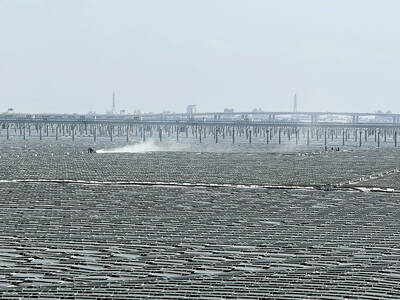
The arithmetic is straightforward and uncomfortable. By the end of 2025, Taiwan had committed itself to a 50-30-20 electricity mix — half natural gas, 30 per cent coal, 20 per cent renewables. The Ministry of Economic Affairs’s (MOEA) own monthly energy reports tell a different story. Natural gas reached 47.8 per cent of generation last year. Coal stood at 35.4 per cent, comfortably above its target ceiling. Renewables came in at 13.1 per cent, well short of the 20 per cent Taipei had pledged a decade earlier. Installed renewable capacity reached roughly half of the 12 gigawatts (GW) the government

Last week US President Donald Trump was asked by a reporter whether he would speak on the phone to the President of Taiwan. “l’ll speak to him. I speak to everybody. We have that situation very well in hand,” Trump said. This marked the second time in a couple of weeks he had said he would talk to the President of Taiwan. In 2016 he famously took a call from then-president Tsai Ing-wen (蔡英文), when he was president-elect. Despite warnings that the apocalypse was nigh because of a phone call, the world quickly forgot about the conversation between two democratically-elected presidents.
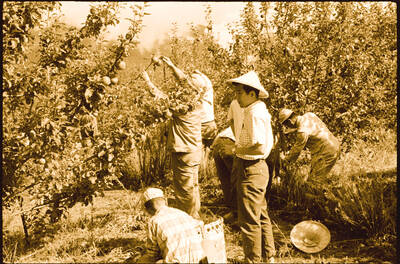
May 25 to May 31 Few believed that apples could be cultivated on a commercial scale in Taiwan’s high mountains. When horticulturalist Cheng Chao-hsiung (程兆熊) first proposed the idea in 1955, both American and Taiwanese colleagues dismissed it as implausible, arguing that temperate fruit could not be reliably grown on a subtropical island, especially on rugged terrain. However, it was this terrain in the Central Mountain Range where many Chinese Civil War veterans were resettled in the late 1950s. With limited job prospects and no family in Taiwan, they were placed on cooperative farms aimed toward self-sufficiency. Some say the conditions


 RSS
RSS