


There are those who differentiate zucchini from yellow squash and those who don’t, but both are members of the summer squash family. Both are relatively new to Taiwan. Though grown locally, this is mostly for the restaurant trade, and zucchini and yellow squash command a relatively high price in the market. Despite this, they are pretty to look at, amazingly versatile in the kitchen and are perfect for summer dishes ranging from fresh crisp salads to luscious vegetable stews.
Summer squash comes in a variety of shapes, colors and sizes. Zucchini is green and straight. Yellow squash is bright yellow, bulging very slightly at one end. Both these varieties are available in Taiwan. Crookneck, with is distinctively curved neck and bulbous base, and scalloped squash, also called pattypan squash, with its scalloped fringe, are rare, but the difference is more in shape and presentation than in flavor.
Zucchini is not much used in Taiwanese food but local farmers were not about to ignore a potential market and over the last decade zucchini has gradually made its way into the culinary sphere, though not without a few hiccups along the way.
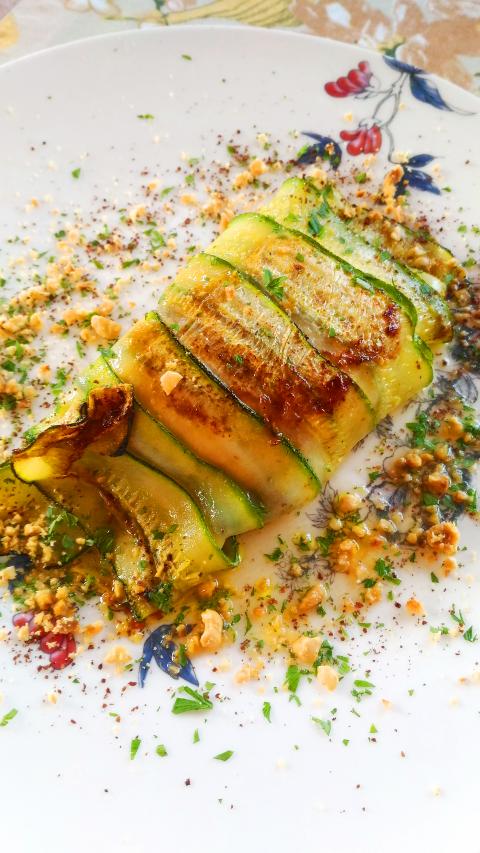
Photo: Ian Bartholomew
Some years ago I picked up a windfall of zucchini at a traditional market in New Taipei City’s Sindian District (新店) from a stallholder who clearly had little idea what it was that she was selling. The presence of zucchini at the traditional market was probably due to some mix up, and she was pleased to get rid of this case of weird fruit for a pittance. Sad to say, having obtained nearly 10kg kilos of green and yellow zucchini, I had no idea how to preserve them beyond a week or so, as pickling was a skill I did not acquire until some time later. (Zucchini lend themselves very well to pickling, the results particularly stellar when added to meaty burgers.)
After moving to Hualien, we found that local farmers were experimenting with zucchini. We ordered some, and were proudly presented with massive zucchini, almost as long and as thick as my forearm. I was impressed. These were bigger than anything I had ever seen. But my amazement at the skill of Taiwan’s farmers dissipated when I discovered these massive marrows had hard seeds, fibrous flesh and virtually no flavor.
Subsequent research revealed that zucchini must be harvested young (though not too young), so that the seeds are immature and soft, and the flesh firm and crisp. As a general rule, zucchini should be about 20cm long and no more than 3cm in diameter (A fully developed zucchini can reach a meter in length, but by this time it is entirely unsuitable for the dinner table). At this point in their development they can be eaten raw or very lightly cooked, and reveal a crisp sweetness that is perfect for simple dishes such as vegetable pasta or salads.
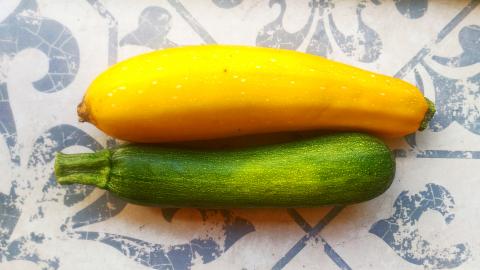
Photo: Ian Bartholomew
The production of zucchini noodles, in which the fruit is spiraled into long strands that pretend to be a veg version of spaghetti, seems designed entirely as a way of selling kitchen gadgets, and while the stuffing of the zucchini flower with soft savory cheese mix can look very pretty, I have never found that it does much to satisfy the taste buds.
Older fruit can be used in stews, and zucchini can reveal unexpected depth of flavor with long cooking, and there is a reason that it is a essential component of the classic French recipe ratatouille, and can often be found in rich southern European casseroles such moussaka.
Zucchini on its own has a subtle flavor that is not particularly remarkable, but is an outstanding vehicle for other flavors and a good team player. Getting a bit of color on it, either by roasting or grilling, is a great way of bringing out the fruit’s natural sweetness. It combines particularly well with salty hard cheeses such as Pecorino or Parmigiana.
The light crisp flavor of the zucchini is reflected in its nutritional profile and it is no surprise that it is a huge favorite with those hoping to lose weight. It is certainly superior to a host of processed weight loss products. Well cooked, it provides a wonderful feeling of fullness without too many calories. It has copious quantities of vitamins and minerals, with the added bonus of helping to guard against asthma, as well as strengthening bones and teeth. There are also suggestions that it is good for the eyes.
Fish wrapped in zucchini
Recipe (serves two):
This dish is light and fresh, perfect for warm summer evenings. It is easy to put together and looks as lovely as it tastes. The flavors are delicate and herbal, and it pairs perfectly with a crisp, citrus Sauvignon Blanc.
Ingredients
300g skinless, fine fleshed white fish fillets (such as sea bass)
1 green zucchini or yellow squash
small bunch of sweet basil
2 cloves garlic, thinly sliced
1 tbsp finely minced preserved lemon
4 cherry tomatoes, halved
salt and pepper to season
olive oil
Directions
1. Use a vegetable peeler to shave thin slices along the length of the zucchini.
2. Season the fish fillets with salt and pepper. Cut to size and make into two small stacks.
3. On a clean cutting board, lay out the zucchini slices, each slice overlapping the previous one by half, to form two sheets. Place the fish stack in the center of each.
4. Distribute the basil leaves, garlic, tomato and preserved lemon around the fish. Drizzle with olive oil and sprinkle with salt and pepper.
5. Wrap the fish in the sheet of zucchini slices.
6. Heat a non-stick skillet with a generous glug of olive oil over low heat. Place the fish packages in the skillet and cook for 5 minutes. Carefully turn the packages over and fry for another 5 minutes. The surface of the zucchini should be dappled with golden brown.
7. Serve immediately.
Ian Bartholomew runs Ian’s Table, a small guesthouse in Hualien. He has lived in Taiwan for many years writing about the food scene and has decided that until you look at farming, you know nothing about the food you eat. He can be contacted at Hualien202@gmail.com.
Ajay Verma, a consultant gastroenterologist at Kettering general hospital in Northamptonshire, says our gut is a “complex machine.” “It is constantly providing us with the nutrition we need, initially to grow and develop, and then for us to survive, thrive and repair from injury and illness.” How can we keep it functioning well? Put simply: “Make sure what you put into it is balanced, and that you clear out its waste products adequately,” Verma says. “In a general gastroenterology clinic, the most common conditions we see are irritable bowel syndrome (IBS), gastroesophageal reflux disease, inflammatory bowel disease and constipation,” says Nisha
The arithmetic is straightforward and uncomfortable. By the end of 2025, Taiwan had committed itself to a 50-30-20 electricity mix — half natural gas, 30 per cent coal, 20 per cent renewables. The Ministry of Economic Affairs’s (MOEA) own monthly energy reports tell a different story. Natural gas reached 47.8 per cent of generation last year. Coal stood at 35.4 per cent, comfortably above its target ceiling. Renewables came in at 13.1 per cent, well short of the 20 per cent Taipei had pledged a decade earlier. Installed renewable capacity reached roughly half of the 12 gigawatts (GW) the government

Last week US President Donald Trump was asked by a reporter whether he would speak on the phone to the President of Taiwan. “l’ll speak to him. I speak to everybody. We have that situation very well in hand,” Trump said. This marked the second time in a couple of weeks he had said he would talk to the President of Taiwan. In 2016 he famously took a call from then-president Tsai Ing-wen (蔡英文), when he was president-elect. Despite warnings that the apocalypse was nigh because of a phone call, the world quickly forgot about the conversation between two democratically-elected presidents.
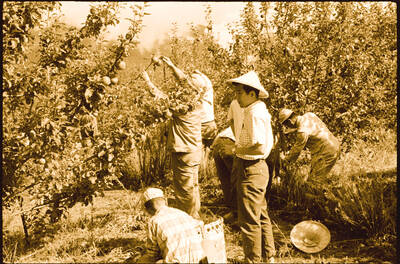
May 25 to May 31 Few believed that apples could be cultivated on a commercial scale in Taiwan’s high mountains. When horticulturalist Cheng Chao-hsiung (程兆熊) first proposed the idea in 1955, both American and Taiwanese colleagues dismissed it as implausible, arguing that temperate fruit could not be reliably grown on a subtropical island, especially on rugged terrain. However, it was this terrain in the Central Mountain Range where many Chinese Civil War veterans were resettled in the late 1950s. With limited job prospects and no family in Taiwan, they were placed on cooperative farms aimed toward self-sufficiency. Some say the conditions


 RSS
RSS