


At a crucial point in this new book on the life and policies of Xi Jinping (習近平), the author remarks that China’s supreme leader has a special relationship with Taiwan. This comes, he claims, not from his meeting with President Ma Ying-jeou (馬英九) in Singapore last November, but from his 16 years as a government official in Fujian Province.
Xi was in Fujian from 1985 to 2002. First he was Executive Vice Mayor of Xiamen, then Party Secretary of Ningde, giving him, the author claims, valuable experience of a depressed rural area. He then moved up to be Party Secretary of Fuzhou, Fujian’s capital city, and in 1996 was promoted to be the same city’s Deputy Governor. Finally, in 2000, he was made Governor of Fujian Province, a post he held until 2002.
All of this, Kerry Brown writes, involved negotiations and contracts with, among others, Taiwanese businessmen. These helped bring prosperity to Fujian — and increased prosperity in their area and on their watch was crucial to the success of any career party official. Also, a close aide of Xi’s, Chen Xi (陳希) is a native of Fujian. Xi Jinping, then, would seem the last high-level government officer to hold an ideologically hostile set of attitudes to the island nation, even though he would never use such a term to describe it.
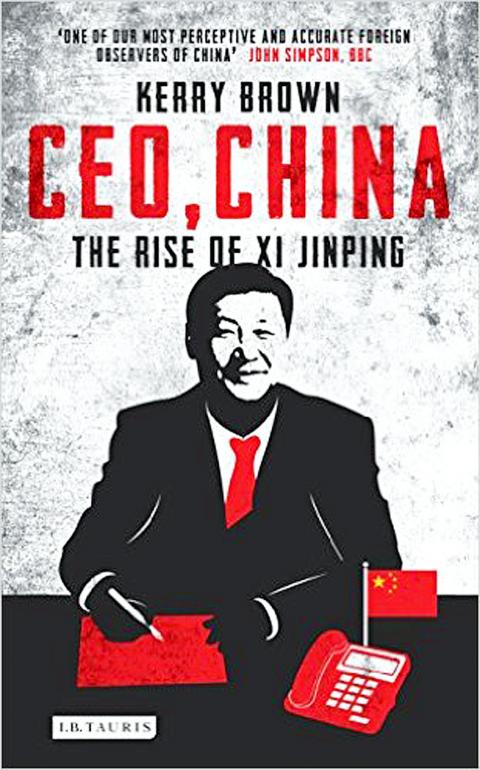
Brown is Professor of Chinese Studies and Director of the Lau China Institute at London University’s King’s College, and, according to the blurb, author of “over ten books on contemporary China” (why there is uncertainty over the exact number is unclear — my source says 12). His previous experience included a spell as First Secretary at the British Embassy in Beijing.
Developing the Taiwan theme, he goes on to say that Xi nowadays appears ambitious on the subject, and he is quoted as remarking to former Taiwanese vice-president Vincent Siew (蕭萬長), at the APEC congress in 2013, that the two entities couldn’t put off talking about political issues forever.
By and large, Brown adopts a sympathetic approach to Xi. He sees his rule as “efficient if unspectacular”, describes with sympathy his crusade against corruption, his commitment to ecological values (he’s “no climate-change denier”), and his apparently almost spiritual devotion to the cause of helping the people. At one point he is even compared implicitly with Pope Francis.
All this comes in a book that is aware of the dangers of hagiography, attributing just such a failing to an earlier writer on Xi, Robert Lawrence Kuhn. But this new book is nonetheless inclined to tacit approval of its subject. A far more hostile case could have been assembled, citing the almost routine increases in China’s military expenditure, crackdowns on free-speaking quasi-dissidents, and so on.
The author gives last July as his “time of writing”, with all URLs verified as of last November. But this doesn’t in itself explain the absence of any extensive discussion of the dispute over the islands in the South China Sea, Taiwan’s Itu Aba Island (Taiping Island, 太平島) included. A reference to “almost unresolvable issues of sovereignty” is about as far as Brown is willing to go. But Beijing under Xi has taken the lead in pursuing an aggressively expansionist policy here, and the issue should have formed a part of any assessment of the current leader’s policies. By contrast, China’s problems in Xinjiang are given reasonably full treatment, including mention of the very harsh treatment meted out to former Uighur academic Dr. Ilham Tohti who, while being openly critical of Beijing’s policies in the region, had never questioned its legitimacy or defended the use of violence by dissenters.
This, in other words, is a readable but not entirely comprehensive book on China’s leader. The usual material is there, of course, notably Xi’s curious route to ultimate power, only joining the Communist Party of China in 1974 after ten failed attempts, joining the Party Central Committee in 1997 despite coming 151st on the list of candidates when there were only 150 places — the number was expanded to 151 specially to include him, reputedly on the insistence of Jiang Zemin (江澤民), the Party leader — and his final accession to the Politburo Standing Committee in 2007. Then there’s his marriage (Xi’s second) in 1986 to the celebrated singer Peng Liyuan (彭麗媛) — she was to go on to become a “goodwill ambassador” of the WHO in the fields of tuberculosis and HIV, and to give a speech in English at the UN in 2015.
In discussing Peng, Brown has some interesting things to say about women in China’s political life. The Party, he writes, rose to power on the back of promises to support gender equality. Yet no woman has ever risen to the level of membership of the Politburo Standing Committee, currently numbered at seven, and since 1949 only two provincial governors have been women. The contrast with Taiwan, in other words, could hardly be more marked.
CEO, China will be published in the UK in hardback on Saturday, and I read it in an uncorrected proof. Oddities in the index, therefore, will possibly have been ironed out in the corrected edition. Even so, it is strange that some references to Taiwan (on pages 68, 87, 110, 112, 191 and 212) aren’t listed, while others are, and that Japan doesn’t appear at all, despite mentions on pages 167, 182, 188, 204 and 214. Vietnam isn’t there either, despite being referred to on pages 188, 190 and 204, and indeed there are no Index listings for any subjects beginning with the letter “V”.
In the final analysis, this book sees Xi as a devotee of the Party. He serves it, we are told, with a loyalty that almost verges on the spiritual. Efficient if unspectacular he may be, but Brown sees him as serving China’s needs, including paying lip-service to the need for reform, and claims he could easily find ways to extend his leadership beyond 2022, when his current position officially ends.

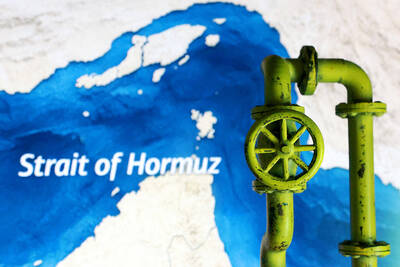
The US war on Iran has illuminated the deep interdependence of Asia on flows of oil and related items as raw materials that become the basis of modern human civilization. Australians and New Zealanders had a wake up call. The crisis also emphasizes how the Philippines is a swatch of islands linked by jet fuel. These revelations have deep implications for an invasion of Taiwan. Much of the commentary on the Taiwan scenario has looked at the disruptions to world trade, which will be in the trillions. However, the Iran war offers additional specific lessons for a Taiwan scenario. An insightful
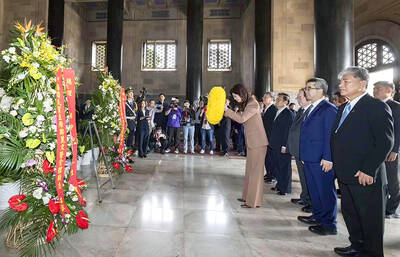
The problem with Marx’s famous remark that history repeats itself, first as tragedy, the second time as farce, is that the first time is usually farce as well. This week Chinese Nationalist Party (KMT) Chair Cheng Li-wun (鄭麗文) made a pilgrimage to the People’s Republic of China (PRC) “to confer, converse and otherwise hob-nob” with Chinese Communist Party (CCP) officials. The visit was an instant international media hit, with major media reporting almost entirely shorn of context. “Taiwan’s main opposition leader landed in China Tuesday for a rare visit aimed at cross-strait ‘peace’”, crowed Agence-France Presse (AFP) from Shanghai. Rare!

April 6 to April 13 Few expected a Japanese manga adaptation featuring four tall, long-haired heartthrobs and a plucky heroine to transform Taiwan’s television industry. But Meteor Garden (流星花園) took the nation by storm after premiering on April 12, 2001, single-handedly creating the “idol drama” (偶像劇) craze that captivated young viewers across Asia. The show was so successful that Japan produced its own remake in 2005, followed by South Korea, China and Thailand. Other channels quickly followed suit, with more than 50 such shows appearing over the following two years. Departing from the melodramatic

Sunflower movement superstar Lin Fei-fan (林飛帆) once quipped that the Democratic Progressive Party (DPP) could nominate a watermelon to run for Tainan mayor and win. Conversely, the DPP could run a living saint for mayor in Taipei and still lose. In 2022, the DPP ran with the closest thing to a living saint they could find: former Minister of Health and Welfare Chen Shih-chung (陳時中). During the pandemic, his polling was astronomically high, with the approval of his performance reaching as high as 91 percent in one TVBS poll. He was such a phenomenon that people printed out pop-up cartoon


 RSS
RSS