


Sunflower movement superstar Lin Fei-fan (林飛帆) once quipped that the Democratic Progressive Party (DPP) could nominate a watermelon to run for Tainan mayor and win. Conversely, the DPP could run a living saint for mayor in Taipei and still lose.
In 2022, the DPP ran with the closest thing to a living saint they could find: former Minister of Health and Welfare Chen Shih-chung (陳時中). During the pandemic, his polling was astronomically high, with the approval of his performance reaching as high as 91 percent in one TVBS poll. He was such a phenomenon that people printed out pop-up cartoon cardboard cutouts of him to put on their desks.
Of course, Chen was not a saint; the reality is he was a dentist with good political connections — and the political campaign brought him down to earth. Still, he remained well-respected and likely would have done better in any of the other big six metropolises.
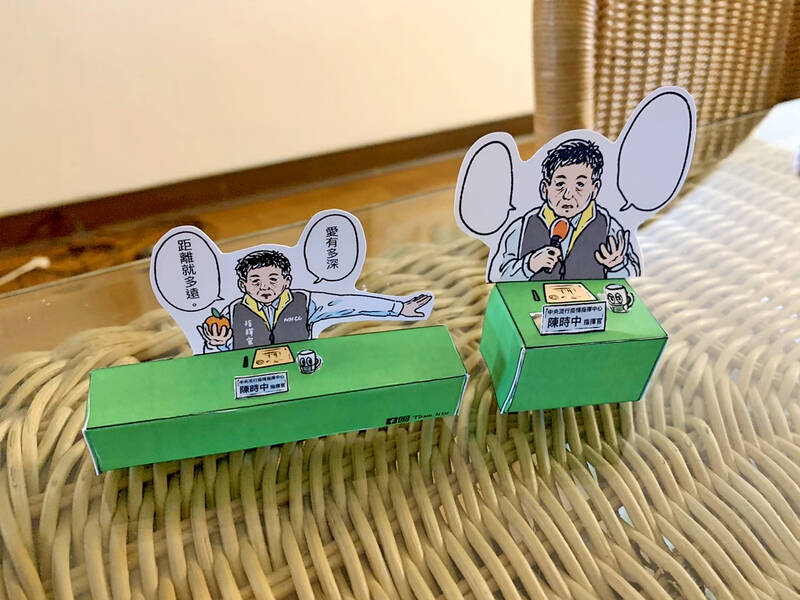
Photo: Tang Shih-ming, Taipei Times
Chen came in second with 31.93 percent, but lost to the Chinese Nationalist Party’s (KMT) Chiang Wan-an (將萬安), who received a still relatively modest 42.29 percent.
DPP Taipei mayoral candidates typically do not just lose; they get slaughtered. The only time they won was in 1994, when future president Chen Shui-bian (陳水扁) won in a three-way race.
The only time they lost by less than double digits was in 1998, when Chen lost his re-election campaign by a little over five points. The DPP hit rock bottom in 2018 when their candidate only won 17.28 percent. In 2014, they did not bother running a candidate, instead backing then-independent candidate Ko Wen-je (柯文哲).
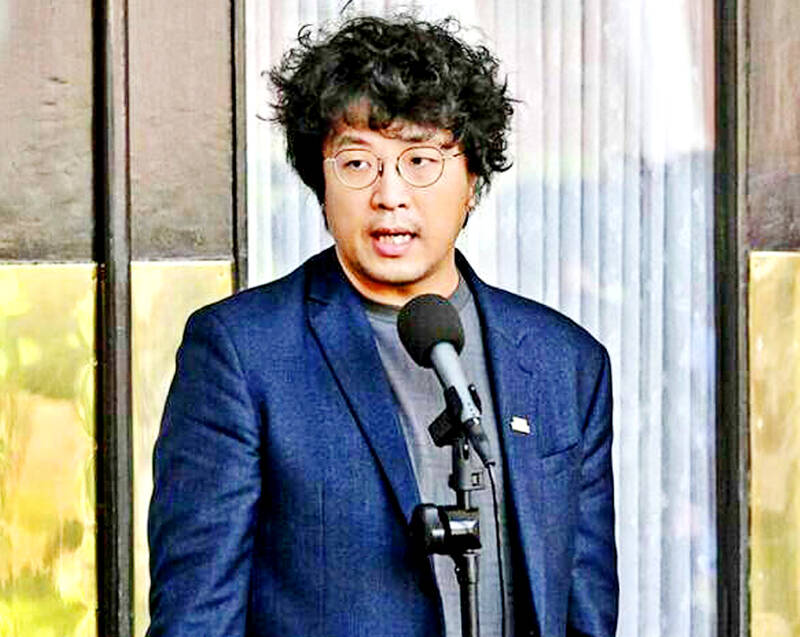
Photo: TT file photo
DEEP BLUISH
The perception is that Taipei is a deep blue, profoundly pro-KMT city. The reality, of course, is more complicated.
Following the Chinese Civil War, the KMT moved the capital to Taipei and brought with them the ruling class and party elite. They dominated much of the city, and attracted party supporters from around the country.
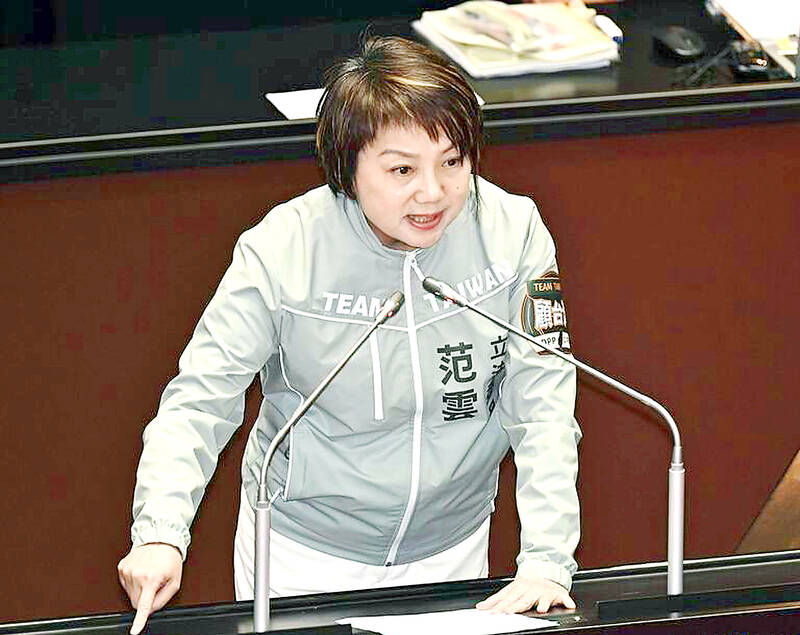
Photo: TT file photo
Much of the city still bears this imprint. Yet this manifests not so much as being pro-KMT, but rather anti-DPP.
These voters are not necessarily ideological. They will vote for candidates who are almost the exact opposite of the KMT ideologically, just so long as they are not branded DPP.
For example, for a time, the New Power Party did well in those areas. Rockstar Freddy Lim (林昶佐) won a legislative seat, won re-election and survived a recall despite having a pro-Taiwan independence stance and left-wing views that made the DPP look tame.
There are also areas of Taipei that are pan-green, and regularly vote for the DPP. Three of the city’s eight lawmakers are DPP.
In national elections, the city leans mildly pan-blue, typically only by a few percentage points. In the last three presidential elections, Taipei voted DPP, but by slightly lower margins. In 2024, in the presidential election and the party list vote, the KMT did about two to three points better than the national average. Significant, but not overwhelming.
A similar pattern is shown in the latest Formosa poll, showing that favorability towards the DPP is 3.7 percent lower than the national average, while unfavorability is 2.1 points higher. Yet, curiously, those “strongly favorable” towards the DPP is actually 3.3 points higher than the national average, while “strongly unfavorable” is 1.1 percent lower — it is in the “somewhat” categories where Taipei tips the scales overall.
This suggests that the DPP’s mayoral candidates should be at a disadvantage, but not an insurmountable one. Yet, they consistently get wiped out in double-digit landslides.
Worse for the DPP, even when they put up the strongest candidates, they still get crushed. In 2010, the DPP ran Su Tseng-chang (蘇貞昌) — one of Taiwan’s most dynamic campaigners — against the KMT’s Hau Lung-bin (郝龍斌), a middling candidate at best. Yet Su lost by nearly 12 points.
Why does the DPP fare so poorly in Taipei mayoral elections, but are otherwise somewhat competitive?
Likely the biggest reason is a national phenomenon that is exaggerated in Taipei: The KMT is trusted to run local governments, while the DPP is more trusted on the national level. Many voters view the KMT as more competent, but trust them less on foreign policy and especially on relations with China.
GREEN TORPOR
It almost feels that DPP has already given up. Their shortlist of four potential candidates is unimpressive, and they face a powerful incumbent in Chiang.
Chiang’s polling is holding up well, and some of his recent city government initiatives have been copied by other local governments nationally. There is growing chatter he may be positioning himself as a potential presidential candidate in 2028, despite his relative youth and lack of seniority.
It also seems unlikely that he will face a meltdown before election day, though anything is possible. Previously as a lawmaker and as mayor, the DPP has thrown everything and the kitchen sink at him, and nothing has slowed him down. He is well vetted by the press, so the chances of a surprise revelation are low.
The highest hopes in the DPP are pinned on Vice Premier Cheng Li-chiun (鄭麗君). She is highly competent and has won acclaim for her handling of trade negotiations with the US, securing a deal that is far better than regional peers like Japan and South Korea.
She is a problematic candidate, however. She has never run for office before. More importantly, she seems reluctant to run. She is doing well in her current job, so why throw it away to run in a race she would likely lose?
Recently, the rumor mill has shifted the focus to Legislator Puma Shen (沈伯洋). He is also inexperienced in campaigning, and like Cheng, was appointed to the legislature on the party list.
A criminologist by training, he is young, energetic and dynamic. He co-founded Kuma Academy (黑熊學院), dedicated to teaching civil defense skills, as well as Doublethink Lab (台灣民主實驗室), dedicated to fighting Chinese disinformation and subversion campaigns.
Though an impressive character, his lack of government experience give him a weak resume for Taipei mayor.
Enoch Wu (吳怡農) is the only declared candidate, and his resume is relatively strong. He has served on the national security council, in the special forces, as an investment banker and founded national security NGO Forward Alliance. A source also told me he is popular in Washington.
He also ran for a legislative seat and did better than expected, but lost to Chiang Wan-an. This means Wu not only has experience running in a campaign, but also in running against Chiang.
He has one huge hurdle to overcome. The DPP seems determined to find someone — anyone — to run other than him. I’m unsure as to why he seems so unpopular in the party, but reports suggest that some in the DPP find the Chicago-born Wu “too American,” despite his having renounced his US citizenship and devoted his life to serving Taiwan.
The fourth candidate on the list is Fan Yun (范雲), who has a career as a social activist going back to the Wild Lily movement that played an important role in Taiwan’s early democratization. She has been involved in many movements since and was involved in founding the Social Democratic Party in 2015.
She joined the DPP in 2019 and, like Cheng and Shen, was appointed a party list lawmaker. She has high name recognition from the talk show circuit.
Though winning Taipei is a long shot, the party cannot afford to be absent from the race. The mayoral candidate should, in theory, provide much-needed publicity and oomph to downstream city council candidates.
Plus, it is not impossible for the DPP to win Taipei — just very difficult.
Donovan’s Deep Dives is a regular column by Courtney Donovan Smith (石東文) who writes in-depth analysis on everything about Taiwan’s political scene and geopolitics. Donovan is also the central Taiwan correspondent at ICRT FM100 Radio News, co-publisher of Compass Magazine, co-founder Taiwan Report (report.tw) and former chair of the Taichung American Chamber of Commerce. Follow him on X: @donovan_smith.

Michael slides a sequin glove over the pop star’s tarnished legacy, shrouding Michael Jackson’s complications with a conventional biopic that, if you cover your ears, sounds great. Antoine Fuqua’s movie is sanctioned by Jackson’s estate and its producers include the estate’s executors. So it is, by its nature, a narrow, authorized perspective on Jackson. The film ends before the flood of allegations of sexual abuse of children, or Jackson’s own acknowledgment of sleeping alongside kids. Jackson and his estate have long maintained his innocence. In his only criminal trial, in 2005, Jackson was acquitted. Michael doesn’t even subtly nod to these facts.

Writing of the finds at the ancient iron-working site of Shihsanhang (十 三行) in New Taipei City’s Bali District (八里), archaeologist Tsang Cheng-hwa (臧振華) of the Academia Sinica’s Institute of History and Philology observes: “One bronze bowl gilded with gold, together with copper coins and fragments of Tang and Song ceramics, were also found. These provide evidence for early contact between Taiwan aborigines and Chinese.” The Shihsanhang Web site from the Ministry of Culture says of the finds: “They were evidence that the residents of the area had a close trading relation with Chinese civilians, as the coins can be
The March/April volume of Foreign Affairs, long a purveyor of pro-China pablum, offered up another irksome Beijing-speak on the issues and solutions for the problems vexing the People’s Republic of China (PRC) and the US: “America and China at the Edge of Ruin: A Last Chance to Step Back From the Brink” rang the provocative title, by David M. Lampton and Wang Jisi (王緝思). If one ever wants to describe what went wrong with US-PRC relations, the career of Wang Jisi is a good place to start. Wang has extensive experience in the US and the West. He was a visiting
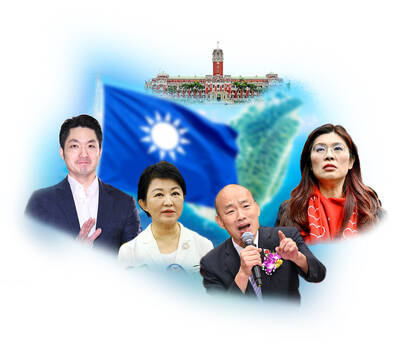
The January 2028 presidential election is already stirring to life. In seven or eight months, the primary season will kick into high gear following this November’s local elections. By this point next year, we will likely know the Democratic Progressive Party (DPP) candidate and whether the Taiwan People’s Party (TPP) will be fielding a candidate. Also around this time, the Chinese Nationalist Party (KMT) will either have already completed their primary, or it will be heading into the final stretch. By next summer, the presidential race will be in high gear. The big question is who will be the KMT’s


 RSS
RSS