


The January 2028 presidential election is already stirring to life. In seven or eight months, the primary season will kick into high gear following this November’s local elections.
By this point next year, we will likely know the Democratic Progressive Party (DPP) candidate and whether the Taiwan People’s Party (TPP) will be fielding a candidate. Also around this time, the Chinese Nationalist Party (KMT) will either have already completed their primary, or it will be heading into the final stretch.
By next summer, the presidential race will be in high gear.
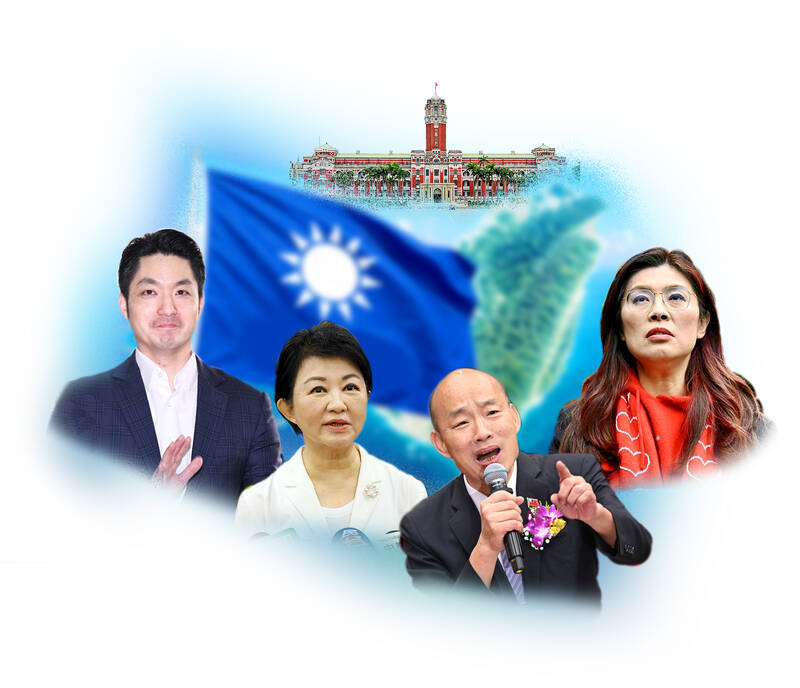
GRAPHIC: TT
The big question is who will be the KMT’s candidate, and there have recently been some interesting developments that could alter the calculations of all the major players going forward.
DPP AND TPP
It is rare for anyone to have the temerity to challenge an incumbent in the primary, so William Lai (賴清德) will likely run unopposed on the DPP side. However, if there is some sort of unexpected meltdown, or if Lai, as party chair, manages to lose Kaohsiung and/or Tainan and performs poorly elsewhere in this year’s local elections, a challenger could emerge.
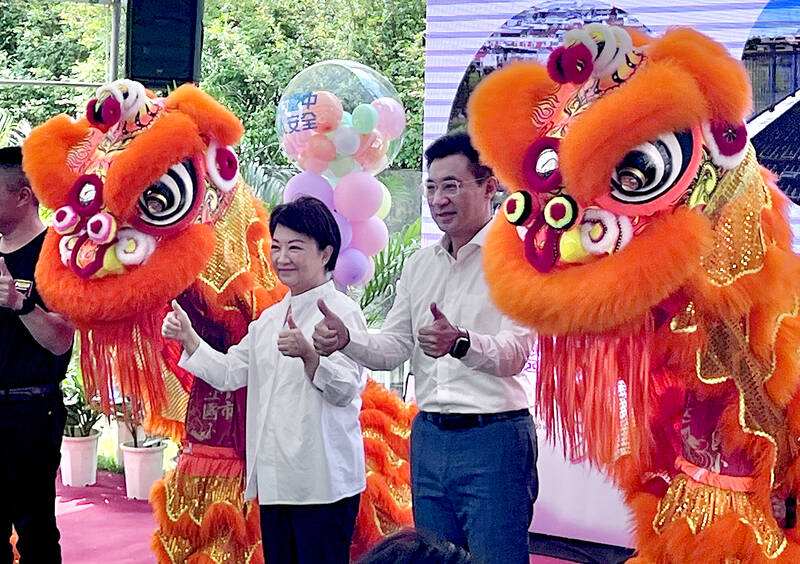
Photo: Liao Yao-tung, Taipei Times
That is what happened in 2019, when Lai broke his own promise not to challenge the incumbent DPP president, Tsai Ing-wen (蔡英文), but lost in an ugly fight. This time around, even if Lai leads the DPP to electoral disaster this November, there are few in the party with enough standing to effectively challenge him.
The TPP’s Ko Wen-je (柯文哲) lost in the last election but pulled in a respectable 26 percent. Following his recent conviction on corruption charges, he is legally barred from running in 2028.
The TPP should run a candidate. Presidential candidates that receive at least five percent of the vote get a NT$30 government subsidy for every vote cast, which is a lot of money for a small party — plus a presidential candidate can draw press attention to downstream candidates, which is worth yet more government subsidies from the party list vote.
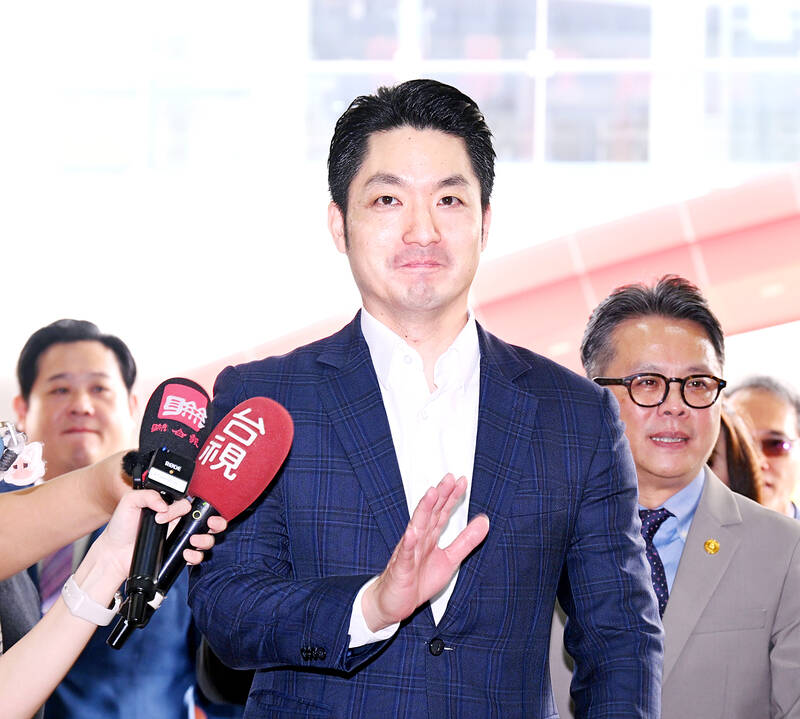
Photo: Fang Pin-chao, Taipei Times
However, who could the TPP run? Current party Chairman Huang Kuo-chang’s (黃國昌) bid to run for mayor of New Taipei City is failing badly; so much so that the latest Formosa poll on the New Taipei City race they did not even bother to include him. He also has tied his party to the KMT, and running would risk that relationship.
LU LOSING STEAM
Taichung Mayor Lu Shiow-yen (盧秀燕) has been quietly running for president since at least last year, burnishing her international credentials and carefully cultivating a moderate image to appeal to swing voters.
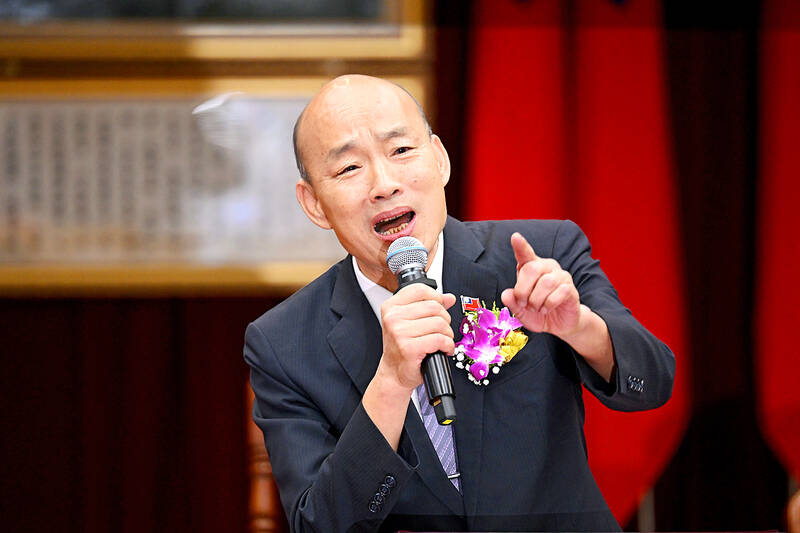
Photo: Chen Yi-kuan, Taipei Times
She is the logical candidate. She is term-limited out this December, leaving her free to campaign full-time. She is popular and is a powerhouse in the key swing region of central Taiwan, and at age 64, she has the maturity and seniority few in the party can match.
However, in recent months there have been signs she has been losing steam.
Last year, she made what appeared to be a strategically sound decision not to run for KMT party chair. It would have been difficult to juggle being both Taichung mayor and running the Taipei-based party; botching one or the other could damage her credibility.
Additionally, the likely candidates were all relative nobodies who were likely to follow the precedent of the last two elections, and not run for president themselves — though historically the party chair and the presidential candidate were one and the same.
During last year’s recall campaigns aiming to unseat KMT lawmakers, her peers all railed against the DPP government using angry, hyperbolic language. She took a markedly different, moderate tone and stuck to issues grounded in reality. Her peers drew loud crowd responses as they bayed for the blood of their DPP enemies, but only politely clapped Lu.
Following the highly successful campaign to defeat the recalls, the KMT grew more hardline ideologically, electing Cheng Li-wun (鄭麗文) as party chair. Lu seemed out of step.
She has also been losing some ground in public perception as the nation’s most dynamic mayor. While still popular, her polling numbers have been slowly eroding.
RISING STAR
Recently, a series of initiatives by Taipei Mayor Chiang Wan-an (蔣萬安) have seized nationwide public attention. For example, his initiative to subsidize one free milk weekly for schoolchildren was widely copied by others around the country, and those who did not faced questions about why not.
Being the mayor of the capital and the center of the media gives him a major advantage in gaining maximum publicity. That he has also positioned himself as a relative moderate should be worrying to Lu. She is now under pressure from both sides.
In that Formosa poll (conducted April 8-10) on the New Taipei City race, they quietly snuck in a polling question on 10 top politicians. Lu came in second with a respectable 48.7 percent approval, but Chiang was far away the leader at 62.6 percent.
It is not surprising that New Taipei City residents would rate the mayor of neighboring Taipei higher than faraway Taichung, but the gap was still remarkable.
Though not my favorite pollster, a national poll by Z.media conducted April 19-20 confirmed the trend. On suitability to represent the KMT-TPP alliance as president, Chiang topped it at 25 percent, with Lu trailing at 19.7 percent.
Among KMT supporters and non-party-affiliated respondents, Chiang led, with Lu coming in second. Lu slightly led among DPP-leaning supporters, but came in fourth among TPP supporters.
Chiang is not an ideal candidate. If he wins re-election as Taipei mayor in November, he will have only just started his second term while beginning campaigning for president — though that did not stop Hou You-yi (侯友宜) in the 2024 race.
At 47, he is fairly young and does not have the seniority Lu has. However, the KMT seems to be in the mood for fresh faces, and the first three democratically elected presidents were all former Taipei mayors. Also, as a claimed descendant of former presidents Chiang Ching-kuo (蔣經國) and Chiang Kai-shek (蔣介石), he may appeal to the base and families of Chinese Civil War refugees.
Logically, he would make a better candidate for 2032, but high opinion polling tends to cloud judgment.
HAN AND CHENG
That happened in 2019, when the KMT backed the upstart Han Kuo-yu (韓國瑜), who had only just taken office as Kaohsiung mayor in a surprising upset. He lost in a landslide.
Now legislative speaker, Han’s popularity has been rising, and he has been sounding more moderate than before. There is chatter of him running.
It is unclear if he would be interested in subjecting himself to another campaign. His current job is the nation’s third most powerful, and by most non-partisan accounts, seems to be doing a reasonably good job.
In that Z.media poll, he came in third overall at 15.6 percent, in second among KMT-leaners and interestingly, in first among TPP supporters — even beating out the TPP’s own Huang by six points.
There is also speculation about Cheng Li-wun. When running for KMT chair she stated she had “no plans” to run and would follow party procedures to help the party pick the strongest candidate.
She strongly implied she would not run, but did not say it outright. However, when recently asked about public comments supporting her presidential bid, Cheng laughed and said, “That’s thinking too far ahead.”
In the Z.media poll, she only got four percent overall, and only six percent among KMT supporters, so for now she is a long shot. However, that could change if she pulls off a big win in November for the KMT.
Donovan’s Deep Dives is a regular column by Courtney Donovan Smith (石東文) who writes in-depth analysis on everything about Taiwan’s political scene and geopolitics. Donovan is also the central Taiwan correspondent at ICRT FM100 Radio News, co-publisher of Compass Magazine, co-founder Taiwan Report (report.tw) and former chair of the Taichung American Chamber of Commerce. Follow him on X: @donovan_smith.
May 11 to May 17 Traversing the southern slopes of the Yushan Range in 1931, Japanese naturalist Tadao Kano knew he was approaching the last swath of Taiwan still beyond colonial control. The “vast, unknown territory,” protected by the “fierce” Bunun headman Dahu Ali, was “filled with an utterly endless jungle that choked the mountains and valleys,” Kano wrote. He noted how the group had “refused to submit to the measures of our authorities and entrenched themselves deep in these mountains … living a free existence spent chasing deer in the morning and seeking serow in the evening,” even describing them as
Yesterday, the Democratic Progressive Party (DPP) nominated legislator Puma Shen (沈伯洋) as their Taipei mayoral candidate, the Chinese Nationalist Party (KMT) put their stamp of approval on Wei Ping-cheng (魏平政) as their candidate for Changhua County commissioner and former legislator Tsai Pi-ru (蔡壁如) of the Taiwan People’s Party (TPP) has begun the process to also run in Changhua, though she has not yet been formally nominated. All three news items are bizarre. The DPP has struggled with settling on a Taipei nominee. The only candidate who declared interest was Enoch Wu (吳怡農), but the party seemed determined to nominate anyone
In a sudden move last week, opposition lawmakers of the Chinese Nationalist Party (KMT) and Taiwan People’s Party (TPP) passed a NT$780 billion special defense budget as a preemptive measure to stop either Chinese leader Xi Jinping (習近平) or US President Donald Trump from blocking US arms sales to Taiwan at their summit in Beijing, said KMT heavyweight Jaw Shaw-kong (趙少康), speaking to the Taipei Foreign Correspondents Club on Wednesday night in Taipei. The 76-year-old Jaw, a political talk show host who ran as the KMT’s vice presidential candidate in 2024, says that he personally brokered the deal to resolve
What government project has expropriated the most land in Taiwan? According to local media reports, it is the Taoyuan Aerotropolis, eating 2,500 hectares of land in its first phase, with more to come. Forty thousand people are expected to be displaced by the project. Naturally that enormous land grab is generating powerful pushback. Last week Chen Chien-ho (陳健和), a local resident of Jhuwei Borough (竹圍) in Taoyuan City’s Dayuan District (大園) filed a petition for constitutional review of the project after losing his case at the Taipei Administrative Court. The Administrative Court found in favor of nine other local landowners, but


 RSS
RSS