


May 11 to May 17
Traversing the southern slopes of the Yushan Range in 1931, Japanese naturalist Tadao Kano knew he was approaching the last swath of Taiwan still beyond colonial control.
The “vast, unknown territory,” protected by the “fierce” Bunun headman Dahu Ali, was “filled with an utterly endless jungle that choked the mountains and valleys,” Kano wrote. He noted how the group had “refused to submit to the measures of our authorities and entrenched themselves deep in these mountains … living a free existence spent chasing deer in the morning and seeking serow in the evening,” even describing them as “dashing, heroic rebels.”
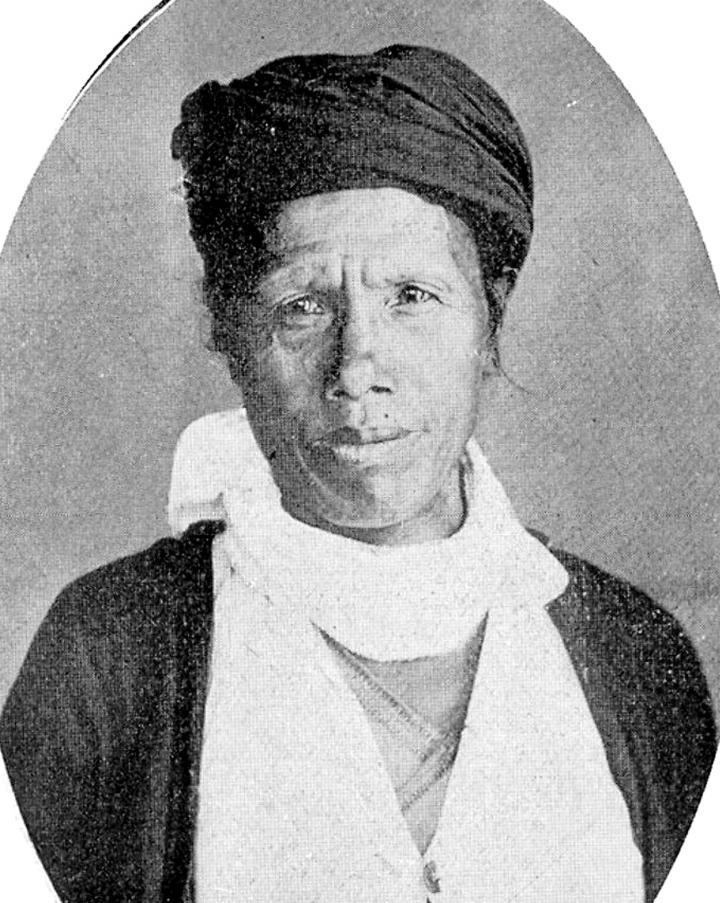
Photo courtesy of Wikimedia Commons
Colonial officials would not have shared that view. To them, Dahu Ali was the last “vicious savage” who needed to be brought under imperial rule.
These depictions were largely colonial projections imposed on Dahu Ali and his followers, who were determined to keep their firearms and continue their traditional mountain life. After the first clashes in December 1914, most surviving Bunun had already been relocated to lower elevations and ordered to take up farming.
Dahu Ali in April 1933 agreed to make peace, traveling to Kaohsiung for a ceremony the Bunun saw as mapakasil (“reconciliation”) but the Japanese framed as kijun (“surrender”). The agreement ended more than 18 years of Bunun resistance.
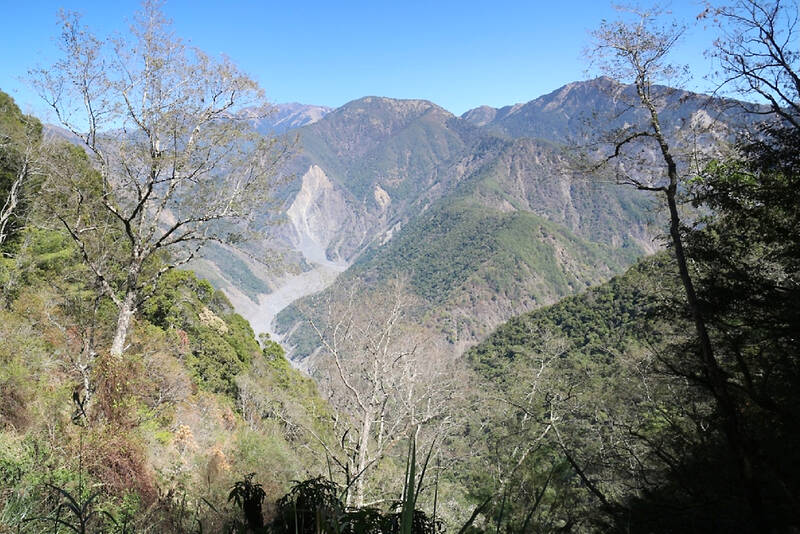
Photo courtesy of Indigenous Peoples Cultural Development Center.
FIREARM CONFISCATION
Ten years after taking control of Taiwan, much of the island’s mountainous Indigenous territory remained outside of Japanese authority. In 1907, the colonial government began a military campaign to subjugate these areas, starting in the north. This first phase culminated in the Truku War, which ended in August 1914.
The Japanese immediately turned their attention to Bunun and Paiwan communities in the southeast, ordering them to give up their firearms — weapons essential not only for hunting and survival, but also of spiritual significance. This campaign went smoothly at first as the Japanese invoked their recent victory in the Truku War and in some cases held headmen hostages, writes historian Shizue Fujii in Bunun mas minbas Lipun: 1914–1933 (布農族郡社群抗日事件), published by the Council of Indigenous Peoples.
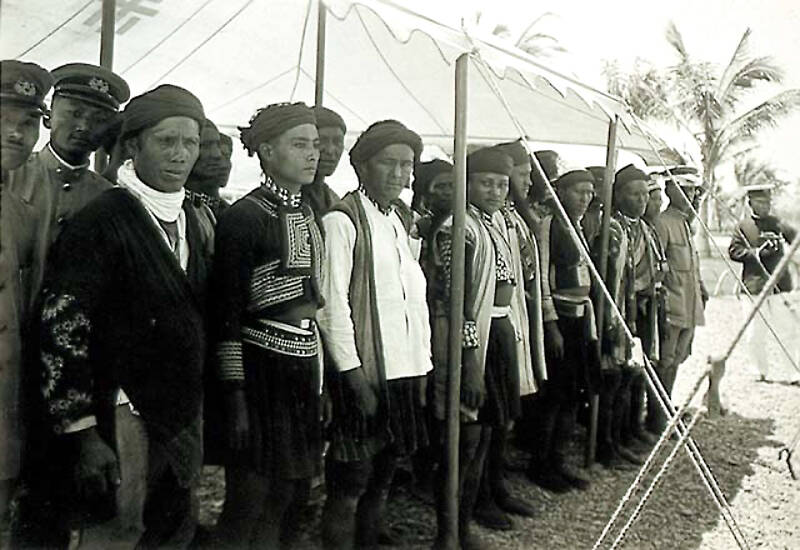
Photo courtesy of National Taiwan Library
Since Bunun territory had fewer coveted resources, the Japanese opted against another costly campaign. Instead, they sought to isolate communities by cutting off trading routes and gathering intelligence through local informants, sowing division and softening opposition. The eventual goal was to bring remote mountain settlements under tighter control by moving them to more easily governed locations.
However, tensions worsened when Bunun communities received little compensation for their guns, sometimes being paid with cows or water buffalo instead of cash.
Once the main Japanese forces withdrew, Bunun fighters struck back. On Dec. 6, 1914, a raiding party attacked Xinwulu Police Station, killing two officers, seizing about 40 guns and 400 rounds of ammunition along with supplies and torched the building. Attacks on other posts continued throughout the month.
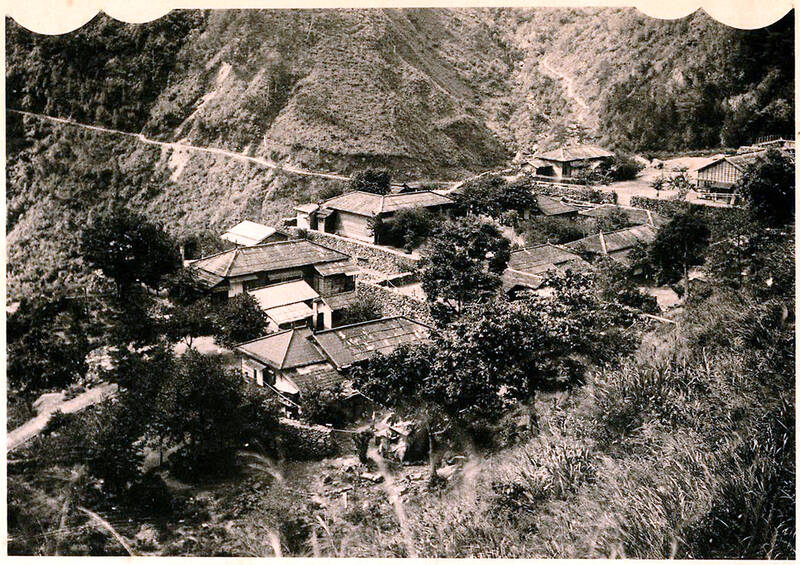
Photo courtesy of Open Museum
ESCALATING VIOLENCE
Unrest would soon reach the Dahun area — also known as Baungzavan, located in today’s Jhuosi Township (卓溪), Hualien County. One of the leading headmen there was Aliman Siking, younger brother of Dahu Ali. Several accounts suggest that one of their siblings was tortured to death by Japanese authorities, though the sources differ both on the date and the name.
On Feb. 23, a group stormed the Dahun Police Station, killing one officer before Aliman Siking reportedly rushed to the scene and called for them to stop. On March 19, a camphor distillery was targeted, and on May 12 the Qasibanan Police Station was raided.
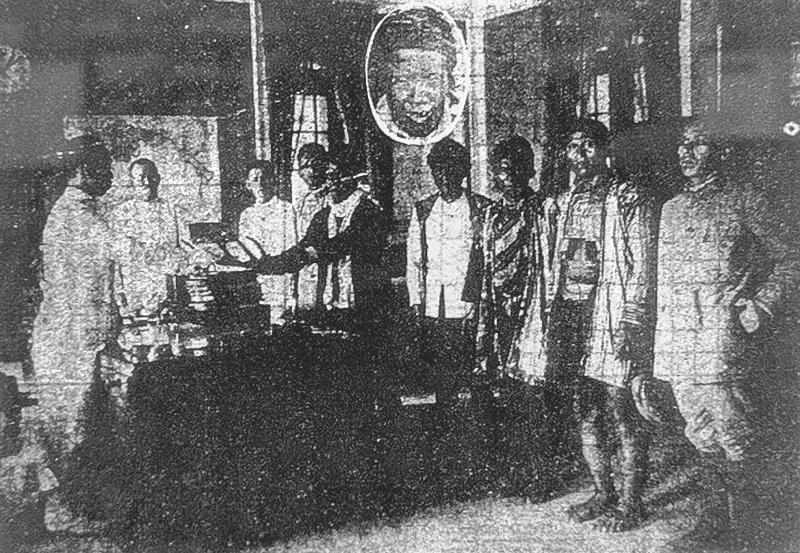
Photo courtesy of Wikimedia Commons
On May 17, the Dahun Police Station was attacked again, this time resulting in the deaths of all nine officers, though some accounts total 12. As early as 1933, narratives have identified Dahu Ali as a key figure behind these events. However, scholars such as Fujii and Bunun ethnographer Haisul Palalavi question this attribution, arguing that Dahu Ali did not rise up until 1921, suggesting that the association with the 1915 violence was due to his later legendary reputation as the last Bunun leader to submit.
Both sides remained on high alert, Fujii writes. In August 1915, a group of 93 men was invited to the police station in today’s Taluk Village, where they were given money and wine in exchange for surrendering their weapons. As they drank in the courtyard, they were reportedly ambushed, resulting in 11 deaths.
The incident deepened mistrust and led to renewed violence. Local officers called for a full-scale attack, but the governor-general opted to save costs, bolstering border control and continuing efforts to isolate the Bunun.
REFUGE IN HIGHER GROUND
Meanwhile, the Japanese surveyed the Central Mountain Range with the help of Bunun guides, and in 1919 began building the Batongguan Traversing Trail (八通關越道路), which passed through Dahun territory. During this period, many Bunun communities relocated to lower elevations and were granted farmland and renewed trade access.
However, as the Japanese began constructing police stations along the route, Bunun fighters began attacking to disrupt the work. They reportedly came mainly from Tusiu and Bulbul villages, prompting the Japanese to bombard Tusiu in May 1921. Tusiu was within the territory of Aliman Siking, who is said to have refused to surrender and moved his family further up the hills to Tamahu, in what is now Yusui Mountain (玉穗山). Some accounts say that Dahu Ali had been living there since 1915.
On June 16, 1921, more than 20 Tusiu villagers arrived at a local police station to submit, bringing a large boar with them to show sincerity. However, a confrontation broke out, ultimately resulting in destruction of the village and the deaths of the delegation. More Bunun fled to Tamahu after this, totalling about 250 people.
Japanese records show that Aliman Siking had grown weary of resistance by 1923, but it was Dahu Ali, his children and survivors from Tusiu Village who reportedly insisted on continuing the struggle, as food supplies were abundant in Tamahu.
Unable to reach those who had retreated deeper into the mountains, Japanese forces began aerial bombing operations in 1924. By 1926, strikes reached Aliman Siking’s fields and property. Coupled with a measles outbreak, in 1930, Aliman Siking descended from the mountains and surrendered.
In 1931, the Japanese completed the Guanshan Traversing Trail (關山越嶺道), bringing them closer to Tamahu. Officer Sogo Shinmori, fluent in Bunun, entered Tamahu with the help of a Bunun patrolman known as Yoshitami Ishida. They talked and tensions eased, but Dahu Ali’s family still refused to submit.
Relations gradually shifted, however. A Japanese report shows that by 1932, three of Dahu Ali’s grandsons had enrolled in a Japanese public school. In March 1933, his family was invited to tour Taipei, although Dahu Ali did not attend due to illness.
On April 19, 1933, Dahu Ali’s family traveled to Kaohsiung and formally made peace with the authorities. They were permitted to keep living in Tamahu until they accepted resettlement in 1938.
Taiwan in Time, a column about Taiwan’s history that is published every Sunday, spotlights important or interesting events around the nation that either have anniversaries this week or are tied to current events.
Ajay Verma, a consultant gastroenterologist at Kettering general hospital in Northamptonshire, says our gut is a “complex machine.” “It is constantly providing us with the nutrition we need, initially to grow and develop, and then for us to survive, thrive and repair from injury and illness.” How can we keep it functioning well? Put simply: “Make sure what you put into it is balanced, and that you clear out its waste products adequately,” Verma says. “In a general gastroenterology clinic, the most common conditions we see are irritable bowel syndrome (IBS), gastroesophageal reflux disease, inflammatory bowel disease and constipation,” says Nisha
The arithmetic is straightforward and uncomfortable. By the end of 2025, Taiwan had committed itself to a 50-30-20 electricity mix — half natural gas, 30 per cent coal, 20 per cent renewables. The Ministry of Economic Affairs’s (MOEA) own monthly energy reports tell a different story. Natural gas reached 47.8 per cent of generation last year. Coal stood at 35.4 per cent, comfortably above its target ceiling. Renewables came in at 13.1 per cent, well short of the 20 per cent Taipei had pledged a decade earlier. Installed renewable capacity reached roughly half of the 12 gigawatts (GW) the government

Last week US President Donald Trump was asked by a reporter whether he would speak on the phone to the President of Taiwan. “l’ll speak to him. I speak to everybody. We have that situation very well in hand,” Trump said. This marked the second time in a couple of weeks he had said he would talk to the President of Taiwan. In 2016 he famously took a call from then-president Tsai Ing-wen (蔡英文), when he was president-elect. Despite warnings that the apocalypse was nigh because of a phone call, the world quickly forgot about the conversation between two democratically-elected presidents.
May 25 to May 31 Few believed that apples could be cultivated on a commercial scale in Taiwan’s high mountains. When horticulturalist Cheng Chao-hsiung (程兆熊) first proposed the idea in 1955, both American and Taiwanese colleagues dismissed it as implausible, arguing that temperate fruit could not be reliably grown on a subtropical island, especially on rugged terrain. However, it was this terrain in the Central Mountain Range where many Chinese Civil War veterans were resettled in the late 1950s. With limited job prospects and no family in Taiwan, they were placed on cooperative farms aimed toward self-sufficiency. Some say the conditions


 RSS
RSS