


Taiwan is well known for it’s many cheap culinary delights. Stinky tofu, oyster omelets, pig’s blood cake and three cups chicken (三杯雞) are all tasty dishes found easily in every city and are a must try for tourists.
In Latin countries, tacos are usually the best cheap foods. Taiwan doesn’t really do tacos, unless guabao (割包), soy sauce braised pork topped with peanut powder and served in a steamed bun, is included. This weekend, the first-ever Festival del Taco en Taipei at the Taiwan Artist Village (台北國際藝術村) will be introducing Taiwan to a variety of tacos
Nine stalls will be selling tacos, including Em’s Taco, Mecato, Uncle Kunkel, Nala’s Mexican Food and Las Adelitas.
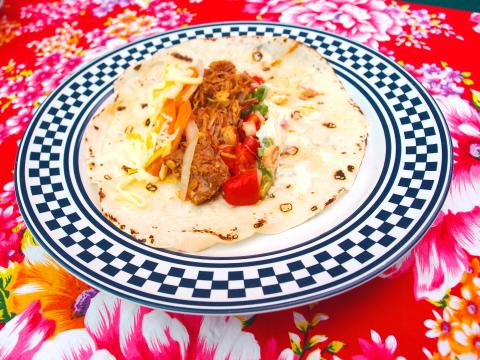
Photo courtesy of Color Wolf Studios
TACO MADNESS
Todde Williams is a culinary crackerjack who considers himself an expert on tacos. He plans his birthdays in Taco Bells and is always on the lookout for Mexican food when he travels around the world as a writer. Williams will also be at the festival selling his Uncle Taco Touch tacos.
Having relocated to Taipei from South Korea two years ago, Williams says that Taiwanese pay closer attention to replicating the original than Korean’s do.
“Taipei has actually taken the time to look up recipes, and people in town travel a lot more than Koreans do, and get more out of other cultures in general. I’d say that here it’s genuinely about flavor, even if there’s a slight miss,” he said.
“Sometimes everything will be spot on, and then someone throws cabbage on the taco and makes it a mess. I’ve had a perfect taco, served cold, and a nice, hot, juicy taco served with mayonnaise instead of sour cream.”
While Williams’ favorite taco joint in Taiwan is Anita’s Cantina in Taitung County’s Dulan Village (都蘭), he said he is proud of his pork adobada, which he stews for 12 hours.
“It’s [the] Mexican guabao,” he said.

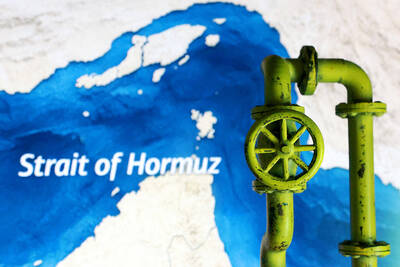
The US war on Iran has illuminated the deep interdependence of Asia on flows of oil and related items as raw materials that become the basis of modern human civilization. Australians and New Zealanders had a wake up call. The crisis also emphasizes how the Philippines is a swatch of islands linked by jet fuel. These revelations have deep implications for an invasion of Taiwan. Much of the commentary on the Taiwan scenario has looked at the disruptions to world trade, which will be in the trillions. However, the Iran war offers additional specific lessons for a Taiwan scenario. An insightful
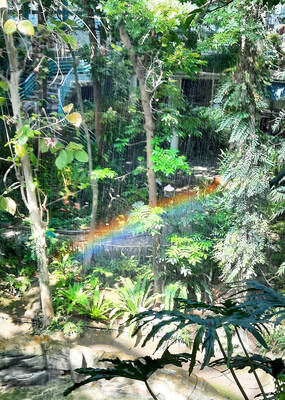
It’s only half the size of its more famous counterpart in Taipei, but the Botanical Garden of the National Museum of Nature Science (NMNS, 國立自然科學博物館植物園) is surely one of urban Taiwan’s most inviting green spaces. Covering 4.5 hectares immediately northeast of the government-run museum in Taichung’s North District (北區), the garden features more than 700 plant species, many of which are labeled in Chinese but not in English. Since its establishment in 1999, the site’s managers have done their best to replicate a number of native ecosystems, dividing the site into eight areas. The name of the Coral Atoll Zone might

Polling data often confirms what we expect, but sometimes it throws up surprises. When examined over time, some patterns appear that speak to something bigger going on. In this column, whenever possible, Formosa’s polls are used. Despite the sometimes cringeworthy antics of Formosa’s Chairman, Wu Tzu-Chia (吳子嘉), the data produced includes detailed breakdowns crucial for analysis. It has also been conducted monthly 11-12 times a year for many years with many of the same questions, allowing for analysis over time. When big shifts do occur between one month and the next it is usually in response to some event in
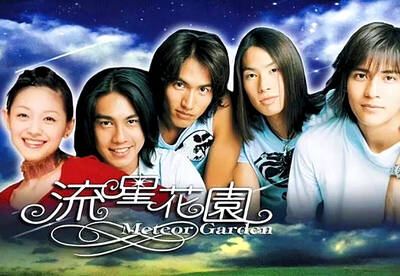
April 6 to April 13 Few expected a Japanese manga adaptation featuring four tall, long-haired heartthrobs and a plucky heroine to transform Taiwan’s television industry. But Meteor Garden (流星花園) took the nation by storm after premiering on April 12, 2001, single-handedly creating the “idol drama” (偶像劇) craze that captivated young viewers across Asia. The show was so successful that Japan produced its own remake in 2005, followed by South Korea, China and Thailand. Other channels quickly followed suit, with more than 50 such shows appearing over the following two years. Departing from the melodramatic


 RSS
RSS