


It’s only half the size of its more famous counterpart in Taipei, but the Botanical Garden of the National Museum of Nature Science (NMNS, 國立自然科學博物館植物園) is surely one of urban Taiwan’s most inviting green spaces.
Covering 4.5 hectares immediately northeast of the government-run museum in Taichung’s North District (北區), the garden features more than 700 plant species, many of which are labeled in Chinese but not in English. Since its establishment in 1999, the site’s managers have done their best to replicate a number of native ecosystems, dividing the site into eight areas.
The name of the Coral Atoll Zone might confuse visitors who don’t know much about Taiwan’s diverse natural environment. In addition to a variety of high-mountain, mid-elevation and lowland ecosystems, the country has places — notably within Kenting National Park (墾丁國家公園) and around Kaohsiung’s Shoushan (壽山) — where prehistoric coral formations were pushed above sea level by tectonic activity.
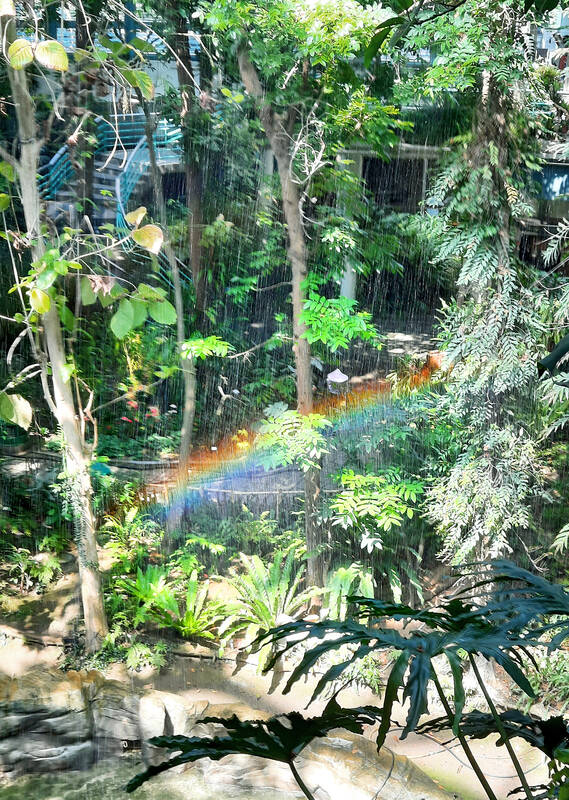
Photo: Steven Crook
The soils in such places are dry, highly alkaline, limestone-derived and seldom more than a few centimeters deep, so plants mainly rely on the humus created by decaying organic matter. Among the species that grow in the Coral Atoll Zone are the Formosan nato tree (Palaquium formosanum) and Ficus tinctoria, a type of fig that also thrives on Orchid Island (Lanyu, 蘭嶼).
Another of the zones is devoted to Orchid Island, while one is named for Taitung cycads (Cycas taitungensis), a truly ancient species. Like most cycads around Asia and Oceania, Cycas taitungensis is endangered, and not just because it requires a particular environment to thrive. Cycads are often snatched from the wild by plant collectors and landscapers. Taiwan’s efforts to protect this precious lifeform, which include establishing a heavily patrolled 290-hectare reserve in the southeast, have had some effect. Choking off the supply of illegally-removed local trees, however, prompted dealers to smuggle in another cycad species from Vietnam; this inadvertently introduced a non-native insect which feeds on and sometimes kills Cycas taitungensis.
Areas of roughly equal sizes gather plants found in Taiwan’s Northern Lowland, Central Lowland, Southern Lowland and Littoral Forest ecosystems. The last of these could be the most precious, because so many of Taiwan’s waterways have been adversely impacted by development (see Taipei Times “Dead in the water: Taiwan’s long-suffering rivers,” March 9, 2022).
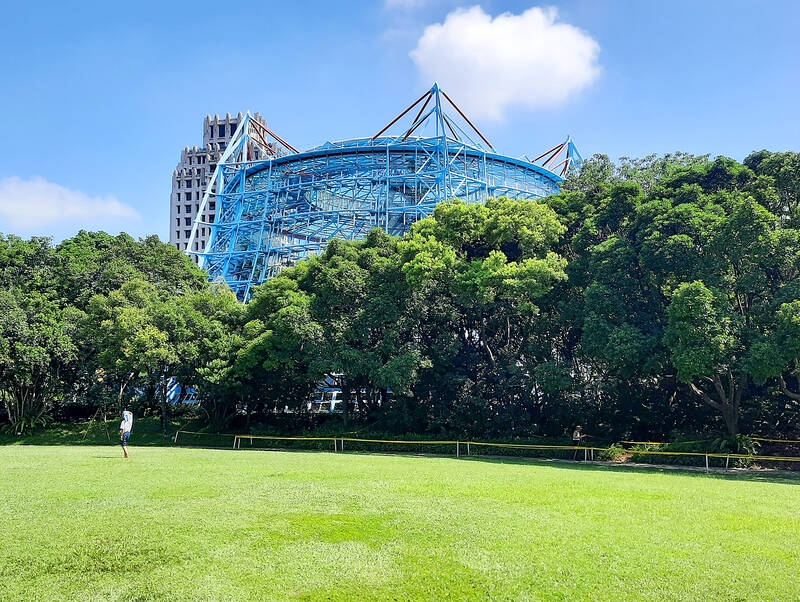
Photo: Steven Crook
A highlight of the Littoral Forest Zone is the powder-puff tree (Barringtonia racemosa), and its appearance is as delicate as its name implies. Calling it “a legendary wetland plant,” the NMNS Web site breaks some bad news: The plant “is nearly extinct in the wild in Taiwan,” and now found only near Hengchun (恆春) in Pingtung County and in Yilan County’s 52-Jia Wetland (五 十 二甲重要濕地).
Another hard-to-spot-in-the-wild species is Hernandia nymphaeifolia, which can grow to more than 20m in height. Common in parts of Oceania — but in this country confined to Orchid Island, Green Island (綠島), and Kenting’s Banana Bay Ecological Reserve (香蕉灣生態保護區) — its ecological value stems from its extensive root systems, which reduce erosion by holding sand and soil in place, and its dense canopy, which shelters various birds and animals.
If nature were left to take its course, it’s extremely unlikely the powder-puff tree or Hernandia nymphaeifolia (or many other of the garden’s species) would establish a foothold in central Taichung. But ex situ (“off site”) conservation like that being practiced in the NMNS Botanical Garden is regarded as a critical insurance policy for plants facing local or global extinction. By preserving seeds and living specimens outside of their natural habitats, scientists can ensure a foundation exists for future reforestation and restoration projects.
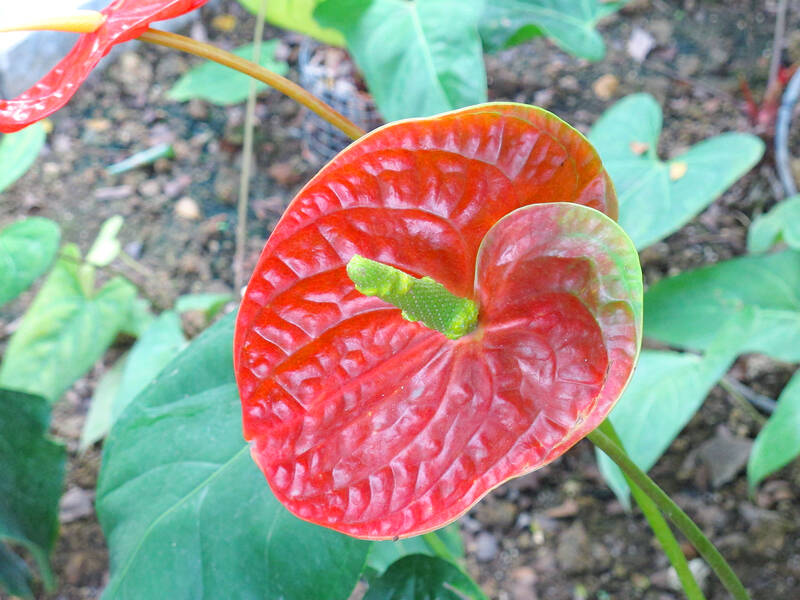
Photo: Steven Crook
The Monsoon Rainforest Zone recreates plant life around Shouka (壽卡) and Mudan (牡丹) in Pingtung County, one of the least developed parts of Taiwan’s main island. In Taichung, among the plants representing this region is the Taiwan chinkapin (Castanopsis formosana), an evergreen that prefers broadleaved forests 200m to 700m above sea level.
The botanical garden’s most unique and memorable feature isn’t one of its outdoor divisions, but rather the Tropical Rainforest Greenhouse, a fat cylindrical structure that’s 31m high and 56m across at its base.
Because it lacks the mammals and many of the insects you’d expect to find in a tropical woodland (and the only birds are a few infiltrating sparrows) the interior doesn’t sound quite like a rainforest. Even so, the density of foliage and the fragrantly humid air make for a glorious immersion into the world of ferns, orchids and tropical trees.
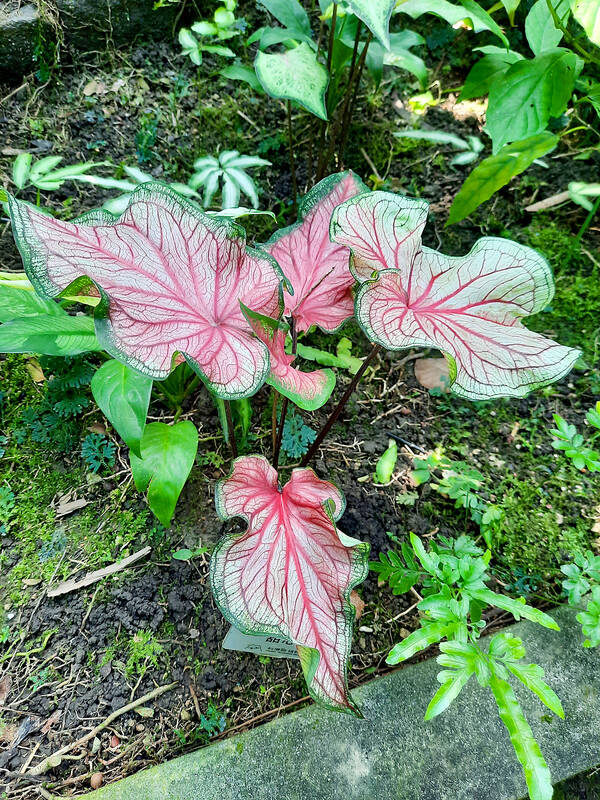
Photo: Steven Crook
Water pumped upward close to the ceiling comes down as a waterfall-like spray, creating a mini-rainbow when the sun shines through the glass. This feeds a little creek that then flows out of the greenhouse.
In the greenhouse’s basement there’s a small aquarium with a selection of piranhas, freshwater stingrays and other tropical fish. Some very colorful amphibians are also on display.
The Tropical Rainforest Greenhouse is open 9am to 5pm Tuesday to Sunday. General admission is NT$20; students pay half that. The outdoor section of the botanical garden is open around the clock and can be visited for free.
Photo: Steven Crook
Photo: Steven Crook
Photo: Steven Crook

Michael slides a sequin glove over the pop star’s tarnished legacy, shrouding Michael Jackson’s complications with a conventional biopic that, if you cover your ears, sounds great. Antoine Fuqua’s movie is sanctioned by Jackson’s estate and its producers include the estate’s executors. So it is, by its nature, a narrow, authorized perspective on Jackson. The film ends before the flood of allegations of sexual abuse of children, or Jackson’s own acknowledgment of sleeping alongside kids. Jackson and his estate have long maintained his innocence. In his only criminal trial, in 2005, Jackson was acquitted. Michael doesn’t even subtly nod to these facts.

The March/April volume of Foreign Affairs, long a purveyor of pro-China pablum, offered up another irksome Beijing-speak on the issues and solutions for the problems vexing the People’s Republic of China (PRC) and the US: “America and China at the Edge of Ruin: A Last Chance to Step Back From the Brink” rang the provocative title, by David M. Lampton and Wang Jisi (王緝思). If one ever wants to describe what went wrong with US-PRC relations, the career of Wang Jisi is a good place to start. Wang has extensive experience in the US and the West. He was a visiting

The January 2028 presidential election is already stirring to life. In seven or eight months, the primary season will kick into high gear following this November’s local elections. By this point next year, we will likely know the Democratic Progressive Party (DPP) candidate and whether the Taiwan People’s Party (TPP) will be fielding a candidate. Also around this time, the Chinese Nationalist Party (KMT) will either have already completed their primary, or it will be heading into the final stretch. By next summer, the presidential race will be in high gear. The big question is who will be the KMT’s

One of the challenges with the sheer availability of food in today’s world is that lots of us end up spending many of our waking hours eating. Whether it’s full meals, snacks or desserts, scientists have found that it’s not uncommon for us to be mindlessly grazing at some point during all of our 16 or so waking hours. The problem? As soon as this food hits the bloodstream in the form of glucose, it initiates the release of the hormone insulin. This in turn activates a switch present in every one of our cells, which is responsible for driving cell


 RSS
RSS