


Long a bastion for cheap, fast-fashion manufacturing, a new crop of designers are trying to transform the Made in Vietnam label and save the country’s rich ethnic heritage in the process.
In the remote hills of Cao Bang, some 300km north of the capital Hanoi, Vietnamese designer Thao Vu is gleefully dropping swaths of hand-spun cotton into a large bucket of fermented indigo leaves.
Her label, Kilomet 109, is at the forefront of Vietnam’s new ‘ethical fashion’ movement — an approach to design that seeks to maximize benefit to communities while minimizing environmental harm.

Photo: Reuters/Issei Kato
The 38-year-old designer has been tapping into this growing global trend by working with some of Vietnam’s 54 ethnic minority groups, each of which have their own unique textiles and traditional clothing designs.
“I learn the techniques from them,” Thao told AFP, explaining how she has drawn inspiration from Nung women in Phuc Sec village, who use natural dyes and weave on hand looms. She then adds “a more modern, contemporary touch” to style garments that will appeal to clients in fashion capitals like Berlin and New York.
But bridging this divide isn’t always easy.
Thao said the Nung women were shocked when she suggested experimenting with colors outside of their traditional dark indigo shade.
“They looked at me like ‘what’? And they said: ‘if you lived here you wouldn’t find a husband,’” Thao told AFP, explaining that crafting the perfect dark indigo fabric dye is a prerequisite for marriage in their community.
Thao persevered, and now uses traditional roots and leaves to color organic silk, cotton, and hemp, which are also manufactured from scratch, in a range of hues from deep indigo to pale grey, and earthy oranges and browns.
RETURNING TO THE ROOTS
Vietnam has in recent decades become a hub for massive garment factories that churn out reams of cheap clothes as quickly as possible for fashion giants like Zara, Mango and H&M.
The multi-billion dollar sector has helped drive impressive economic growth but also drawn criticism for weak environmental and labor rights regulations. Yet products made by the country’s traditional fabric spinners are inherently eco friendly — made with natural dyes and textiles, not harsh chemicals or synthetic fibers. And there is not a sweat shop in sight.
“At first, I just wanted to keep the traditional techniques alive... but then I realized we need to be concerned about the environmental, ethical side (of fashion) now or it will be too late,” said Thao.
The designer has already attracted accolades, winning international design awards and selling her wares to high-fashion buyers.
The local women who work with her, such as Luong Thi Kim, 40, say they too have benefited from the collaboration.
“Before I weaved for personal use but now ... our weaving products can go to other countries. I want to earn money to raise my children,” Kim told AFP.
Over in central Hue — the former imperial capital of Vietnam — another label is also helping local artisans market their skills to the global fashion industry.
Fashion4Freedom founder LanVy Nguyen, a former refugee who fled post-war Vietnam in a wooden boat and forged a successful Wall Street career, returned to Vietnam in 1998 and decided to use her venture capital acumen to save ancient artisanal techniques.
“We knew these people had generations of skill, we just had to unlock it so the market could appreciate it as we did,” LanVy told AFP.
Fashion4Freedom stepped in to help, teaching traditional woodworkers, who carve ornate pillars in pagodas or local houses, to learn how to make platform shoes that cost some $600 a pair.
Do Quang Thanh, a carpenter, said the idea of making shoes initially struck him as “strange” but he is glad he gave it a try.
“In the past I carved traditional wooden houses now I carve shoes in a modern style -- I love the job,” he said.
KEEN FOREIGN BUYERS
Jimmy Lepore Hagen, vice president of strategy for high-end US clothing line Nanette Lapore, said he’s considering a collaboration with Fashion4Freedom, which also sells luxury jewelry and apparel.
“Taking a brand’s idea (and) design aesthetic, and matching that with people who have an incredible culture and history and are trying to build something new and exciting for US market is a real opportunity,” he added.
The head of Vietnam’s handicraft export association, Le Ba Ngoc, sees linking Vietnamese artisans with overseas fashion designers as a chance to embrace more sophisticated designs — what he says is the weak link in the handicraft chain. “It’s the major factor holding back foreign and domestic sales,” he told AFP. Ensuring consistent quality is also a problem. But his organization is trying to work with ethnic groups to find ways to modernize their techniques — such as developing an Indigo powder dye — while still remaining true to their style.
Ajay Verma, a consultant gastroenterologist at Kettering general hospital in Northamptonshire, says our gut is a “complex machine.” “It is constantly providing us with the nutrition we need, initially to grow and develop, and then for us to survive, thrive and repair from injury and illness.” How can we keep it functioning well? Put simply: “Make sure what you put into it is balanced, and that you clear out its waste products adequately,” Verma says. “In a general gastroenterology clinic, the most common conditions we see are irritable bowel syndrome (IBS), gastroesophageal reflux disease, inflammatory bowel disease and constipation,” says Nisha

And so, in the wake of US President Donald Trump’s trip to the People’s Republic of China (PRC), all the experts on the Strait of Hormuz suddenly became experts on US-China-Taiwan relations. The Internet has certainly expanded human knowledge. Lots of these sudden experts made noise this week about Trump’s words after the meeting with PRC dictator Xi Jin-ping (習近平). Trump is going to sell out Taiwan! Longtime Taiwan commentator J. Michael Cole summed the situation up neatly in the Guardian: “We need to keep in mind that he has a tendency to say many things — sometimes contradicting himself within

Last week US President Donald Trump was asked by a reporter whether he would speak on the phone to the President of Taiwan. “l’ll speak to him. I speak to everybody. We have that situation very well in hand,” Trump said. This marked the second time in a couple of weeks he had said he would talk to the President of Taiwan. In 2016 he famously took a call from then-president Tsai Ing-wen (蔡英文), when he was president-elect. Despite warnings that the apocalypse was nigh because of a phone call, the world quickly forgot about the conversation between two democratically-elected presidents.
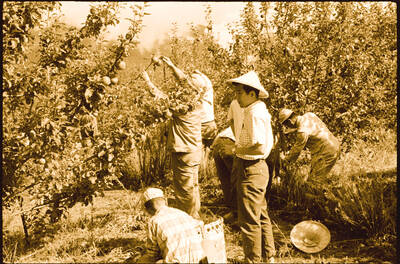
May 25 to May 31 Few believed that apples could be cultivated on a commercial scale in Taiwan’s high mountains. When horticulturalist Cheng Chao-hsiung (程兆熊) first proposed the idea in 1955, both American and Taiwanese colleagues dismissed it as implausible, arguing that temperate fruit could not be reliably grown on a subtropical island, especially on rugged terrain. However, it was this terrain in the Central Mountain Range where many Chinese Civil War veterans were resettled in the late 1950s. With limited job prospects and no family in Taiwan, they were placed on cooperative farms aimed toward self-sufficiency. Some say the conditions


 RSS
RSS