


The annual Dumbo Arts Festival by the Hudson River in Brooklyn, New York attracts tens of thousands of eager art enthusiasts each year. So it is no small feat for young Taiwanese artist Feng Yu-ting (馮鈺婷) to have her art installation showcased during the three-day long event.
An interactive poetry installation, Deer Dear is designed to function as a solution to help cure writer’s block. Participants sit at a desk with a wooden typewriter and answer a series of mad libs-style questions prompted by a gentleman in a deer mask seen in an overhead projector. Upon completion, the typewriter churns out a receipt with a completed poem printed on it. The receipt also serves as a quirky festival souvenir.
Unsurprisingly, a good majority of the poems end up being silly and nonsensical rather than profound masterpieces. The goal of the installation however, is to encourage participants to think outside of the box, demonstrating that inspiration for brilliant ideas can come from the most unexpected circumstances.
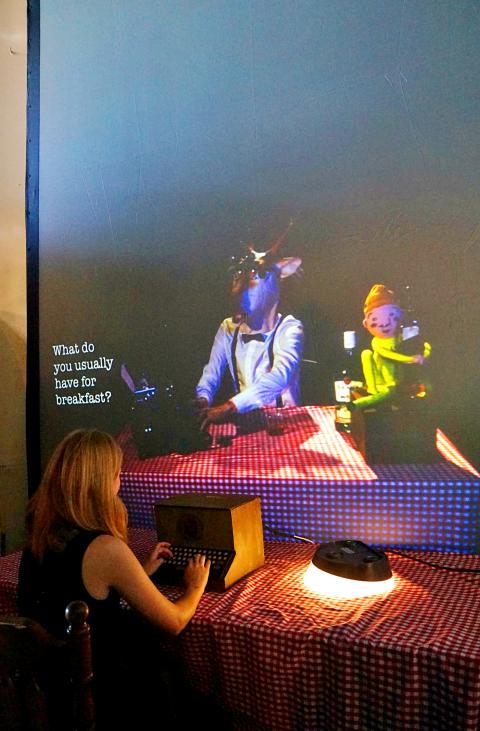
Photo: Dana Ter
GIRL BEHIND THE MASK
A common theme in Feng’s artwork is bridging communication. Although the deer mask may appear comical, it is also symbolic.
“I never wore masks in Taiwan, but when I moved to New York for graduate school, I started to wear a mask whenever I did performance art,” Feng tells the Taipei Times.
When friends and viewers questioned her about the significance of the mask, Feng admitted that it was a way to conceal her identity.
“The mask hides my race and I wore it so I wouldn’t have to speak in English,” says Feng.
In Toaster Bunny for instance, Feng wears a rabbit mask while performing a humorous dance depicting the mundane and repetitive nature of everyday tasks like waking up, toasting bread and going to work.
The Dumbo Arts Festival brought Feng out of her comfort zone — this time, it was her friend who wore the deer mask seen in the overhead projector. Far from being shy, Feng was extremely chatty with participants who were mostly 20-something hipsters interested in taking Instagram-worthy photos with a “vintage” typewriter and a deer.
Although the installation might appear fun and light-hearted for participants, it holds deeper meaning for Feng.
“The idea for Dear Deer started with my foreigner’s point of view,” Feng says. “Whenever I want to write something fancy, my language barrier leaves me stuck at ‘Dear’.”
The installation was created as part of a project for Feng’s poetry writing class at New York University. It first debuted in Grand Central Station in April before it was selected as one of the exhibits for the Dumbo Arts Festival.
Throughout the process, Feng was surprised to learn that a lot of her American peers also struggled with writer’s block. That was when she chose to shed her deer mask and started interacting with viewers.
“Dear Deer is about saying, I can help you tell your story,” Feng said. “You just need to feel and capture the moment.”
SOCIAL EXPERIMENT
Although technically an art installation, Dear Deer ended up being a social experiment. Feng said she learned about human nature from reading people’s word choices.
“You can observe how people use language to join a community,” she says.
Often times, similarities or differences in word choices could be explained by particular social groups or demographics that individuals belonged to.
Most participants responded to a question about their favorite childhood pastime with something along the lines of “dancing,” “drawing” or “reading.” Younger children however, replied with “watching Netflix.”
The responses of children were by far the most down-to-earth and interesting. When asked about how they prepare their breakfast, they typed “mom prepares it for me.” Millennials on the other hand said they didn’t have time to eat breakfast.
The question “what’s your favorite part of your body” put adult participants on the spot and made them feel self-conscious. A lot of them laughed nervously and hesitated to type their answers in front of a large audience. Children however, simply yelled out to their parents for help.
“It makes me feel like I am doing social research with an art project,” Feng said.
The varying responses from people of different age groups compelled Feng to consider other variables.
“What kind of poem would people generate if the installation took place in a different location than New York? I am curious about that and will include Taiwan at one point,” she says.
By prompting people to say the first thing that comes to mind, Deer Dear brings us back to a state of child-like simplicity. It reminds us that inspiration for artistic pursuits often arises from these raw and honest emotions.


The US war on Iran has illuminated the deep interdependence of Asia on flows of oil and related items as raw materials that become the basis of modern human civilization. Australians and New Zealanders had a wake up call. The crisis also emphasizes how the Philippines is a swatch of islands linked by jet fuel. These revelations have deep implications for an invasion of Taiwan. Much of the commentary on the Taiwan scenario has looked at the disruptions to world trade, which will be in the trillions. However, the Iran war offers additional specific lessons for a Taiwan scenario. An insightful
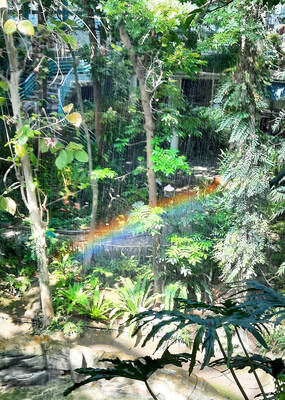
It’s only half the size of its more famous counterpart in Taipei, but the Botanical Garden of the National Museum of Nature Science (NMNS, 國立自然科學博物館植物園) is surely one of urban Taiwan’s most inviting green spaces. Covering 4.5 hectares immediately northeast of the government-run museum in Taichung’s North District (北區), the garden features more than 700 plant species, many of which are labeled in Chinese but not in English. Since its establishment in 1999, the site’s managers have done their best to replicate a number of native ecosystems, dividing the site into eight areas. The name of the Coral Atoll Zone might
Polling data often confirms what we expect, but sometimes it throws up surprises. When examined over time, some patterns appear that speak to something bigger going on. In this column, whenever possible, Formosa’s polls are used. Despite the sometimes cringeworthy antics of Formosa’s Chairman, Wu Tzu-Chia (吳子嘉), the data produced includes detailed breakdowns crucial for analysis. It has also been conducted monthly 11-12 times a year for many years with many of the same questions, allowing for analysis over time. When big shifts do occur between one month and the next it is usually in response to some event in
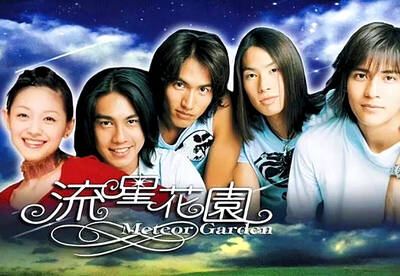
April 6 to April 13 Few expected a Japanese manga adaptation featuring four tall, long-haired heartthrobs and a plucky heroine to transform Taiwan’s television industry. But Meteor Garden (流星花園) took the nation by storm after premiering on April 12, 2001, single-handedly creating the “idol drama” (偶像劇) craze that captivated young viewers across Asia. The show was so successful that Japan produced its own remake in 2005, followed by South Korea, China and Thailand. Other channels quickly followed suit, with more than 50 such shows appearing over the following two years. Departing from the melodramatic


 RSS
RSS