


Every weekend, hordes of people make their way up from Taipei and farther parts of the country to take in the wonders of Yehliu (野柳) and Fulong Beach (福隆海灘). The northern coast’s dramatic scenery, which features beaches, bizarre rock formations and latticed rocky platforms that stretch out to sea, is nothing short of spectacular. About midway between the two destinations on Provincial Highway No. 2 lies one of the nicest yet often overlooked places in the region: Bitou Cape (鼻頭角).
Bitou Cape is an immensely varied strip of land that edges out into the sea at Taiwan’s northeastern corner. There are extraordinary coastal views, a rich diversity of plants and animals, rock formations that would make a geologist go weak at the knees, and a pleasant, well-maintained hiking path from which to take it all in.
The Bitou Cape Trail (鼻頭角步道) begins just a few minutes’ walk south of the sleepy fishing town of Bitou; English and Chinese signs along the roadside point the way to the trailhead. The path skirts Bitou Elementary School (鼻頭國小) before winding its way through a dense mangrove forest. The area is crawling with wildlife, and you should easily spot several species of brightly colored butterflies, dragonflies and lizards. If you’re quiet and fortunate enough, you might also glimpse a squirrel or two scampering through the undergrowth.
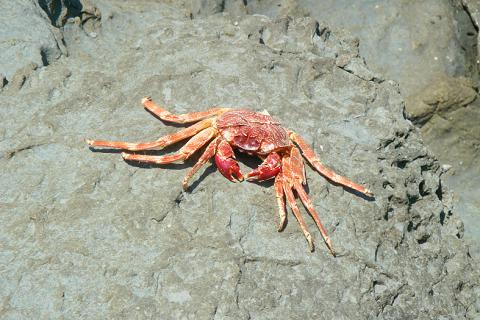
Photo: Andrew Crosthwaite
When you emerge into the open, you’re met with an invigorating blast of cool, salty sea air. And then there is the view. The cliffs at Bitou have borne the full brunt of the Pacific Ocean’s winds and waves, and are suitably rugged as a result. The hiking trail, which winds its way along the length of the cape, affords incredible views of steep rock faces that stand like sentinels against the mighty power of the sea. Toward the end of the trail, the path separates, and the lower route leads to Bitou’s picturesque lighthouse. The other path takes you to the end of the trail, where the land falls away in front and on either side of you. With 270 degrees of glorious sea to look at, you might have a difficult time turning around to head back down the path.
Another of Bitou’s features is the wide, wave-cut platform that lies at the base of the cliffs. The scoured and grooved surface of this massive, rocky terrace bears witness to the centuries of erosion that created it. There are many different minerals and types of rock in the area, and since some of them are much weaker than others, the weathering process has left its mark in a series of seemingly preternatural formations. Two of the most common are honeycomb rocks, with their many dimples and holes, and mushroom rocks, which have tops much larger than their bases.
Some people who visit Bitou prefer not to veer too far from the main hiking trail, but you should take the time to head down to the platform. The flights of stairs that take you there are not very long, and while it might not be safe to stand by the water’s edge, there’s no need to walk out that far. Even if you stay away from the sea end of the platform, it’s a great place to view marine life. The endless rock pools give shelter to a number of crab, shrimp and fish.
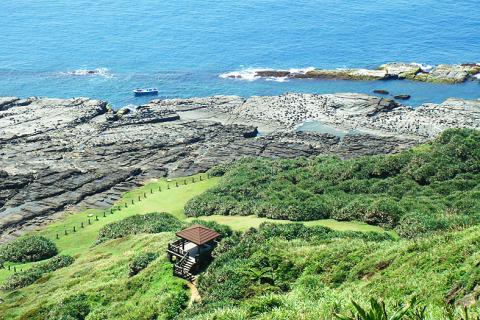
Photo: Andrew Crosthwaite
The Bitou Cape hiking trail isn’t especially long — just a few kilometers — and it’s well equipped with toilet blocks and rest stops, but it is still very exposed. If you come, especially if you’re with children, make sure you carry sunscreen, hats and plenty of water.
If you’re in need of cooling down after you’ve finished your hike, try the Bitou and Longdong Bay Geology Park (鼻頭龍洞地質公園). It’s about 500m south of the trailhead and has a marine swimming pool that is open to the sea except for a few large rocky outcrops jutting out of the water. There are lifeguards on duty, a smaller children’s play pool and plenty of space to lie back and soak up the sun. If you feel hungry, try the cafe in the park or head back to Bitou for some freshly caught seafood at one of the inexpensive restaurants next to the sea. The town’s harbor is always pretty, but if you happen to see it filled with blue and white fishing vessels, you should count yourself lucky because this is when it’s at its most charming.
Bitou proves the old saying that good things come in small packages. I can’t think of many better places to spend a day by the sea.
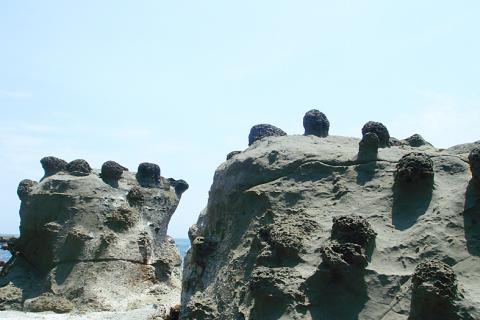
Photo: Andrew Crosthwaite
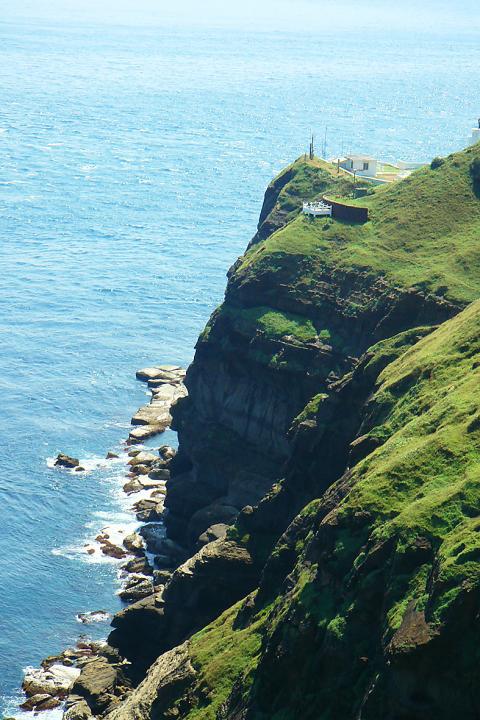
Photo: Andrew Crosthwaite
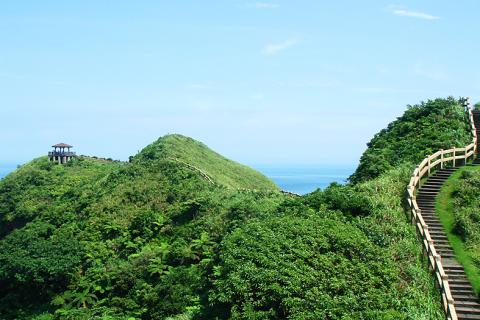
Photo: Andrew Crosthwaite
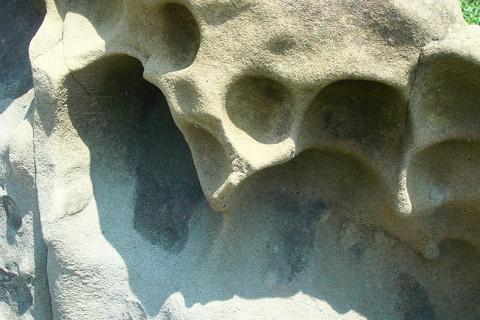
Photo: Andrew Crosthwaite
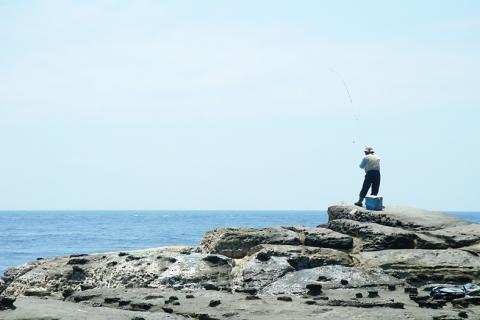
Photo: Andrew Crosthwaite
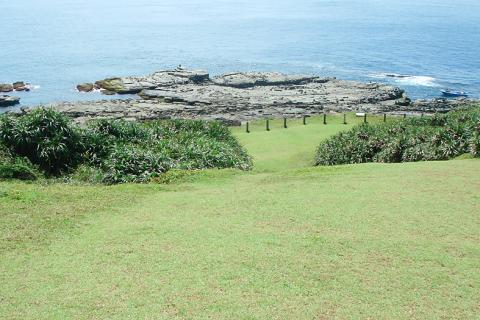
Photo: Andrew Crosthwaite
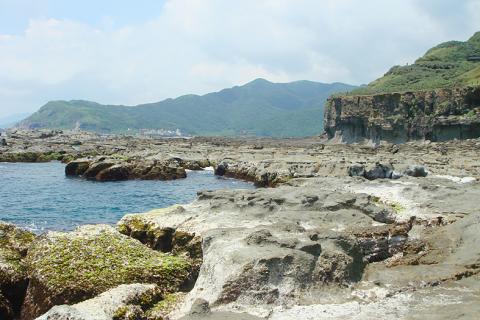
Photo: Andrew Crosthwaite

This is the year that the demographic crisis will begin to impact people’s lives. This will create pressures on treatment and hiring of foreigners. Regardless of whatever technological breakthroughs happen, the real value will come from digesting and productively applying existing technologies in new and creative ways. INTRODUCING BASIC SERVICES BREAKDOWNS At some point soon, we will begin to witness a breakdown in basic services. Initially, it will be limited and sporadic, but the frequency and newsworthiness of the incidents will only continue to accelerate dramatically in the coming years. Here in central Taiwan, many basic services are severely understaffed, and

It is a soulful folk song, filled with feeling and history: A love-stricken young man tells God about his hopes and dreams of happiness. Generations of Uighurs, the Turkic ethnic minority in China’s Xinjiang region, have played it at parties and weddings. But today, if they download it, play it or share it online, they risk ending up in prison. Besh pede, a popular Uighur folk ballad, is among dozens of Uighur-language songs that have been deemed “problematic” by Xinjiang authorities, according to a recording of a meeting held by police and other local officials in the historic city of Kashgar in
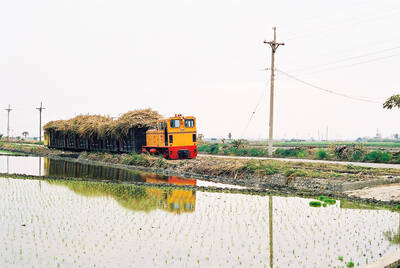
Jan. 5 to Jan. 11 Of the more than 3,000km of sugar railway that once criss-crossed central and southern Taiwan, just 16.1km remain in operation today. By the time Dafydd Fell began photographing the network in earnest in 1994, it was already well past its heyday. The system had been significantly cut back, leaving behind abandoned stations, rusting rolling stock and crumbling facilities. This reduction continued during the five years of his documentation, adding urgency to his task. As passenger services had already ceased by then, Fell had to wait for the sugarcane harvest season each year, which typically ran from

The People’s Republic of China (PRC) was out in force in the Taiwan Strait this week, threatening Taiwan with live-fire exercises, aircraft incursions and tedious claims to ownership. The reaction to the PRC’s blockade and decapitation strike exercises offer numerous lessons, if only we are willing to be taught. Reading the commentary on PRC behavior is like reading Bible interpretation across a range of Christian denominations: the text is recast to mean what the interpreter wants it to mean. Many PRC believers contended that the drills, obviously scheduled in advance, were aimed at the recent arms offer to Taiwan by the


 RSS
RSS