


In Asia he is known as the “Bruce Lee of comedy” but it wasn’t until this week that Hong Kong’s Michael Hui (許冠文) realized his brand of humor could have universal appeal.
Mixing slapstick with often savage social commentary, the 68-year-old Hui has written, acted in and directed a string of box office hits across the region since the 1970s while his regular stand up shows in Hong Kong sell out within minutes of tickets going on sale.
Such is his popularity that Hui has been commandeered by the Hong Kong government to join the election committee that chooses the city’s chief executive while he also sits on China’s National People’s Congress — a rare honor for man who makes a living out of poking fun at society.
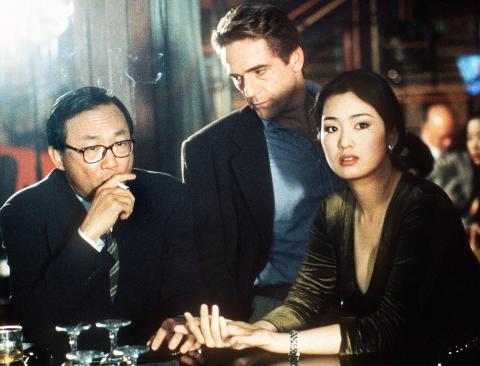
Photo: AFP
While the veteran has been happy thus far to ply his trade mostly at home, a trip to the 13th Far East Film Festival in the northern Italian town of Udine this week — where Hui is being honored with a lifetime achievement award — has opened his eyes to the possibilities of spreading the cheer.
And, he says, the timing could not be better.
“This is the first time in my life I have realized that comedy has no boundaries,” said Hui on the fringes of the 10-day festival.
“Just as long as the audience is human, if you listen we all make that same sound — ‘ha, ha, ha.’”
Although Hui has not made a film since Rob-B-Hood alongside Jackie Chan (成龍) in 2006, he says he has been inspired now by recent happenings both at home and abroad to start writing again.
“People in Hong Kong are now daring to speak up,” he says. “They will demonstrate against anything. This is the mood all over the world.
“For my comedy I look at the people around me and I look at their weaknesses and then I put those weaknesses into my character on screen so people can identify with them,” says Hui. “I have really thought it is time to do that again, given the mood in the world. It has become less easy to laugh. We have to ask why.”
Hui began his career in comedy after first wanting to be a “serious intellectual, a politician or president.” But friends in the Hong Kong entertainment industry had other ideas.
“They said to me: ‘You look funny,’” says Hui. “That’s how it all started.”
After hosting a number of TV specials, Hui was lured into cinema — often drawing on the talents of his brothers Ricky and Sam — and formed a successful relationship with the massive Shaw Brothers studio during its golden era of the 1970s.
Films such as Games Gamblers Play (鬼馬雙星) (1974) and Chicken and Duck Talk (雞同鴨講) (1998) found an audience not only in Hong Kong but across Asia, especially in Japan where Hui became known as “Mr Boo,” or the character that fans loved to hate.
He also had a brief flirtation with Hollywood, picking up a small part in Burt Reynolds’ box office smash Cannonball Run in 1981. There were offers for more work overseas but Hui chose to stay close to home.
“I look at my comedy as though I am cooking a dish for my family, for Hong Kong,” says Hui. “To find here this week that Italians find my food delicious is very nice.
“With the Chinese film industry rising, Hong Kong’s traditional market is shrinking and what I think Hong Kong filmmakers now have to do is not lose the true color of our own culture but try to find the recipe so that everyone can enjoy it — China, Italy, everywhere.
“I think if I keep cooking with the right ingredients — chicken and pork — and not ... scorpions or snake, everything will be all right.”
The Hui-produced The Private Eyes (半斤八兩) (1976) is acknowledged as the first film to explore the comic possibilities of kung fu — a rich vein of humor most famously tapped by the internationally acclaimed Chan and since followed by filmmakers from Hong Kong to Hollywood.
“I just thought kung fu always took itself too seriously,” says Hui. “All those people being killed. It’s a little bit silly when you step back from it. So I decided to make it funny so people could see you don’t have to always take things so seriously.”
For noted film scholar Roger Garcia, who programmed the Tribute to Michael Hui retrospective in Udine, the filmmaker’s influence on Asian cinema is unmistakable.
“I think Michael really helped to put Hong Kong comedy on the map in the modern world,” he says. “He also unleashed the comedy potential — both in kung fu films and in common-man drama — of modern Hong Kong.”
On reflection, Hui says his role in life has always been simple.
“I don’t want to tell people the world is sad — everybody knows that already,” says Hui. “I’d rather look at the world and say, it’s sad — but not completely. I would like to be remembered as a comedian who found comedy in anything.


The US war on Iran has illuminated the deep interdependence of Asia on flows of oil and related items as raw materials that become the basis of modern human civilization. Australians and New Zealanders had a wake up call. The crisis also emphasizes how the Philippines is a swatch of islands linked by jet fuel. These revelations have deep implications for an invasion of Taiwan. Much of the commentary on the Taiwan scenario has looked at the disruptions to world trade, which will be in the trillions. However, the Iran war offers additional specific lessons for a Taiwan scenario. An insightful
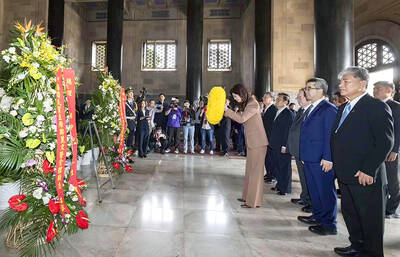
The problem with Marx’s famous remark that history repeats itself, first as tragedy, the second time as farce, is that the first time is usually farce as well. This week Chinese Nationalist Party (KMT) Chair Cheng Li-wun (鄭麗文) made a pilgrimage to the People’s Republic of China (PRC) “to confer, converse and otherwise hob-nob” with Chinese Communist Party (CCP) officials. The visit was an instant international media hit, with major media reporting almost entirely shorn of context. “Taiwan’s main opposition leader landed in China Tuesday for a rare visit aimed at cross-strait ‘peace’”, crowed Agence-France Presse (AFP) from Shanghai. Rare!

Polling data often confirms what we expect, but sometimes it throws up surprises. When examined over time, some patterns appear that speak to something bigger going on. In this column, whenever possible, Formosa’s polls are used. Despite the sometimes cringeworthy antics of Formosa’s Chairman, Wu Tzu-Chia (吳子嘉), the data produced includes detailed breakdowns crucial for analysis. It has also been conducted monthly 11-12 times a year for many years with many of the same questions, allowing for analysis over time. When big shifts do occur between one month and the next it is usually in response to some event in
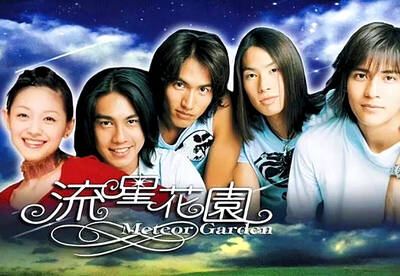
April 6 to April 13 Few expected a Japanese manga adaptation featuring four tall, long-haired heartthrobs and a plucky heroine to transform Taiwan’s television industry. But Meteor Garden (流星花園) took the nation by storm after premiering on April 12, 2001, single-handedly creating the “idol drama” (偶像劇) craze that captivated young viewers across Asia. The show was so successful that Japan produced its own remake in 2005, followed by South Korea, China and Thailand. Other channels quickly followed suit, with more than 50 such shows appearing over the following two years. Departing from the melodramatic


 RSS
RSS