


Not far from the Bund district in Shanghai, with its hordes of tourists and view of the city’s famous skyscrapers across the Huangpu River, is a quiet neighborhood called Hongkou.
Walk here along Zhoushan Road and you’ll stumble on a sign that signifies an otherwise unremarkable building at No. 59 as a landmark.
“During the World War II,” the sign reads in imperfect English, “a number of Jewish refugees lived in this house, among whom is Michael Blumenthal, the US Secretary of the Treasury of the Carter Government.”
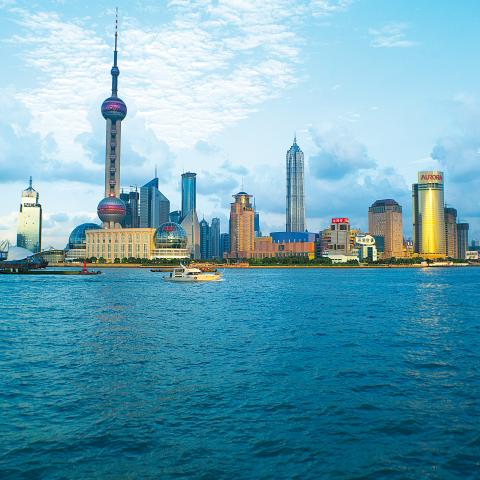
Photo: Taipei Times
The marker offers a clue to the hidden Jewish history of Shanghai and the incredible story of thousands of Jews who fled the Nazis and found refuge here in what was the Far East’s only Jewish ghetto.
Among them was Blumenthal, who fled Europe with his family, spent part of his youth in Shanghai, then moved to the US and served in the late 1970s under former US president Jimmy Carter.
The best way to learn about this unusual slice of Jewish and Shanghai history is on a tour with an Israeli expat named Dvir Bar-Gal. But be warned: This is no superficial glance at the highlights; this is a five-hour, US$60 mini-course with Bar-Gal as professor. With his encyclopedic knowledge and intense passion, he brings to life a vanished world, attracting visitors from every continent, many of them descended from the Jews who only survived World War II because they found refuge in Shanghai.
“No other place in the whole world saved so many Jewish lives,” Bar-Gal said, adding that “there is no anti-Semitism in China.”
Bar-Gal begins the tour on the bustling Bund, explaining how Jewish merchants from Baghdad helped build Nanjing Road into the neighborhood’s commercial center in the 19th century. The landmark Peace Hotel, now owned by the Fairmont chain, was built in the 1920s by Victor Sassoon, part of a famous and wealthy Sephardic Jewish family.
Among the community’s rags-to-riches tales was that of Silas Hardoon, who started as a night watchman for the Sassoons and became a powerful real estate developer, helping to turn Nanjing Road into the “Fifth Avenue of China” in the early 20th century.
“Eventually he became the richest Jew in Asia, the real estate king of Shanghai,” Bar-Gal said.
The Kadoorie family, which founded the China Light & Power Company and today owns the Peninsula Hotel Group, is also descended from Sephardic Jews who got their start with the Sassoons.
A second layer was added to Shanghai’s Jewish community when several thousand Jews fleeing persecution in Czarist Russia arrived here at the turn of the 20th century. Many settled in Shanghai’s French Concession district and opened small businesses.
The third layer of Shanghai’s Jews consisted of European refugees fleeing the Nazis in the 1930s. Walking past small shops and tenements in Hongkou today, past street vendors and bicyclists, all of them Chinese, Bar-Gal said: “Imagine here a deli, a bakery, a grocery, a restaurant, a pharmacy,” run by Jews trying to recreate familiar rhythms of European life in their new city.
So many of the residents were Austrian that the area was known as Little Vienna. A Chinese diplomat who worked in Austria during World War II, He Fengshan (何鳳山), is part of the story. Defying orders from his superiors, He issued lifesaving visas that allowed Jews to leave, most of them traveling by boat from Italy to Shanghai.
“Everyone else rejected them,” Bar-Gal said, referring to the limits other countries — including the US — placed on admitting Jewish refugees. “In the late 1930s, Shanghai was the only option.”
Shanghai was open to Jewish arrivals despite the fact that the city was under control of the Japanese, who were Nazi allies. A Japanese diplomat in Lithuania, Chiune Sugihara, also issued thousands of visas that allowed Jews to escape Europe for Japan or China.
But eventually Japanese officials forced all “stateless” people living in Shanghai to move to Hongkou, and turned it into a ghetto.
Some 20,000 Jews were crammed into the neighborhood, living as many as 30 to a room, Bar-Gal said. Disease and starvation were rampant, though the Jews tried to help themselves by setting up clinics, soup kitchens, schools and shelters.
“Where we walk today, we are in the heart of the ghetto,” Bar-Gal said.
A stone monument in Huoshan Park, a peaceful place with trees and benches, offers a description of the neighborhood in Chinese, Hebrew and English as a “designated area for stateless refugees” bordered by Gongping, Tongbei, Huimin and Zhoujiazui roads. But many buildings that once housed the refugees have been torn down, and more are slated for demolition.
Bar-Gal’s tour also stops at the Shanghai Jewish Refugees Museum and Ohel Moshe synagogue, where artifacts like passports, photos and a newspaper produced by the refugees are on display. The tour ends inside a tiny, dark apartment that once housed Jews and is now inhabited by several Chinese families. Here Bar-Gal, who is writing a book, describes another of his projects — an effort to find “the lost Jewish cemeteries of Shanghai” and create a memorial. He has found tombstones from the destroyed graveyards in towns and villages, in one case being used as a washboard.
His tour attracts visitors from around the world — Europe, Australia, North and South America — many of whom had family members living in Shanghai during the war. “They talked about the poverty, the starvation, the sickness,” said Chaya Medalie of Johannesburg, South Africa, who took Bar-Gal’s tour last year. “When you stand in it, you see it from a different perspective. It’s unbelievable.”
IF YOU GO
■ Shanghai Tour of Jewish History: www.shanghai-jews.com.
■ Four to five hours, usually starting at 9:30am, US$61 (400 yuan), offered daily depending on demand
■ Shanghai Jewish Refugees Museum (上海猶太難民紀念館): 62 Changyang Road, Shanghai City (上海市長陽路62號); open daily 9am-5pm. Adults, US$7.60. Admission to the museum and the Ohel Moshe synagogue onsite is included in Bar-Gal’s tour
■ Huoshan Park (霍山公園): Located in the Hongkou neighborhood of Shanghai, on Huoshan Road. Stone monument commemorates the area’s history as a Jewish ghetto for refugees fleeing the Nazis in Europe during World War II

This is the year that the demographic crisis will begin to impact people’s lives. This will create pressures on treatment and hiring of foreigners. Regardless of whatever technological breakthroughs happen, the real value will come from digesting and productively applying existing technologies in new and creative ways. INTRODUCING BASIC SERVICES BREAKDOWNS At some point soon, we will begin to witness a breakdown in basic services. Initially, it will be limited and sporadic, but the frequency and newsworthiness of the incidents will only continue to accelerate dramatically in the coming years. Here in central Taiwan, many basic services are severely understaffed, and
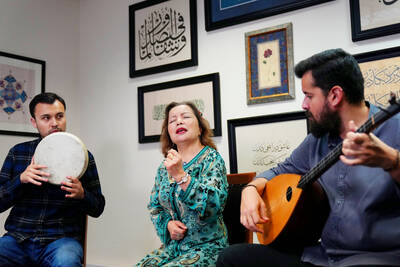
It is a soulful folk song, filled with feeling and history: A love-stricken young man tells God about his hopes and dreams of happiness. Generations of Uighurs, the Turkic ethnic minority in China’s Xinjiang region, have played it at parties and weddings. But today, if they download it, play it or share it online, they risk ending up in prison. Besh pede, a popular Uighur folk ballad, is among dozens of Uighur-language songs that have been deemed “problematic” by Xinjiang authorities, according to a recording of a meeting held by police and other local officials in the historic city of Kashgar in
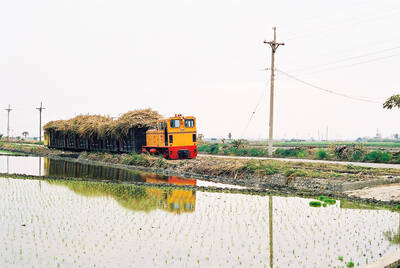
Jan. 5 to Jan. 11 Of the more than 3,000km of sugar railway that once criss-crossed central and southern Taiwan, just 16.1km remain in operation today. By the time Dafydd Fell began photographing the network in earnest in 1994, it was already well past its heyday. The system had been significantly cut back, leaving behind abandoned stations, rusting rolling stock and crumbling facilities. This reduction continued during the five years of his documentation, adding urgency to his task. As passenger services had already ceased by then, Fell had to wait for the sugarcane harvest season each year, which typically ran from

The People’s Republic of China (PRC) was out in force in the Taiwan Strait this week, threatening Taiwan with live-fire exercises, aircraft incursions and tedious claims to ownership. The reaction to the PRC’s blockade and decapitation strike exercises offer numerous lessons, if only we are willing to be taught. Reading the commentary on PRC behavior is like reading Bible interpretation across a range of Christian denominations: the text is recast to mean what the interpreter wants it to mean. Many PRC believers contended that the drills, obviously scheduled in advance, were aimed at the recent arms offer to Taiwan by the


 RSS
RSS