


Got Threads has plenty of just that — clothing and accessories — but it sets itself apart from neighboring boutiques in the East District (東區) with its green philosophy. The six-month-old store sells a mixture of new and secondhand clothing and doubles as a space for clothing swap parties.
Owner Viona Seshadri (葉家瑋) was inspired by Buffalo Exchange, a US chain that sells secondhand clothing bought directly from its customers. She worked part-time at its Austin, Texas, location while a university student and then as a full-time buyer for two years in Seattle.
The nearly three years she spent working for Buffalo Exchange was a learning experience, says Seshadri. Not only did she become familiar with vintage clothing, but she also caught up on American pop culture.
“Before then, I didn’t know about Kurt Cobain because I didn’t grow up in the US, but when I was a buyer for Buffalo Exchange I saw Nirvana T-shirts,” says Seshadri. “It was a lot like when I studied art history and we had to deduce an artist’s background from a painting. I feel like clothing represents culture in the same way.”
Got Thread’s carefully edited selection of merchandise is sourced from vintage and secondhand stores in the US and Japan, as well as clothing brought in by customers here in Taipei and sold on consignment. Seshadri spends half of each year in the US, where her husband lives. On each trip, she invariably makes a stop at the famous Rose Bowl Flea Market in Pasadena, California, waking up at 5am to beat the crowds.
Though Got Threads takes its inspiration from Buffalo Exchange, Seshadri says that Taiwanese consumers look at vintage clothing differently than their American counterparts. In Taiwan, the term “vintage” connotes a certain style (right now, it’s 1980s-inspired clothing), while secondhand stores usually mean consignment boutiques that sell name-brand bags or shops that specialize in imported jeans and T-shirts from the US. “I wanted to do something that would be in the middle,” says Seshadri, adding that she wants to build a type of secondhand clothing store that is unique to Taiwan.
Got Threads’ concept is relatively novel in this country, but the store has built a base of repeat customers and garnered attention from stylists and celebrities since opening last August. Last week, actress and model Jo’elle Lu (陸明君) dropped by with a couple bags filled with clothing.
Since most Taiwanese consumers shy away from copying period looks literally, Seshadri seeks out clothing that combines contemporary lines with vintage flair. Items in the store include a pair of Salvatore Ferragamo loafers from the 1980s for NT$2,980, 1970s dresses found in Japan, and designer jeans by True Religion and J Brand for NT$3,600 to NT$4,500 per pair (a third of their original price).
“We want to encourage customers to use what they wear to express their backgrounds and points of view,” says Seshadri. “You might carry a designer purse, but you could also have on something that you inherited from your grandmother and a jacket from Zara. What results is your own style.”
Seshadri’s own sartorial sensibility embodies this eclecticism. Last Saturday, she had on a mixture of pieces from a vintage clothing store, Buffalo Exchange and a J Brand jeans sample sale. Her favorite magazines include Nylon and Japan’s Fudge, but Seshadri also reads the Taiwanese editions of Vivi and Mina to keep abreast of current trends in this country. The store’s blog, gotthreads.blogspot.com, regularly posts links to style blogs like The Sartorialist (thesartorialist.blogspot.com), Style Rookie (tavi-thenewgirlintown.blogspot.com, by 13-year-old fashionista Tavi Gevinson) and Nubby Twiglet (www.nubbytwiglet.com).
Got Threads also serves as a space for clothing swaps. Parties where people gather to exchange their used clothing, shoes and other items have gained traction in the US thanks to the slumping economy and increasing environmental awareness, but are still rare in Taiwan. The store hosted two shoe swap parties last weekend, and Seshadri plans to have at least one similar event per season.
“We hope we can encourage people to focus on quality over fashion,” she says. “Buy good quality so that it lasts and buy good quality so you can sell it instead of throwing it away.”




The US war on Iran has illuminated the deep interdependence of Asia on flows of oil and related items as raw materials that become the basis of modern human civilization. Australians and New Zealanders had a wake up call. The crisis also emphasizes how the Philippines is a swatch of islands linked by jet fuel. These revelations have deep implications for an invasion of Taiwan. Much of the commentary on the Taiwan scenario has looked at the disruptions to world trade, which will be in the trillions. However, the Iran war offers additional specific lessons for a Taiwan scenario. An insightful
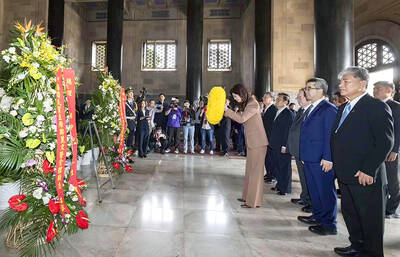
The problem with Marx’s famous remark that history repeats itself, first as tragedy, the second time as farce, is that the first time is usually farce as well. This week Chinese Nationalist Party (KMT) Chair Cheng Li-wun (鄭麗文) made a pilgrimage to the People’s Republic of China (PRC) “to confer, converse and otherwise hob-nob” with Chinese Communist Party (CCP) officials. The visit was an instant international media hit, with major media reporting almost entirely shorn of context. “Taiwan’s main opposition leader landed in China Tuesday for a rare visit aimed at cross-strait ‘peace’”, crowed Agence-France Presse (AFP) from Shanghai. Rare!
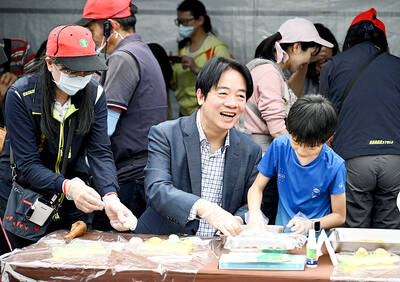
Polling data often confirms what we expect, but sometimes it throws up surprises. When examined over time, some patterns appear that speak to something bigger going on. In this column, whenever possible, Formosa’s polls are used. Despite the sometimes cringeworthy antics of Formosa’s Chairman, Wu Tzu-Chia (吳子嘉), the data produced includes detailed breakdowns crucial for analysis. It has also been conducted monthly 11-12 times a year for many years with many of the same questions, allowing for analysis over time. When big shifts do occur between one month and the next it is usually in response to some event in
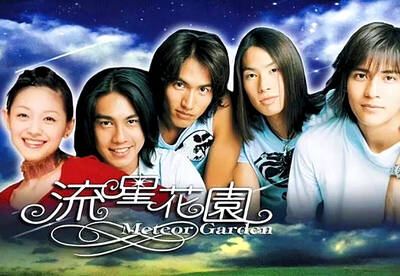
April 6 to April 13 Few expected a Japanese manga adaptation featuring four tall, long-haired heartthrobs and a plucky heroine to transform Taiwan’s television industry. But Meteor Garden (流星花園) took the nation by storm after premiering on April 12, 2001, single-handedly creating the “idol drama” (偶像劇) craze that captivated young viewers across Asia. The show was so successful that Japan produced its own remake in 2005, followed by South Korea, China and Thailand. Other channels quickly followed suit, with more than 50 such shows appearing over the following two years. Departing from the melodramatic


 RSS
RSS