


The design studies known as concept cars, which are staples at auto shows and often inspirations for the cars of tomorrow, are also test beds for new ideas. The newest designers in an automaker's studio often have a hand in these - with ideas that spring from creative young minds to become dream-car matter.
Who, at the moment, are the young designers worth watching, the young people who may become the next Ralph Gilles (creator of the Chrysler 300) or Franz von Holzhausen (who designed the Pontiac Solstice before moving to Mazda)? In conversations with senior designers, auto executives and design school faculty members, a few names came up over and over.
Here is a look at some up-and-comers who played significant roles in creating concept vehicles being displayed at major auto shows this year, including some that will be featured at the New York auto show, which opens to the public on Friday.
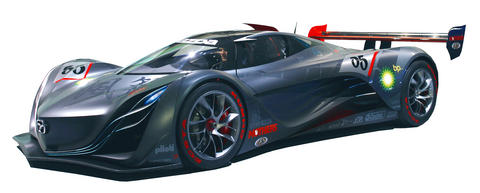
PHOTO: AP
BILL ZHENG
CHRYSLER
Even when he lived half a world away, Bill Zheng, 30, seemed destined to become a designer for Chrysler. Zheng said he had been a fan of Jeeps since he was a child in Shanghai. Then, in the 1990s, after his family moved to Michigan, he was impressed by the "dynamite" concept cars and production models coming from Chrysler's studios.
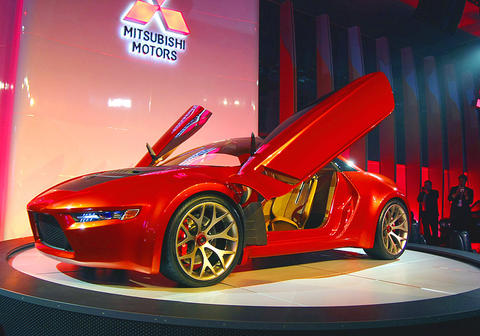
PHOTO: AFP
And Chrysler designers were involved in the industrial design program at the Cleveland Institute of Art in Ohio, where, in addition to car design, Zheng got experience in furniture and product design. He was hired by Chrysler upon his graduation in 2000 and is now design manager for small, premium and family vehicles.
The Dodge Zeo, a design study for a sporty electric car, sprang from a studio competition. The end result was an electric car that defies expectations. Zheng contended that electric vehicles will yet become as common as those powered by gasoline or diesel fuel, and that they deserved to have different design personalities. "So to say that electric cars should look like electric cars is a dated thing," he said.
He did, however, want a hint of an electric vehicle identity. So, the conventional grille was abandoned in favor of a version illuminated by blue LEDs.
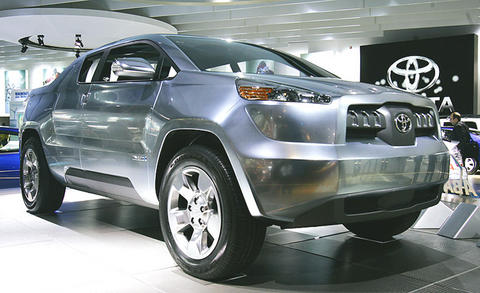
PHOTO : AP
"The Zeo is basically a muscle car, but it's not powered by a V-8," Zheng said. "It's quiet, but it goes superfast. The image of a green car is kind of timid. I'm very environmentally conscious, but I love sports cars."
JENNIFER HEWLETT
FORD MOTOR COMPANY
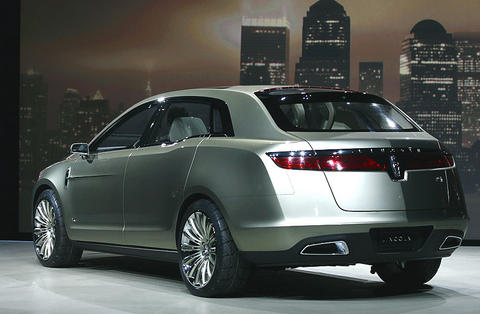
PHOTO : AP
As part of an image overhaul for Lincoln, the brand imagined its latest concept car, the MKT, as an example of guilt-free luxury, a seeming contradiction in terms. Jennifer Hewlett, 28, a color and materials designer, was tapped to come up with an appropriate interior.
At the College for Creative Studies in Detroit, Hewlett studied industrial design, fine arts and furniture building, gaining experience in working with wood, metal, fiber, ceramics and glass, and particularly in learning about how to relate such materials to one another. "It's one of the crucial points of a vehicle, all these materials coming together and harmonizing," she said.
Her previous work included color and materials for the 2009 MKS, Lincoln's new flagship.
"When the new MKS was coming out, we thought it would be a really good match for her because of her taste level, her sense of style, as well as her skills," said Susan Sage, the color and materials design manager at Ford.
Hewlett said that with the MKT, her design inspiration was a feather. She tried to bring the lightness, translucence and layering of a feather to the colors in the passenger cabin, while using earth-friendly materials, like a rug made with banana fibers.
The stained oak veneers come from recycled oak, already found in some other Lincolns. The MKT's leather is made using an organic tanning method, free of harsh chromium additives.
BERNARD LEE
MAZDA
Furai is Japanese for "sound of the wind." Streamers, kite tails and a sheet in the wind are images that Bernard Lee, 32, imagined when designing the Furai (pronounced FOO-rye) concept.
"I chose wind because a racecar is all about downforce, and aerodynamics are very key to its function," he said. "So I wanted to see how materials can be manipulated by the wind and get the visual interpretation of that force of nature.
"If you look on the body side of the car, there are these really waving lines, and it's supposed to mimic the way a sheet in the wind moves. At the beginning, it's very graceful, and then as you get to the tail end of the sheet it becomes very turbulent and it flutters."
Franz von Holzhausen, design director for Mazda North America, said Lee's model had "a really nice balance of proportion, of sense of movement, of controlled chaos and quietness."
After graduating from the Art Center College of Design in Pasadena, California, in 1997, Lee spent three years at Honda and then seven years at Ford. He joined Mazda a year ago and is a senior designer.
Though he had drawn cars since he was five, Lee might have become a doctor like his father had his parents had their way. Instead, it was a sixth-grade teacher in Los Angeles, who had caught him drawing in class, who steered him on the road to design.
"I thought I was going to be in a lot of trouble," he said. "But she took my drawing and said, 'That's pretty good.' She told me her son was a car designer and that I could do this for a living. She showed me some of his drawings, and I was so blown away.
"Because of her," he added, "I got to live out a childhood dream."
GARY RAGLE
MITSUBISHI
It is as if Gary Ragle never had a choice but to be somehow involved with autos: He is the third generation in his family to work in the auto industry. His grandfather worked for British Leyland; his father for Ford.
Now Ragle, 29, is a senior designer for Mitsubushi Motors Research and Design of America in Cypress, California. "I was always good at art and I always loved cars from day one," he said. "My dad is a big hot-rod guy and some of my earliest memories were being crammed into the small front seat of a 1934 Chevy coupe going to the hot-rod shows."
But it wasn't until Ragle attended the University of Cincinnati in his hometown and decided to go into industrial design that he found out people could make a living designing cars. When he graduated in 2002, he joined Mitsubishi.
Dave O'Connell, the studio's chief designer, said: "Gary is very creative, innovative and very hard-working, and as an artist the guy does amazing art work. You look at the renderings that he does, even the loose sketches, and they really get you excited. And I've been a designer for 30 years."
The assignment that became the Concept RA (which stands for "Road Alive") was to design a vehicle that would showcase new technology, including a 4-cylinder turbodiesel engine and all-wheel drive.
His vision was selected after an internal design competition against about 30 others from Mitsubishi's studios in Japan, Germany and California.
He admitted that the Concept RA doesn't look environmentally friendly, although the diesel was intended to provide good fuel economy and low emissions. "There are vehicles like the Prius out there that look environmentally friendly, but I think a sports car should look like a sports car," he said.
MICHAEL THOMAS
GENERAL MOTORS
If someone says "automotive design," what usually comes to mind is the exterior of a vehicle, not components like the steering wheel or radio. Michael Thomas, 30, admitted that he was no different.
"You don't think of it that much, which is kind of ironic considering that's what you interact with the most," he said. Now, after working in component design - he is creative designer for GM's Component Design Strategy Center - Thomas has a different perspective. He designed the steering wheel for the Cadillac CTS.
He attended the Cleveland Institute of Art and was initially interested in jewelry design, partly because of the influence of his parents, who were stained-glass artists.
Working at Ford, Bose and finally GM, Thomas gained a growing understanding that parts of the interior can be a kind of jewelry that are important to a brand's image and to an owner.
"For the CTS you really want to emphasize luxury and quality," he said. "It becomes critical to iron out things like the fit and finish, craftsmanship and materials so that when the customer is handling it, it feels like luxury and it feels like quality."
He likened the CTS wheel, with its leather and stitching, to a fine purse. "You say, 'What makes the leather in a purse appear high-end, and how can we incorporate that into the design?'"
As a musician who plays professionally with his wife, he draws inspiration from instruments. "If you look at the details of a clarinet, something people have been using for centuries, that design has been so refined and executed so perfectly. That can be inspirational."
MATT SPERLING
TOYOTA
The A-BAT, a four-wheel-drive hybrid pickup, is Toyota's attempt to respond not just to compact trucks that are getting bigger and bigger, but to increasingly important environmental issues.
Matt Sperling, 28, of Toyota's Calty design studio in Newport Beach, California, designed the A-BAT's exterior. He said he could relate to those issues.
"I have a Tacoma myself and I love that thing to death, but sometimes it's a little too big for me," he said. "This was kind of my own personal response to that. If I could get my hands on this in real life I would use it every day."
But Sperling also wanted a design that seemed to be from tomorrow, to be "very forward thinking."
To make an environmental connection and link it to the Toyota hybrid family, Sperling gave the concept the trapezoidal silhouette of the Prius.
Sperling was hired in 2002 after studying at the College for Creative Studies, where his mother had enrolled him in a car-design course when he was a high school senior. Her reasoning: At school, he was always drawing cars instead of paying attention.
"It was the most brutal course I ever took," he recalled, "but it got me introduced to the world of car design. I fell in love and that was it."
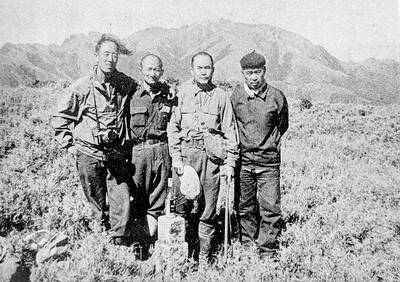
May 18 to May 24 Gathered on Yangtou Mountain (羊頭山) on Dec. 5, 1972, Taiwan’s hiking enthusiasts formally declared the formation of the “100 Peaks Club” (百岳俱樂部) and unveiled the final list of mountains. Famed mountaineer Lin Wen-an (林文安) led this effort for the Chinese Alpine Association (中華山岳協會). Working with other experienced climbers, he chose 100 peaks above 10,000 feet (3,048m) that featured triangulation points and varied in difficulty and character. The list sparked an alpine hiking craze, inspiring many to take up mountaineering and competing to “conquer” the summits. A common misconception is that the 100 Peaks represent Taiwan’s 100 tallest

Yesterday, the Democratic Progressive Party (DPP) nominated legislator Puma Shen (沈伯洋) as their Taipei mayoral candidate, the Chinese Nationalist Party (KMT) put their stamp of approval on Wei Ping-cheng (魏平政) as their candidate for Changhua County commissioner and former legislator Tsai Pi-ru (蔡壁如) of the Taiwan People’s Party (TPP) has begun the process to also run in Changhua, though she has not yet been formally nominated. All three news items are bizarre. The DPP has struggled with settling on a Taipei nominee. The only candidate who declared interest was Enoch Wu (吳怡農), but the party seemed determined to nominate anyone
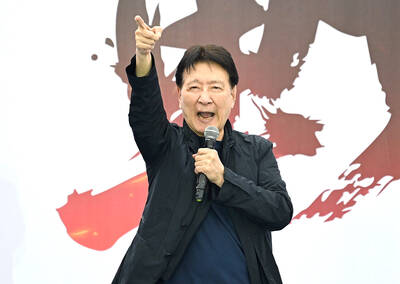
In a sudden move last week, opposition lawmakers of the Chinese Nationalist Party (KMT) and Taiwan People’s Party (TPP) passed a NT$780 billion special defense budget as a preemptive measure to stop either Chinese leader Xi Jinping (習近平) or US President Donald Trump from blocking US arms sales to Taiwan at their summit in Beijing, said KMT heavyweight Jaw Shaw-kong (趙少康), speaking to the Taipei Foreign Correspondents Club on Wednesday night in Taipei. The 76-year-old Jaw, a political talk show host who ran as the KMT’s vice presidential candidate in 2024, says that he personally brokered the deal to resolve

“China wants to unify with Taiwan at the lowest possible cost, and it currently believes that unification will become easier and less costly as time passes,” wrote Amanda Hsiao (蕭嫣然) and Bonnie Glaser in Foreign Affairs (“Why China Waits”) this month, describing how the People’s Republic of China (PRC) is playing the long game in its quest to seize Taiwan. This has been a favorite claim of many writers over the years, easy to argue because it is so trite. Very obviously, if the PRC isn’t attacking Taiwan, it is waiting. But for what? Hsiao and Glaser’s main point is trivial,


 RSS
RSS