


Human skin is both dead and alive. It regulates the body's temperature and protects against the elements. It heals when cut and reveals much about the person who it covers. As such, skin is a multilayered, multipurpose organ that shifts across the landscape of the body and, for the current exhibition at the Museum of Contemporary Art (MOCA) called "Second Skin," it serves as both substance and metaphor in recent design practice.
Curated by Ellen Lupton, a researcher at Cooper-Hewitt, National Design Museum of the Smithsonian Institute, the exhibit originally opened in New York in 2002 under the title Skin: Surface, Substance and Design. As with the earlier exhibit, Second Skin uses installations, video, lighting, architecture, interior design, biotechnology, photography and clothing, to show the influence skin has had on contemporary design.
Second Skin has five sub-themes, each corresponding to the skin's functions and metaphorically dealing with design subjects.
PHOTOS COURTESY OF TFAM
The first category, called Beauty, Horror + Biotechnology, investigates the current obsession with aesthetic alterations of the body. Leora Farber's Four Minor Renovations: Revamp, Refurbish, Retouch, Refine, uses four videos to show the process of plastic surgery in all its grotesque beauty and is a statement of how — by altering the body — the line between what is natural and artificial is becoming increasingly blurred.
Thematically similar to Farber's video, Elke Gasselseder's Beauty, Horror and Biotechnology, is a montage of clips from Hollywood films about cyborgs, aliens and artificial life. It is difficult to distinguish between the natural and artificial skins in the shots.
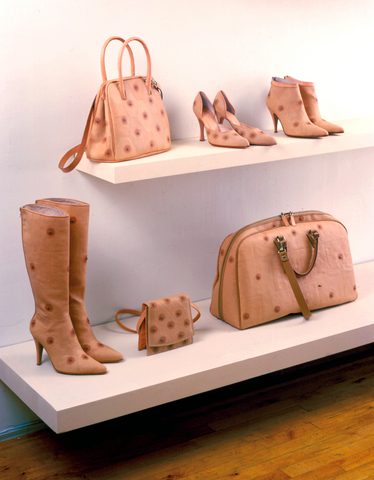
Humans often wear artificial skins as a means of mediating the world. This notion serves as the underlying theme of Erotics of the Artificial and is poignantly revealed in Tonita Abeyta's line of latex clothing. As contemporary eroticism sometimes comes wrapped in latex, Abeyta has designed a line of latex garments for men and women, some of which come with built-in condoms. Nicola Costantino playfully eroticizes everyday objects such as soccer balls, handbags and shoes, by designing them with nipples and anuses — a surrealistic effect that is at once decorative and alarming.
The various garments found in the section Body Armors, evoke contemporary fashion designers' tendency to create garments that serve as portable environments in a world defined by leisure, terror and war.
Cooling System, a jacket designed by the US military and manufactured by Grando Zero Espace Ltd, evokes the feeling of separation from the environment by wearing protective skins.
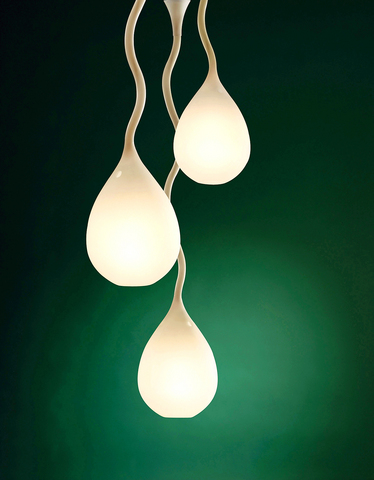
Taking the luminescence of skin as its starting point, Luminous Objects, Luminous Surfaces is a series of objects that characterizes the delicate relationships between lighting and life. The multifunctional Jingzi Lamp designed by Herzog & de Meron resembles a giant, tail waggling, spermatozoon. Its exterior is made of silicon with the electronic components wrapped inside its translucent silicon skin.
Living Architecture, the exhibition's fifth category, investigates how challenges faced by contemporary architects today are differ from past considerations.
INVERSAbrane is a building material created by KOL/MAC, a two-man team of architects from New York, and serves the basic function of forming a hard, fire-resistant facade that can be freely adjusted to environmental conditions. The wall also functions as a collector of solar energy and can filter pollutants that are washed away with rainwater.
For existing structures, Jan and Tim Edler have invented a lighting system that converts the traditional surfaces of architecture into facades with continuously changing, computer-controlled video montages that morph passive buildings into ones that are active and alive. The architectural duo thus forms an uninterrupted dialogue with the public.
Ajay Verma, a consultant gastroenterologist at Kettering general hospital in Northamptonshire, says our gut is a “complex machine.” “It is constantly providing us with the nutrition we need, initially to grow and develop, and then for us to survive, thrive and repair from injury and illness.” How can we keep it functioning well? Put simply: “Make sure what you put into it is balanced, and that you clear out its waste products adequately,” Verma says. “In a general gastroenterology clinic, the most common conditions we see are irritable bowel syndrome (IBS), gastroesophageal reflux disease, inflammatory bowel disease and constipation,” says Nisha

And so, in the wake of US President Donald Trump’s trip to the People’s Republic of China (PRC), all the experts on the Strait of Hormuz suddenly became experts on US-China-Taiwan relations. The Internet has certainly expanded human knowledge. Lots of these sudden experts made noise this week about Trump’s words after the meeting with PRC dictator Xi Jin-ping (習近平). Trump is going to sell out Taiwan! Longtime Taiwan commentator J. Michael Cole summed the situation up neatly in the Guardian: “We need to keep in mind that he has a tendency to say many things — sometimes contradicting himself within

Last week US President Donald Trump was asked by a reporter whether he would speak on the phone to the President of Taiwan. “l’ll speak to him. I speak to everybody. We have that situation very well in hand,” Trump said. This marked the second time in a couple of weeks he had said he would talk to the President of Taiwan. In 2016 he famously took a call from then-president Tsai Ing-wen (蔡英文), when he was president-elect. Despite warnings that the apocalypse was nigh because of a phone call, the world quickly forgot about the conversation between two democratically-elected presidents.
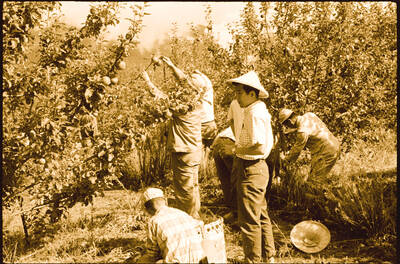
May 25 to May 31 Few believed that apples could be cultivated on a commercial scale in Taiwan’s high mountains. When horticulturalist Cheng Chao-hsiung (程兆熊) first proposed the idea in 1955, both American and Taiwanese colleagues dismissed it as implausible, arguing that temperate fruit could not be reliably grown on a subtropical island, especially on rugged terrain. However, it was this terrain in the Central Mountain Range where many Chinese Civil War veterans were resettled in the late 1950s. With limited job prospects and no family in Taiwan, they were placed on cooperative farms aimed toward self-sufficiency. Some say the conditions


 RSS
RSS