

A warm welcome is due to a particularly fine book on our island home. It's subtitled A History of Taiwan, and its central chapters do indeed survey the island's paradoxical history in the accustomed manner, though with exceptional clarity. But the greatest strength of Forbidden Nation lies in its treatment of Taiwan's current situation, both internally and as seen from an international perspective.
The book opens with an account of the shooting incident in Tainan on the eve of the 2004 presidential election, and Jonathan Manthorpe's qualities are immediately apparent. He's meticulous but clear-headed, with both the wood and the trees presented in sharp focus. On the one hand Taiwan's media showed itself "scandal and rumor-obsessed," on the other, US forensic expert Henry Lee was "unable to say conclusively that the assassination attempt had not been staged." Few could fault his presentation of the facts, but at the same time he manages to offer a very balanced and fair-minded assessment of this much-analyzed affair.
Then comes the island story, and again the sanity and fairness of the account leaps at you from the page. Everywhere you find the same virtues, displayed in careful yet concise analysis of the pheno-mena, whether it's China's Taiping rebellion or the case of the 18th century impostor George Psalman-azar, who claimed to come from "Formosa."
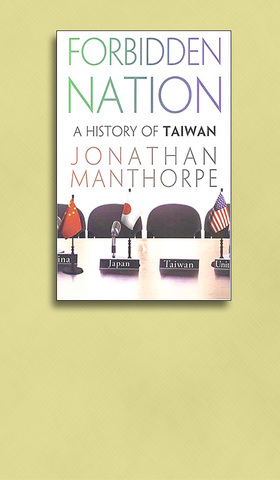
Most readers of this news-paper will probably be familiar with much of what Manthorpe has to say, with interest inevitably centering on which side he is going to come down on when it comes to the big question of "renegade province" or "de facto independence." Here this author doesn't disappoint. It can be fairly stated that he is a firm opponent of China's claims to hegemony. But nevertheless he is also at pains to point out that Taiwan's very geographical position makes it unavoidably and inextricably vulnerable to the claims of neighboring powers.
A good example of this author's combination of detail and balance comes with the treatment of the life of Chiang Ching-kuo (蔣經國). You know at once that this will be a test case because Manthorpe opens by saying some Taiwanese loathe his name whereas others fete him to the skies. This, you sense, is just the kind of situation the author relishes. So he proceeds with his account, and the result is that you see Chiang as if in a full-length portrait of some Renaissance prince -- opportunistic and Machiavellian on the one hand, but the man who nevertheless shepherded Taiwan into the democratic fold, from whatever personal motives, on the other.
When it comes to the historical basis for China's claim of sovereignty over Taiwan, Manthorpe does not dodge giving his opinion. There's no question that China ever truly ruled the island, he asserts. It's true that prior to the Japanese takeover in 1895 the Qing Dynasty did operate rule of a kind, but this was sporadic, contested, and -- here Manthorpe plays one of his trump cards -- in essence only over the western coastal plain. This is undoubtedly the case. You only have to look at the main map in John Davidson's magisterial tome The Island of Formosa Past and Present, published in 1903, to see that even under Japanese rule the east coast, and the mountains that drop down to it, are labeled "Savage District," in contradis-tinction to the eastern "Territory under actual Japanese adminis-tration." That the situation before the Japanese arrived was little different can't be doubted. And this eastern no-go region on Davidson' s map constitutes some 55 percent to 60 percent of Taiwan's surface area.
The handover of Taiwan to the Chinese Nationalist Party (KMT) by the international community in 1945 was, Manthorpe argues, in essence illegal. This is probably this book's most original point. "China's claim to own Taiwan and its citizens is based on historically frail arguments and outdated legal concepts," he writes. But this is no partisan anti-Beijing, pro-DPP account of Taiwan's history and current situation. Instead, it's a carefully researched and judicious analysis. In rejecting China's histor-ical claims, therefore, the book deserves to be attended to closely. Clarity and justice, not anti-China rhetoric, are Manthorpe's strongest suits.
The same measured approach is found in his treatment of KMT one-party rule. "It must be acknow-ledged ... that the leavening of economic and social development promoted by the [KMT] in the later years of their exclusive rule made the party's style more akin to strict Chinese paternalism than pure totalitarianism," he writes. On the other hand the Chen administration, in promoting Taiwanese consciousness, has acted "not always wisely."
Nonetheless, this book' s funda-mental position is strongly and unambiguously pro-Taiwanese. "The only people who have established sovereignty over Taiwan are the Taiwanese, no one else ... They do not see why they should be expected to give up their current well-established independence, based on democracy and a vibrant market economy, as a pre-condition for talks with a despotic and repressive regime that has little evident political legitimacy beyond the use of force on its own people ... They have only recently extricated themselves from the coils of the corrupt and dictatorial one-party [KMT] state, and see no reason to jump into the arms of another one, the Communist Party of China."
The topics covered by Manthorpe together constitute a minefield, and yet he tip-toes his way through them with great intelligence and discernment. I have by no means read all the recent English-language books analyzing Taiwan's situation. Even so, if asked to recommend a single volume to a student new to Taiwanese affairs, something that would give both a balanced and a comprehensive account of the state of play here both past and present, Forbidden Nation would be the one I would opt for.
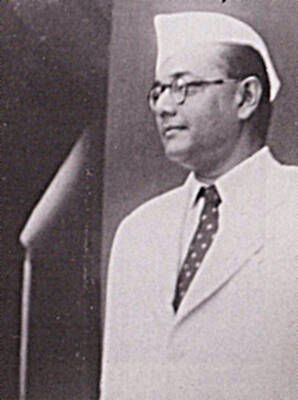
Aug. 17 to Aug. 23 Subhas Chandra Bose was meant to be in Taiwan for no more than two hours. After refueling at today’s Songshan Airport in Taipei, the Mitsubishi Ki-21 bomber carrying the Indian independence leader took off for Japan — and crashed almost immediately. It was Aug. 18, 1945, three days after Japan announced its surrender to the Allies. Bose, who advocated armed struggle to free India from British rule, had worked closely with Imperial Japan. He was attempting to reach the Soviet Union via Manchuria in the hope of gaining support
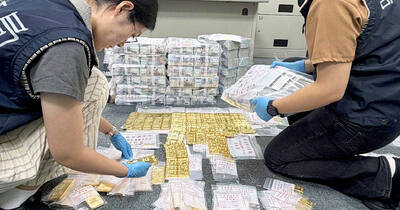
The Tzu Chi Foundation, the globally known Buddhist charity, announced on July 21, 2021 that it had signed a deal to purchase 5 million doses of the Pfizer-BioNTech (BNT) COVID-19 vaccine. It said that the vaccine doses would be donated to the government’s COVID vaccine program. In October the Centers for Disease Control (CDC) made a public announcement thanking the Buddhist foundation and others for the 889,200 doses of the BNT vaccine they had collectively donated. FRAUD Earlier this month, the public was stunned to learn that prosecutors had indicted former Changhua Bar Association chairwoman, Chen Yu-hsuan (陳昱瑄), and others on suspicion

These few weeks will decide who ends up on the ballot, and who does not, in this year’s elections. Registration closes on Sep. 4, but until then, politicians may drop in or drop out of the race. Both the pan-green Democratic Progressive Party and the its supporters (DPP) and the pan-blue Chinese Nationalist Party (KMT) have nominated 19 candidates for 22 of the top-level mayor and county commissioner posts. The KMT is also promoting a “great opposition alliance” in the remaining three, backing two independents and one candidate from the KMT-aligned Taiwan People’s Party (TPP). For more context and a
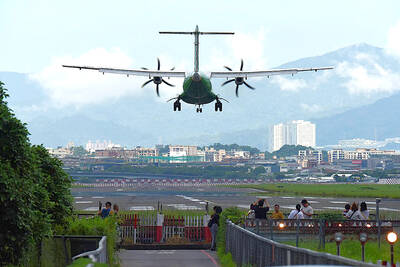
An interesting essay in the spring issue this year of International Security by Kerby Davis and Eugene Gholz explores the possibilities and outcomes of simulated missile attacks by the People’s Republic of China (PRC) on Taiwan’s ports to carry out a blockade. “Substantively,” they conclude in Blockade by Fire: China’s Potential to Blockade Taiwan Using Missile Attacks on Ports, “our article raises serious concern about Taiwan’s vulnerability to Chinese military coercion. Even if Taiwan and the United States take steps to better prepare for a Chinese blockade, they face a greater threat from China than analysts previously believed.” The authors


 RSS
RSS