


STDs for New Year in China
Chinese migrant workers are testing themselves for sexually transmitted diseases (STDs) as millions return home to their spouses for the annual Chinese Lunar New Year holiday, state press said yesterday.
China is in the throes of a massive urbanization process, which has seen up to 140 million migrant workers leave their home towns -- and often their spouses -- as they travel to cities in search of work. This means that many often engage in extra-marital sex, the China Daily reported.
"Around seven to eight people are coming to have venereal disease check-ups everyday, up from the usual two to three cases a day," Lu Haoqiang, at the Guangzhou Medical College told the paper. Lu said most patients had not been infected, but some of the workers still wanted to take the test results home to show their wives.
300 million Americans and counting
Sometime this month, somewhere in the US, a couple -- most likely Hispanic, with Spanish as their mother tongue -- will conceive the 300 millionth American, the New York Times has reported.
The prediction is based on the latest census statistics, which show the US population closing in on 297,900,000. With a baby being born every eight seconds, someone dying every 12 seconds and the nation gaining an immigrant every 31 seconds, the population clock ticks over one numeral roughly every 14 seconds.
Taking into account seasonal deviations -- birth rates normally peak during the summer -- the watershed 300 million mark should be reached in nine months. "You end up with a number in October," the Times quoted demographer and Census Bureau official Katrina Wengert as saying.
The US population passed the 200 million mark in 1967 and is currently growing at an annual rate of 1 percent -- the equivalent of the 2.8 million residents of Chicago.
A `Fulla' figure sells best
Move over Barbie, veiled is beautiful. The physical ideal of Muslim girls increasingly includes the hijab, as evidenced by toy shops' best-selling doll "Fulla" and the string of showbiz stars opting to cover up. The dark-eyed and olive-skinned Fulla has replaced her US rival's skimpy skirts with more modest "outdoor fashion" and Barbie's blonde mane with an Islamic veil.
"Fulla sells better because it is closer to our Arab values: she never reveals a leg or an arm," says Tarek Mohammed, chief salesman at a Toys R Us branch in Mohandessin, one of Cairo's more upmarket neighborhoods. The Arab answer to Barbie has been selling like hot cakes for Eid Al-Adha, the most important holiday in the Muslim calendar, not least because it is cheaper than its American rival, although both are made in China.
Street food is in for top chef
He's among an elite coterie of chefs who command the sort of respect usually accorded royalty, but when Thierry Marx comes to Hong Kong there's only one place you'll find him searching for a meal.
"I hit the street as soon as I come here," says an excited Marx. "There is nothing like street food, especially in Asia. It is so very important to the development of different cuisines -- I get so much inspiration from the street."
For Marx, named last year's chef of the year by gastronomic bible Gault Millau, there is no such thing as "slumming it" when it comes to food. "You cannot ignore what is on the street," says the two-and-a-half star Michelin chef, in Hong Kong for a brief spell in the kitchen at the plush Sheraton Hotel's Oyster Bar.
"That's where new ideas are tried and tested. Wherever I go on my travels I make sure I know what is being eaten by the ordinary people."
HK has designs on fashion
Renowned Hong Kong fashion designer Vivienne Tam believes the Chinese territory could become a global style powerhouse with a little help from business and government. Tam, who along with Sino-Irish designer John Rocha put the former British colony on the fashion map in the 1990s, called for the city's rich property developers to offer cash and internships to nurture local talent.
"A lot of the time [young designers] can't afford the rent -- if you are not an international brand it's hard to get a good location -- but landlords have so much money, it's time to give back to the community," Tam told the South China Morning Post.
Tam is in Hong Kong ahead of fashion week, the sprawling trade show where the couture world gathers to find Chinese sewing factories and manufacturers to put together their latest collections. The New York-based designer, who is credited with helping to introduce traditional Chinese flourishes to mainstream fashion, said it was vital for would-be designers to get first-hand industry experience.
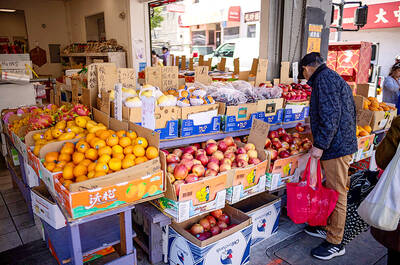
Ajay Verma, a consultant gastroenterologist at Kettering general hospital in Northamptonshire, says our gut is a “complex machine.” “It is constantly providing us with the nutrition we need, initially to grow and develop, and then for us to survive, thrive and repair from injury and illness.” How can we keep it functioning well? Put simply: “Make sure what you put into it is balanced, and that you clear out its waste products adequately,” Verma says. “In a general gastroenterology clinic, the most common conditions we see are irritable bowel syndrome (IBS), gastroesophageal reflux disease, inflammatory bowel disease and constipation,” says Nisha

And so, in the wake of US President Donald Trump’s trip to the People’s Republic of China (PRC), all the experts on the Strait of Hormuz suddenly became experts on US-China-Taiwan relations. The Internet has certainly expanded human knowledge. Lots of these sudden experts made noise this week about Trump’s words after the meeting with PRC dictator Xi Jin-ping (習近平). Trump is going to sell out Taiwan! Longtime Taiwan commentator J. Michael Cole summed the situation up neatly in the Guardian: “We need to keep in mind that he has a tendency to say many things — sometimes contradicting himself within
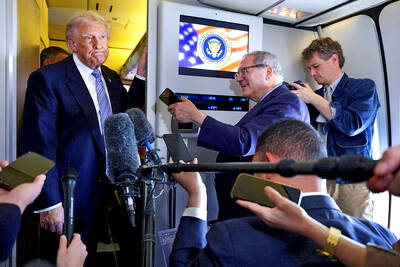
Last week US President Donald Trump was asked by a reporter whether he would speak on the phone to the President of Taiwan. “l’ll speak to him. I speak to everybody. We have that situation very well in hand,” Trump said. This marked the second time in a couple of weeks he had said he would talk to the President of Taiwan. In 2016 he famously took a call from then-president Tsai Ing-wen (蔡英文), when he was president-elect. Despite warnings that the apocalypse was nigh because of a phone call, the world quickly forgot about the conversation between two democratically-elected presidents.
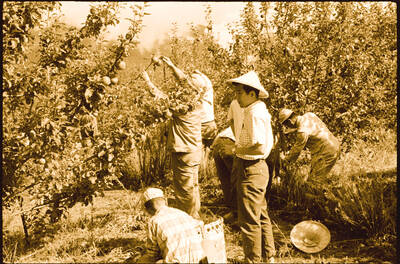
May 25 to May 31 Few believed that apples could be cultivated on a commercial scale in Taiwan’s high mountains. When horticulturalist Cheng Chao-hsiung (程兆熊) first proposed the idea in 1955, both American and Taiwanese colleagues dismissed it as implausible, arguing that temperate fruit could not be reliably grown on a subtropical island, especially on rugged terrain. However, it was this terrain in the Central Mountain Range where many Chinese Civil War veterans were resettled in the late 1950s. With limited job prospects and no family in Taiwan, they were placed on cooperative farms aimed toward self-sufficiency. Some say the conditions


 RSS
RSS