


The Best of Youth was a groundbreaking Italian TV mini-series which found its way into cinemas after garnering plaudits at Cannes. Certainly, there's much to be impressed by in this tale of two brothers, Nicola and Matteo, whose divergent life paths take them on oppositional but intersecting journeys through recent Italian history.
This colossal Italian epic from Marco Tullio Giordana, presented in two parts, is slightly longer than six hours, and yet the time really does whizz by.
Transferred from video to film, this story of two brothers is direct and uncomplicated, with intimate, heartfelt performances, particularly from Italian star Luigi Lo Cascio.
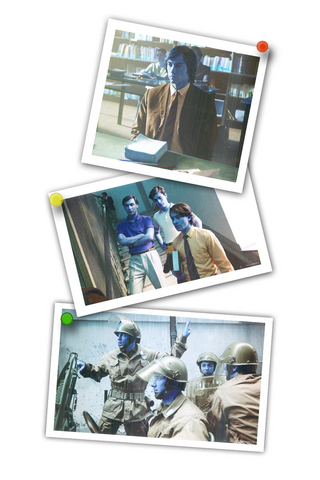
PHOTOS COURTESY OF FOX MOVIES
It's a sanguine drama in the tradition of Visconti's Rocco and His Brothers or the early, Italianate movies of Scorsese and Coppola -- though played in a lighter, soapier style.
Taking its title from a collection of poetry by Pasolini, The Best of Youth fluctuates between insightful social observation and soap-operatic contrivance. Other than sheer prestige value, it's hard to see what's gained by foisting this exemplary TV fare on to cinema screens where the processed Super-16 visuals look oddly degraded (despite Roberto Forza's very handsome framing).
Lo Cascio and Alessio Boni play Nicola and Matteo, two idealistic young students in 1960s Rome. Matteo is a volunteer at a mental hospital and with Nicola's help hatches a disastrous plan to free a young patient, Giorgia (Jasmine Trinca, from Nanni Moretti's The Son's Room), whom he suspects is enduring electro-shock treatment. But Giorgia -- with whom Matteo is more than a little in love -- is recaptured and the plan's failure colors the rest of their lives.
While Nicola takes up with Giulia, an artisan whose bohemian aspirations spill over into revolutionary terrorism, Matteo becomes a zealous, secretive policeman, furious in his prosecution of lawlessness.
Angry and humiliated, Matteo grows emotionally cold almost overnight, and becomes a tough cop. Nicola becomes a doctor campaigning for psychiatric patients' rights, and Matteo is deeply ambivalent about Nicola's appropriation of a moral issue that he had failed to make his own. Poor Giorgia is the brothers' bewildered, imprisoned conscience -- and maybe Italy's conscience too. A satisfying and (very) generously proportioned piece of work.
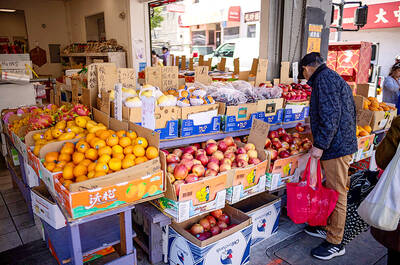
Ajay Verma, a consultant gastroenterologist at Kettering general hospital in Northamptonshire, says our gut is a “complex machine.” “It is constantly providing us with the nutrition we need, initially to grow and develop, and then for us to survive, thrive and repair from injury and illness.” How can we keep it functioning well? Put simply: “Make sure what you put into it is balanced, and that you clear out its waste products adequately,” Verma says. “In a general gastroenterology clinic, the most common conditions we see are irritable bowel syndrome (IBS), gastroesophageal reflux disease, inflammatory bowel disease and constipation,” says Nisha

And so, in the wake of US President Donald Trump’s trip to the People’s Republic of China (PRC), all the experts on the Strait of Hormuz suddenly became experts on US-China-Taiwan relations. The Internet has certainly expanded human knowledge. Lots of these sudden experts made noise this week about Trump’s words after the meeting with PRC dictator Xi Jin-ping (習近平). Trump is going to sell out Taiwan! Longtime Taiwan commentator J. Michael Cole summed the situation up neatly in the Guardian: “We need to keep in mind that he has a tendency to say many things — sometimes contradicting himself within

Last week US President Donald Trump was asked by a reporter whether he would speak on the phone to the President of Taiwan. “l’ll speak to him. I speak to everybody. We have that situation very well in hand,” Trump said. This marked the second time in a couple of weeks he had said he would talk to the President of Taiwan. In 2016 he famously took a call from then-president Tsai Ing-wen (蔡英文), when he was president-elect. Despite warnings that the apocalypse was nigh because of a phone call, the world quickly forgot about the conversation between two democratically-elected presidents.
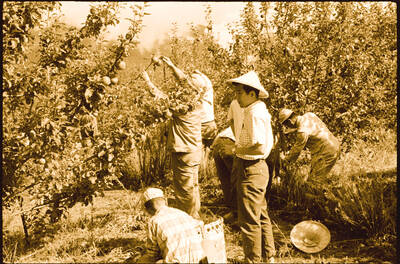
May 25 to May 31 Few believed that apples could be cultivated on a commercial scale in Taiwan’s high mountains. When horticulturalist Cheng Chao-hsiung (程兆熊) first proposed the idea in 1955, both American and Taiwanese colleagues dismissed it as implausible, arguing that temperate fruit could not be reliably grown on a subtropical island, especially on rugged terrain. However, it was this terrain in the Central Mountain Range where many Chinese Civil War veterans were resettled in the late 1950s. With limited job prospects and no family in Taiwan, they were placed on cooperative farms aimed toward self-sufficiency. Some say the conditions


 RSS
RSS