


After six years of planning and redevelopment the National Museum of Taiwanese Literature (
Set to coincide with the 82nd anniversary of the nation's oldest literary group, The Taiwan Cultural Association (
Located in what was until the late 1990s Tainan City Hall, the museum is Taiwan's first national center solely dedicated to the celebration of local literature.
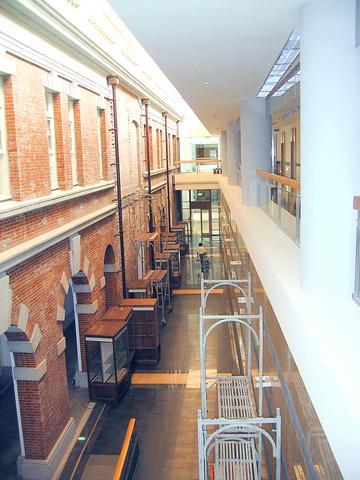
PHOTO: GAVIN PHIPPS, TAIPEI TIMES
Along with offering patrons a photographic blow-by-blow account of the history of Taiwanese literature, the building will also house the nation's largest literary library -- boasting 30,000 publications -- restoration rooms, laboratories, lecture theaters, photo studios, a computer center and an auditorium.
"The establishment of such a museum means that research, as well as the promotion of Taiwanese literature can be centralized," said museum director Lin Juei-ming (
Final touches to the museum's plush new interior may have only been completed last week, but the center has already played host to a series of seminars.
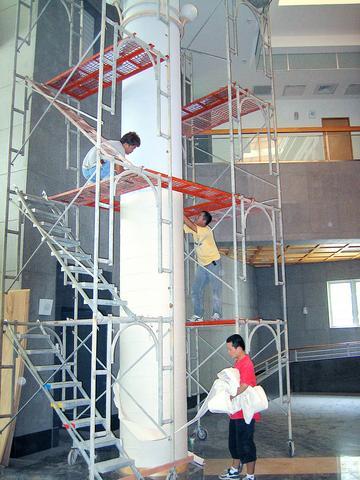
Since early August, when the then partially completed museum had its soft opening, half-a-dozen local literary figures have given lectures covering a wide range of literary topics. Seminars on the translation of Aboriginal works and the position of female writers in Taiwan and Hakka literature have proven hugely popular with both scholars and laymen alike.
Professor Chen Heng-chia (
"For a long time our literature was considered to be the same as China's. Whether the writer was born in Taipei or China, their works were thought to be simply Chinese," Chen said. "But because [Taiwan's] society has developed on its own, our writing has also developed and taken its own direction. Not many people are aware of this."
A solid wall dividing literature from Taiwan and China there may be, yet local literature is still not as widely recognized as some scholars would like it to be. According to Lin over the past couple of decades there has been a marked decrease in the awareness and comprehension of local literature. All of which is something that he hopes the establishment of the museum will change.
"If you mention Shakespeare's or Keats' name to any Taiwanese they will immediately know who are talking about. They may not have read any of their works, but they will be familiar with the names," Lin said. "And while there are and have been copious amounts of Taiwanese writers, very few enjoy the same amount of fame. We want people to know about authors such as the contemporary Atayal writer, Wallis Naqang."
While in agreement for the need to promote local literature, the choice of Tainan over the capital as the site for the nation's foremost museum of
literature has been criticized. Chen believes that the choice of the southern city could leave the institute out in the cold and possibly ignored by the masses it is designed to attract.
"As Taipei is the capital and the place where larger numbers of people live and visit, I reckon they should have possibly thought twice about putting it in Tainan," said the Tamkang University professor. "It's too far to go simply to look at a museum and I think this will certainly limit the number of visitors."
Acknowledging that Tainan is not the first choice of destination for day-trippers who wish to wander the corridors of a prestigious institute of
learning, Lin remains adamant that the choice of Tainan as the museum's locale was the correct one, especially when looked at historically.
"The city could be considered the birth place of Taiwan. So it was thought that there was really no better location for a museum that celebrates our literary culture from its earliest roots to the present day," the director said. "And then of course, there was this fantastic building that we were able to use."
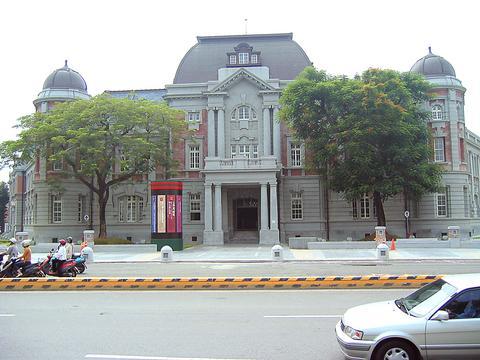
The Mansard-style colonial building the museum now sits in has long been one of Tainan's showcase pieces of architecture and has enjoyed a long history as one of the city's most instantly recognizable structures.
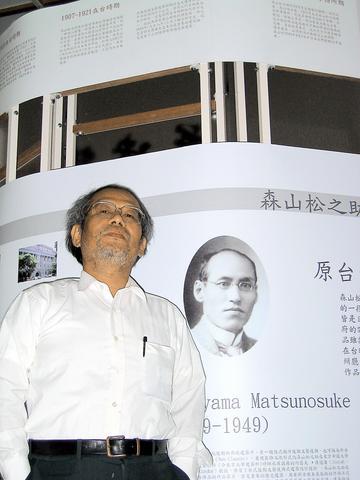
Designed by Japanese architect Moriyama Matsunosuke, who also designed the Control Yuan building in Taipei, the building was completed in 1916 and was originally used by the Japanese for regional government offices. The building served as the headquarters for the ROC Airforce from 1949 until 1968. From the late 1960s until 1997 the building was the seat of power for Tainan City Government.
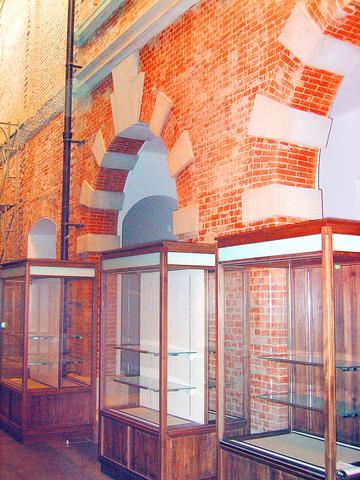
The job of transforming the original 1,300-ping building into the present 6,500-ping structure while maintaining its original appearance was not an easy or cheap undertaking. Its classification as a historic building by Tainan City Government in 1998 meant that the structure could not be altered.
Since renovation and building work began six years ago the Council of Cultural Affairs under the auspices of the Central Government has spent upwards of NT$1.1 billion in order to transform the decades-old building into an eye-catching piece of architecture that encompasses both classical and contemporary styles.
To provide the site with the additional space needed while not marring or altering the building's original interior and exterior, renovators were forced to construct a second building in what was originally the building's rear forecourt. And in order to expand the site even more they also went underground, building three subterranean levels that now house a car park, an auditorium and the museum's mammoth library.
The new structure that sits in the rear courtyard has been carefully designed so as not to be visible from the sidewalk. Only when visitors enter the museum is it clear that what was once one building is now two contrasting structures linked by walkways.
"It's contrasting yes, but that was part of the overall plan. As a place where the classical and the contemporary are explored it was felt that such a design typified what the museum was trying to say," explained one rather harried worker putting the finishing touches to one of the huge columns that sit in the museum's spacious reception area.
While construction and renovation were relatively trouble free, the organization of the museum's exhibitions and displays did cause a few headaches. As a museum dedicated to literature, but not solely aimed at attracting Taiwan's literati, staff had to ensure exhibitions and displays were accessible to both the well-read, the lesser-read and school children alike.
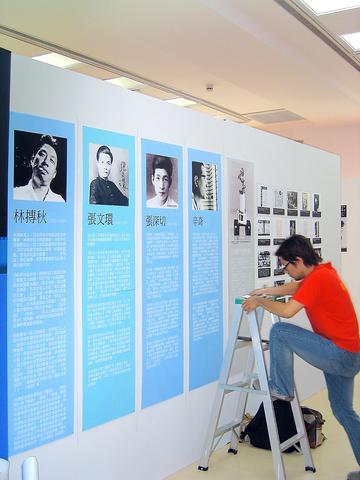
"We realized very early on that we couldn't make the public displays too complicated or complex a study of local literature," the director said. "The crux of many of current exhibitions is photographic. Be it the history of Taiwanese literature and its relationship to cinema or an overview of Taiwanese literature through the ages, visitors can follow events and learn about the writers and there works through photos and brief and succinct accounts."
Whether the National Museum of Taiwanese Literature lives up to its lofty expectations or not, and regardless of the fact that is located far from many of the nation's other prestigious institutes of learning, the Tamkang University Professor feels its establishment is crucial to the future of Taiwanese literature.
"Anything that leads to an increase in the awareness of our literature is certainly a good thing," he said.
Ajay Verma, a consultant gastroenterologist at Kettering general hospital in Northamptonshire, says our gut is a “complex machine.” “It is constantly providing us with the nutrition we need, initially to grow and develop, and then for us to survive, thrive and repair from injury and illness.” How can we keep it functioning well? Put simply: “Make sure what you put into it is balanced, and that you clear out its waste products adequately,” Verma says. “In a general gastroenterology clinic, the most common conditions we see are irritable bowel syndrome (IBS), gastroesophageal reflux disease, inflammatory bowel disease and constipation,” says Nisha

And so, in the wake of US President Donald Trump’s trip to the People’s Republic of China (PRC), all the experts on the Strait of Hormuz suddenly became experts on US-China-Taiwan relations. The Internet has certainly expanded human knowledge. Lots of these sudden experts made noise this week about Trump’s words after the meeting with PRC dictator Xi Jin-ping (習近平). Trump is going to sell out Taiwan! Longtime Taiwan commentator J. Michael Cole summed the situation up neatly in the Guardian: “We need to keep in mind that he has a tendency to say many things — sometimes contradicting himself within

Last week US President Donald Trump was asked by a reporter whether he would speak on the phone to the President of Taiwan. “l’ll speak to him. I speak to everybody. We have that situation very well in hand,” Trump said. This marked the second time in a couple of weeks he had said he would talk to the President of Taiwan. In 2016 he famously took a call from then-president Tsai Ing-wen (蔡英文), when he was president-elect. Despite warnings that the apocalypse was nigh because of a phone call, the world quickly forgot about the conversation between two democratically-elected presidents.
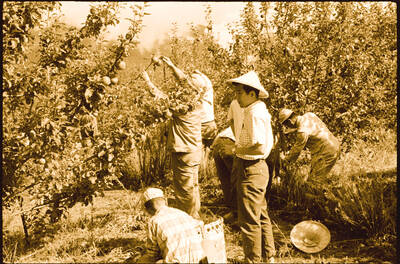
May 25 to May 31 Few believed that apples could be cultivated on a commercial scale in Taiwan’s high mountains. When horticulturalist Cheng Chao-hsiung (程兆熊) first proposed the idea in 1955, both American and Taiwanese colleagues dismissed it as implausible, arguing that temperate fruit could not be reliably grown on a subtropical island, especially on rugged terrain. However, it was this terrain in the Central Mountain Range where many Chinese Civil War veterans were resettled in the late 1950s. With limited job prospects and no family in Taiwan, they were placed on cooperative farms aimed toward self-sufficiency. Some say the conditions


 RSS
RSS