


Do German movies inevitably involve serious, history-laden stories? No, say German, as well as non-German, film professionals, after this year's Berlin International Film Festival.
Festival director Dieter Kosslick's motto of "accepting diversity" in German film meant that the 52nd Berlinale was full of surprises, and provided a forum for many new faces in German cinema.
"I feel that German films have been changing their image and style," said Margaret Hung (

PHOTOS COURTESY OF THE BERLIN FILM FESTIVAL
Hung's Crown Films, which caters to the local art house market, bought four German films at February's European Film Market at the Berlinale. The company was responsible for bringing the works of directors such as Las Von Trier -- Breaking the Waves, The Kingdom and Dancer in the Dark -- as well as Wim Wenders' Oscar-winning documentary Buena Vista Social Club, to Taiwan.
Tom Tykwer, with his 1999 urban-adventure romance Run Lola Run can be seen as the forerunner of German cinema's new look. His lead has been followed by a strong line-up of other German films.
Four German films were selected for the official Berlin competition this year: Tykwer's Heaven starring Cate Blanchett, Dominik Graf's Map of the Heart, Andreas Dresen's Grill Point and Christopher Roth's Baader. In addition, there were two separate programs showcasing German films: 10 films under the Perspective German Cinema program and 20 films at the more commercially oriented German Cinema program.

"We are fortunate that this year there were enough films for us to make a selection," said Alfred Holighaus, director of the Perspective German Cinema program.
The new look
The awarding of the Jury's Grand Prize for Andreas Dresen's Grill Point goes some way to explaining the appeal of German cinema's new look.
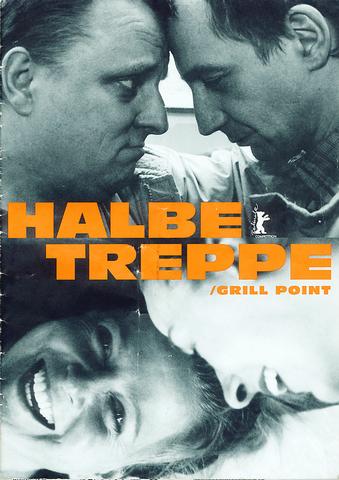
Set in the "not too happening" city of Frankfurt (Oder), in what was East Germany, the film takes an intimate look at the lives of two couples in mid-life crisis. Radio host Chris and his second wife Katrin don't have much to say anymore. His friend Uwe slaves away everyday in his hot-dog stand, forgetting about his wife Ellen. But when Chris's and Ellen's accidental affair begins, they are caught in the act by Uwe, and the four, who have long forgotten what life and dreams are all about, get a wake up call. The film does not seek for a resolution to the couples' marital problems but instead takes a humorous, poignant, poetic look at life's ironies.
In Grill Point, Dresen adopts a cinematic method influenced by Lar von Trier's Dogma ideology, shooting with handheld digital video, working without a script and depending heavily on improvisation. Emotions and sentiments in the film thus are rendered more genuine and expressive.
Dresen provides a refreshing vision of life behind the drab exteriors of East German housing estates, and won laughter and applause from the audience, various awards and sales to Denmark, Czech, Israel and Brazil. All this from a film with the small budget of 600,000 euros.
"In recent years, we have tried to work a way beyond the heavy, depressive stories [that used to characterize German films]. More and more filmmakers are getting what we see as optimistic films in terms of screenplay and character development, and have become more entertainment oriented," said Thortsen Ritter, marketing manager of Bavaria Film International (BFI), distributor of Grill Point. "Yet they don't resort to threadbare plots and phony happy endings. They are still substantial films with solid stories, just dealt with using a lighter approach," he added.
Stylistic controversy
Making use of this lighter touch has not been without controversy. Baader, by Christopher Roth, about a leader of the 1970s terrorist group called the Baader-Meinhof Gang or Red Army Faction (RAF), had members of the German press up in arms for playing fast and loose with historical fact.

PHOTO: YU SEN-LUN, TAIPEI TIMES
Roth picked up the Alfred Bauer Prize, an award recognizing particular innovation, for this picture, but German media verbally abused the young filmmaker during pre- and post-screening press events for the historical distortions in the film. Some members of the audience even booed the film during the screening.
"I want to clarify here that this film is a fiction. We have the artistic license to make the feature film we wanted," said Roth.
The film does not try to beautify the gang or to change historical facts, said Roth. "I was simply fascinated how Baader, as a first-generation terrorist, was formed. When his ideas worked and when they didn't. It was all a string of experiments," said Roth who has studied Badder for 10 years.
Trying to define the Baader Gang is what intrigues Roth. "The film does not even answer what the RAF really wanted. The RAF was itself an experiment," said Roth.
Besides these dialectics about revolution and historical truth, Baader is a smooth and stylish film. In the film, Badder is a cool guy with silk shirts, velvet trousers, leather jackets and sunglasses. His girlfriend Gudrun Ensslin wears shinny sailor shirts. They drive BMWs and talk about Marxist theories. The music, by Stone Roses and others, violates chronology.
"It is the style of the gang that fascinates me," said Roth. "In a way, the gang is not so different from the guitar-slamming, stage-diving rock loving young people. Just, instead, they threw bombs."
Shopping Spree
In fact, it is not only feature films that are getting the spotlight. Alternative and cutting-edge works screened in the Perspective German Cinema were also popular among international audiences at the festival.
The series 99 Euros, a collection of short films by 12 young filmmakers made on a symbolic budget of 99 euros each, was so popular that it caused an argument between the management of theaters where it was screening and audiences who could not get in.
Absolute Warhola is a funny, intriguing documentary tracing the ancestors of Andy Warhol to the border of Poland and the Ukraine. Their is a shrine and pop art museum in this desolate spot, but nobody there knows anything about the artist or his "15 minutes of fame."
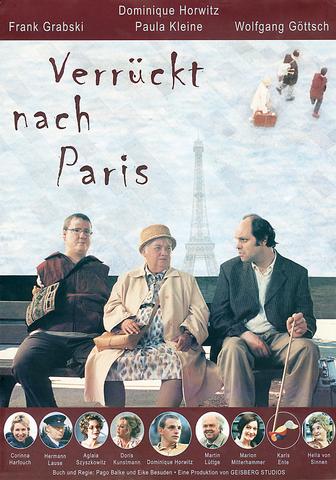
Another departure at the festival was Crazy in Paris, an absurd comic road movie. The three films received standing ovations from the audience and due to overwhelming demand, all had additional screenings added during the festival.
"It turned out to be a very successful marketing strategy for the new appearance of German films. We are very please by the result," said program director Alfred Holigaus.
FINDING NEW MARKETS
Success at the festival has translated into business success for some of these films. Crown Films picked up Mostly Martha from Bavaria Films (BFI), which screened in the German Cinema program. Mostly Martha is a drama/comedy about a workaholic chef whose life is shaken up when she has to take care of an orphaned niece. Another film from BFI picked up by Crown is Shake it All About, a comedy about gay romance.
Taiwan also picked up German films from another German film/TV conglomerate, Telepool. Crown took a jazzy romance drama Gloomy Sunday and Taipei-based Cineplex picked up Knocking on Heaven's Door.
"We are very happy that this is the first time we set up business with Taiwan companies!" said Wolfram Skowuronnek from Telepool. "For me, this situation is a comeback for German films."
Most of the films that proved commercially successful at Berlin had a light touch. Does this mean that history and politics are not subjects that can touch human hearts outside of German-speaking regions? On this point, Margret Hung said, at least for the Taiwan market, that this is the case.
It is still hard for Taiwan audiences to understand the tangled politics of a divided Germany, she said. Crown last year bought The Legend of Rita, a historical profile of an East German terrorist by director Volker Schlondorff. It was a box-office flop.
In this regard, the German representative office or related organizations could play an active part in cultural promotion, Hung suggested. "They could serve as a bridge between German and Taiwan film companies, coordinating marketing or promotional support to sell these films."

Ajay Verma, a consultant gastroenterologist at Kettering general hospital in Northamptonshire, says our gut is a “complex machine.” “It is constantly providing us with the nutrition we need, initially to grow and develop, and then for us to survive, thrive and repair from injury and illness.” How can we keep it functioning well? Put simply: “Make sure what you put into it is balanced, and that you clear out its waste products adequately,” Verma says. “In a general gastroenterology clinic, the most common conditions we see are irritable bowel syndrome (IBS), gastroesophageal reflux disease, inflammatory bowel disease and constipation,” says Nisha

And so, in the wake of US President Donald Trump’s trip to the People’s Republic of China (PRC), all the experts on the Strait of Hormuz suddenly became experts on US-China-Taiwan relations. The Internet has certainly expanded human knowledge. Lots of these sudden experts made noise this week about Trump’s words after the meeting with PRC dictator Xi Jin-ping (習近平). Trump is going to sell out Taiwan! Longtime Taiwan commentator J. Michael Cole summed the situation up neatly in the Guardian: “We need to keep in mind that he has a tendency to say many things — sometimes contradicting himself within

Last week US President Donald Trump was asked by a reporter whether he would speak on the phone to the President of Taiwan. “l’ll speak to him. I speak to everybody. We have that situation very well in hand,” Trump said. This marked the second time in a couple of weeks he had said he would talk to the President of Taiwan. In 2016 he famously took a call from then-president Tsai Ing-wen (蔡英文), when he was president-elect. Despite warnings that the apocalypse was nigh because of a phone call, the world quickly forgot about the conversation between two democratically-elected presidents.

May 25 to May 31 Few believed that apples could be cultivated on a commercial scale in Taiwan’s high mountains. When horticulturalist Cheng Chao-hsiung (程兆熊) first proposed the idea in 1955, both American and Taiwanese colleagues dismissed it as implausible, arguing that temperate fruit could not be reliably grown on a subtropical island, especially on rugged terrain. However, it was this terrain in the Central Mountain Range where many Chinese Civil War veterans were resettled in the late 1950s. With limited job prospects and no family in Taiwan, they were placed on cooperative farms aimed toward self-sufficiency. Some say the conditions


 RSS
RSS