


1. Harry Potter and the Prisoner of Azkaban (哈利波特3阿茲卡班的逃犯)
By J.K. Rowling, Translated by Peng Chien-wen(彭倩文)
The action begins in this third episode of the Harry Potter series when the young wizard "accidentally" causes the dreadful Aunt Marge to inflate like a balloon and float to the ceiling. Fearing punishment, Harry lunges out into the darkness, beginning a journey that will have children and adults cheering.
2. The Premier Voyage of the Century (世紀首航)
By Chen Shui-bian (陳水扁)
In his controversial book, published right before the Dec. 1 elections, the president accuses governmental agencies of being unwilling to cooperate with the DPP government.
3. Quidditch Through the Ages; Fantastic Beasts and Where to Find Them (穿越歷史的魁第奇 and 怪獸與他們的產地)
By J.K. Rowling
Quidditch Through the Ages is the reference book that Harry Potter borrows from the school library; Fantastic Beasts and Where to Find Them is the textbook for all first graders at Harry's school, Hogwarts.
4. Mistletoe (懈寄生)
By Tsai Chih-heng (蔡智恆)
A 120,000-character novel about how a research assistant makes a choice between two girls.
5. Sisy's News (文茜小妹大)
By Sisy Chen (陳文茜)
A collection of comments on a variety of issues by famous social critic and legislator Sisy Chen. More of her comments can be found at http://www.irose.com.tw/
6. Beijing 2008 (經商北京)
By Chang Chin-wen (張靜文), Chow Chenhu (周成虎) and William Zhang (張興華)
The book talks about business opportunities in Beijing after the city successfully won its bid to host the 2008 Olympic Games.
7. Thirty Life Wisdoms of Gerard Hei (破局而出: 黑幼龍的三十個人生智慧)
By Gerard Hei (黑幼龍)
The director of Dale Carnegie Training Taipei gives you 30 pieces of wisdom for life.
8. The Cashflow Quadrant: Rich Dad's Guide to Financial Freedom (富爸爸, 有錢有理)
By Robert Kiyosaki and Sharon Lechter
The book guides all readers in finding their own path to financial freedom.
9. Rich Dad's Guide to Investing: What the Rich Invest in That the Poor and Middle Class Do Not! (富爸爸, 提早享受財富)
By Robert Kiyosaki and Sharon Lechter
The books tells the differences between the rich and the poor.
10. Absolutely Don't Study English (千萬別學英文)
By Chen Tsan Jung (鄭贊容)
Translated by Lee Chen Chiao (李貞嬌)
The Korean writer tells you how to study English the right way.
11. Learning Vocabulary Without Memorizing (學英文不用背單字)
By Richmond Hsieh (謝欽舜)
The author praises the importance of accurate pronunciation, which is beneficial to the learning process of whatever language you are studying.
12. Eternal Light of Love (愛過流星)
By Wu Ruo-chuan (吳若權). Another book from one of Taiwan's best-selling essayists about love, life and comets. 13. Wisdom of Aesop's Fables (伊索寓言的智慧) By Aesop Translated and revised by Liu Yi-chun (劉怡君) A collection of 120 stories translated from Aesop's Fables. The English versions of the stories are also included. 14. The Bible of Reincarnation: Part I (葬書: 上) By Carmelita Chao (趙慧娟) A mystical novel from the Hong Kong-born teacher of meditation who spent much of her life in Taiwan and is now based in the San Francisco area. 15. An Account of Lee Teng-hui in Power (李登輝執政告白實錄) By Tzou Jiing-wen (鄒景雯) A more faithful translation of the title would read "A True Account of Lee's Tell-All Regarding His Presidency" because the book is less an account, and more a settling of accounts from the former president. 16. The Story of Tsai Chuen-jen (稻田裡舞出跨國企業: 佳姿蔡純真的故事) By (黃秀錦) The story of Tsai Chuen-jen, who established the "Jia Chi Rhythm Dance World" in 1977. 17. The Old Fox's Sayings (老狐狸格言) By Lee Ho (李赫) The author tries to overturn some famous old sayings by providing various new concepts and ideas for the readers. 18. Awaken the Giant Within (栽培自己) By Wu Ruo-chuan (吳若權) A book from one of Taiwan's best-selling essayists on life. 19. Travel English (輕鬆旅遊說英語) By Chen Kuan-chien (陳冠蒨) An English-study travel book which covers different topics 20. Say it to Your Heart (把話說到心窩裡) By Liu Yung (劉墉) A meditation by the maestro of inspirational books -- about speech and the right ways to express oneself.

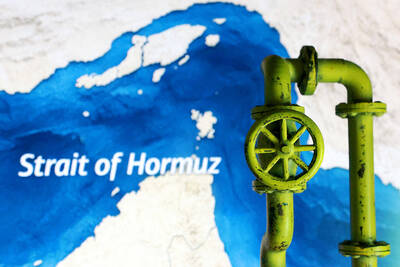
The US war on Iran has illuminated the deep interdependence of Asia on flows of oil and related items as raw materials that become the basis of modern human civilization. Australians and New Zealanders had a wake up call. The crisis also emphasizes how the Philippines is a swatch of islands linked by jet fuel. These revelations have deep implications for an invasion of Taiwan. Much of the commentary on the Taiwan scenario has looked at the disruptions to world trade, which will be in the trillions. However, the Iran war offers additional specific lessons for a Taiwan scenario. An insightful
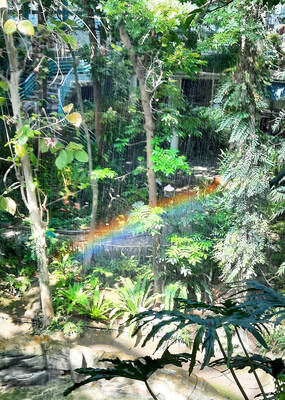
It’s only half the size of its more famous counterpart in Taipei, but the Botanical Garden of the National Museum of Nature Science (NMNS, 國立自然科學博物館植物園) is surely one of urban Taiwan’s most inviting green spaces. Covering 4.5 hectares immediately northeast of the government-run museum in Taichung’s North District (北區), the garden features more than 700 plant species, many of which are labeled in Chinese but not in English. Since its establishment in 1999, the site’s managers have done their best to replicate a number of native ecosystems, dividing the site into eight areas. The name of the Coral Atoll Zone might
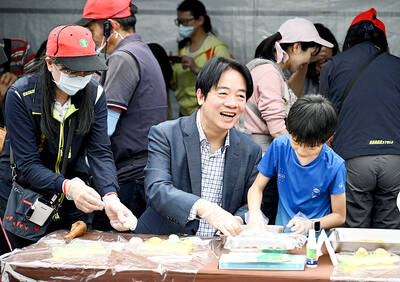
Polling data often confirms what we expect, but sometimes it throws up surprises. When examined over time, some patterns appear that speak to something bigger going on. In this column, whenever possible, Formosa’s polls are used. Despite the sometimes cringeworthy antics of Formosa’s Chairman, Wu Tzu-Chia (吳子嘉), the data produced includes detailed breakdowns crucial for analysis. It has also been conducted monthly 11-12 times a year for many years with many of the same questions, allowing for analysis over time. When big shifts do occur between one month and the next it is usually in response to some event in
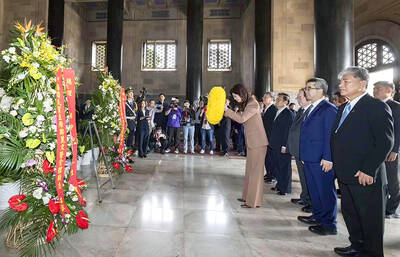
The problem with Marx’s famous remark that history repeats itself, first as tragedy, the second time as farce, is that the first time is usually farce as well. This week Chinese Nationalist Party (KMT) Chair Cheng Li-wun (鄭麗文) made a pilgrimage to the People’s Republic of China (PRC) “to confer, converse and otherwise hob-nob” with Chinese Communist Party (CCP) officials. The visit was an instant international media hit, with major media reporting almost entirely shorn of context. “Taiwan’s main opposition leader landed in China Tuesday for a rare visit aimed at cross-strait ‘peace’”, crowed Agence-France Presse (AFP) from Shanghai. Rare!


 RSS
RSS