


Nan Shan Life Insurance Co’s (南山人壽) exposure to Colombia is NT$62.91 billion (US$2 billion), Financial Supervisory Commission (FSC) Chairman Peng Jin-lung (彭金隆) said yesterday, as geopolitical tensions in Latin America drew legislative scrutiny.
Peng made the remarks at a meeting of the Legislative Yuan’s Finance Committee after US President Donald Trump threatened possible military action against Colombia following a US raid in Caracas last week that led to the capture of deposed Venezuelan president Nicolas Maduro.
Nan Shan Life’s exposure to Venezuela stood at NT$13.55 billion, Peng said.

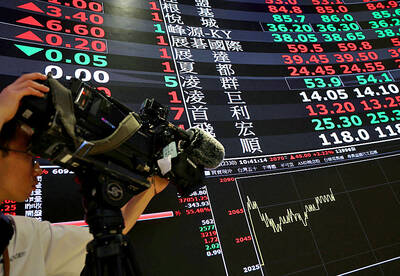
Photo: Tu Chien-jung, Taipei Times
The insurer’s Venezuela-related investments were mainly in AA-rated bonds issued by international development banks, he said.
Democratic Progressive Party (DPP) Legislator Kuo Kuo-wen (郭國文) said during the meeting that life insurers had been reluctant to invest domestically, not only due to limited investment options, but also because higher-risk overseas investments offer higher guaranteed returns.
That has led to excessive hedging and rising costs, Kuo said.
As of November last year, Taiwan’s banking sector had total exposure of NT$14.51 billion to Venezuela, with one institution accounting for NT$13.55 billion, Kuo cited data as showing.
Total bank exposure to Colombia was NT$816 million, with the largest single exposure at NT$392 million.
In contrast, Taiwan’s insurance sector had no exposure to Venezuela, while its total exposure to Colombia was NT$138.51 billion, with one insurer alone accounting for NT$62.91 billion.
Kuo asked the FSC head whether the insurer with NT$62.91 billion in exposure was Nan Shan Life, which Peng confirmed.
Under the Financial Holding Company Act (金融控股公司法), firms are required to disclose their exposure amounts, the legislator said.
Major financial groups such as Fubon Financial Holding Co (富邦金控), Cathay Financial Holding Co (國泰金控) and CTBC Financial Holding Co (中信金控) each reported exposure of NT$18.7 billion, NT$18.4 billion and NT$16.3 billion respectively, none of which matched the largest figure, he added.
When asked whether the FSC would require insurers to gradually reduce such exposure, Peng said the issue should be addressed through systemic reforms rather than on a case-by-case basis.
The regulator would review rules governing non-investment-grade assets, including investment proportions and limits, from risk and return perspectives, he said.
Separately, the US dollar’s 12-month non-deliverable forward (NDF) points against the New Taiwan dollar this week turned positive for the first time in more than nine years, a sign that hedging costs have significantly eased following the FSC’s loosening of foreign exchange accounting rules for Taiwanese insurers from Thursday last week.
The gauge had fallen below zero and hit the lowest level on record in June last year.
Insurers typically sell the US dollar-NT dollar currency pair through the offshore NDF market to hedge against a weakening greenback.
The 12-month NDF points yesterday morning stood at 0.005 in Asia.
The shift in hedging costs reflects the massive scale of the industry’s foreign holdings.
About NT$15.2 trillion of insurers’ assets are exposed to exchange-rate risk, based on regulatory calculations that exclude foreign currency-denominated policies. About 60 percent of that exposure is hedged.
Additional reporting by Bloomberg
After several years flying high as Asia’s best Nvidia Corp proxy, Taiwan Semiconductor Manufacturing Co (TSMC, 台積電) is increasingly vying with other artificial intelligence (AI) stocks for investor attention. Stock traders are chasing a wider array of beneficiaries as mainstream usage of AI creates demand for hardware beyond the most-advanced chips TSMC makes for Nvidia. Subthemes from the deepening memory crunch to advances in robotics are also luring bids. At the same time, investment caps on single stocks are pushing funds to diversify, while retail investors long familiar with TSMC through its US depositary receipts are being offered a broader set of

Netherlands-based semiconductor equipment supplier ASML Holding NV yesterday said that it is planning to hire an additional 1,000 people in Taiwan this year in response to growing demand from clients. ASML had previously planned to recruit 600 people this year, but that the plan has been adjusted upward, ASML vice president and ASML Taiwan general manager Grace Wang (汪佳慧) told reporters. ASML has a workforce of more than 4,500 in Taiwan, accounting for about 10 percent of its global total, Wang said. This year’s recruitment campaign would focus on adding people in the customer support, manufacturing and supply chain domains to assist ASML

UNDER MICROSCOPE: Taiwan detained three people who allegedly conspired to buy servers in Taiwan and export them using fraudulent documentation, prosecutors said Nvidia Corp chief executive officer Jensen Huang (黃仁勳) on Saturday urged Super Micro Computer Inc to tighten up on compliance after Taiwan detained three people this week for allegedly making fraudulent declarations about artificial intelligence (AI) servers made by its US partner. The development marked the nation’s first crackdown on semiconductor smuggling, which grew after the US slapped restrictions on exports of high-end chips such as Nvidia AI accelerators to China. Nvidia is “rigorous” in explaining regulations to all of its partners, Huang told reporters after arriving in Taipei. “Ultimately Super Micro has to run their own company,” he said in response to

Nvidia Corp yesterday announced that CEO Jensen Huang (黃仁勳) would attend an employee meeting in Taipei tomorrow to celebrate the launch of the company’s Taiwan headquarters project. Huang would attend a gathering at the site of Nvidia’s planned headquarters in Beitou Shilin Technology Park (北投士林科技園區), the company said in a statement. After arriving in Taiwan on Saturday last week, Huang told reporters that he plans to meet with Quanta Computer Inc (廣達) chairman Barry Lam (林百里) and Taiwan Semiconductor Manufacturing Co (TSMC, 台積電) chairman C.C. Wei (魏哲家), and would attend the groundbreaking ceremony for Nvidia’s Taiwan headquarters tomorrow. Nvidia has not yet applied


 RSS
RSS