


Enhanced tax credits that have helped reduce the cost of health insurance for the vast majority of US Affordable Care Act enrollees expired on Jan.1, cementing higher health costs for millions of Americans at the start of the new year.
Democrats forced a 43-day US government shutdown over the issue. Moderate Republicans called for a solution to save their political aspirations this year. US President Donald Trump floated a way out, only to back off after conservative backlash.
In the end, no one’s efforts were enough to save the subsidies before their expiration date. A US House of Representatives vote expected this month could offer another chance, but success is far from guaranteed.

Photo: Reuters
The change affects a diverse cross-section of Americans who do not get their health insurance from an employer and do not qualify for Medicaid or Medicare — a group that includes many self-employed workers, small business owners, farmers and ranchers.
It comes at the start of a high-stakes midterm election year, with affordability — including the cost of healthcare — topping the list of voters’ concerns.
“It really bothers me that the middle class has moved from a squeeze to a full suffocation, and they continue to just pile on and leave it up to us,” said 37-year-old single mom Katelin Provost, whose healthcare costs are set to jump.
“I’m incredibly disappointed that there hasn’t been more action,” she added.
Some families grapple with insurance costs that are doubling, tripling or more
The expired subsidies were first given to Affordable Care Act enrollees in 2021 as a temporary measure to help Americans get through the COVID-19 pandemic. Democrats in power at the time extended them, moving the expiration date to the start of this year.
With the expanded subsidies, some lower-income enrollees received healthcare with no premiums, and high earners paid no more than 8.5 percent of their income. Eligibility for middle-class earners was also expanded.
On average, the more than 20 million subsidized enrollees in the Affordable Care Act program are seeing their premium costs rise by 114 percent this year, according to an analysis by the healthcare research nonprofit KFF.
Those surging prices come alongside an overall increase in health costs in the US, which are further driving up out-of-pocket costs in many plans.
Some enrollees such as Salt Lake City, Utah, freelance filmmaker and adjunct professor Stan Clawson, have absorbed the extra expense. Clawson said he was paying just under US$350 a month for his premiums last year, a number that would jump to about US$500 a month this year. It is a strain for the 49-year-old, but one he’s willing to take on, because he lives with paralysis from a spinal cord injury.
Others, like Provost, are dealing with steeper hikes. The social worker’s monthly premium payment is increasing from US$85 a month to about US$750.
Health analysts have predicted the expiration of the subsidies would drive many of the 24 million total Affordable Care Act enrollees — especially younger and healthier Americans — to forgo health insurance coverage altogether.
Over time, that could make the program more expensive for the older, sicker population that remains.
An analysis conducted in September last year by the Urban Institute and Commonwealth Fund projected the higher premiums from expiring subsidies would prompt about 4.8 million Americans to drop coverage this year.
However, with the window to select and change plans still ongoing until Jan. 15 in most states, the final effect on enrollment is yet to be determined.
Provost said she is holding out hope that Congress finds a way to revive the subsidies early in the year — but if not, she would drop herself off the insurance and keep it only for her four-year-old daughter.
She cannot afford to pay for both of their coverage at the current price.
Last year, after Republicans cut more than US$1 trillion in federal healthcare and food assistance with Trump’s big tax and spending cuts bill, Democrats repeatedly called for the subsidies to be extended. However, while some Republicans in power acknowledged the issue needed to be addressed, they refused to put it to a vote until late in the year.
Last month, the US Senate rejected two partisan healthcare bills — a Democratic pitch to extend the subsidies for three more years and a Republican alternative that would instead provide Americans with health savings accounts.
In the House of Representatives, four centrist Republicans broke with party leadership and joined forces with Democrats to force a vote that could come as soon as this month on a three-year extension of the tax credits. However, with the Senate already having rejected such a plan, it is unclear whether it could get enough momentum to pass.
Meanwhile, Americans whose premiums are skyrocketing say lawmakers do not understand what it is really like to struggle to get by as health costs ratchet up with no relief.
Many say they want the subsidies restored alongside broader reforms to make healthcare more affordable for all Americans.
“Both Republicans and Democrats have been saying for years, oh, we need to fix it. Then do it,” said Chad Bruns, a 58-year-old Affordable Care Act enrollee in Wisconsin.
“They need to get to the root cause, and no political party ever does that,” Bruns added.

Cairo’s new monorail slices across the city skyline, running above the familiar chaos of blaring horns and aging buses’ exhaust fumes that mark rush hour below. The US$4.5 billion monorail, opened this month, is among Egypt’s most prominent new transport projects, part of a debt-funded infrastructure drive criticized for sapping state finances while bringing limited benefits to most of the country’s 109 million people. “It feels like you’re in a different country,” said Ramy Sayed, a restaurant manager, aboard a driverless Innovia 300 train. “No noise, no traffic, we’re not used to this.” The eastern line runs 56km from the bustling middle-class
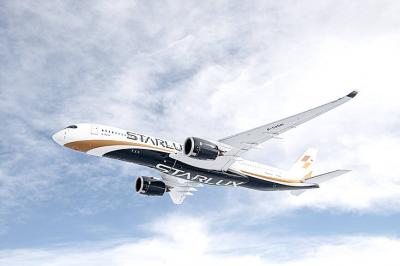
Starlux Airlines Co (星宇航空) today unveiled a long-haul network expansion plan at a shareholders’ meeting in Taipei, including direct flights to Barcelona, Spain, and Zurich, Switzerland, as well as a service connecting Taipei, Sydney and New Zealand. Starlux is to become the first Taiwanese carrier to offer non-stop services to the two European cities, while the inaugural oceanic route is expected to expand transit opportunities within the Australia-New Zealand market, Starlux said. Flight services to Chicago, Dallas, Washington and New York are under evaluation, the airline added. Prior to the shareholders’ meeting, the airline earlier this year announced that it would be

Taiwanese prosecutors suspect that three people successfully smuggled at least one shipment of Nvidia Corp artificial intelligence (AI) chips to China after first exporting them to Japan, people familiar with the matter said. The trio was detained last week by the Keelung District Prosecutors’ Office for allegedly falsifying documents related to exports of Super Micro Computer Inc servers containing advanced Nvidia chips, which the US has barred from sale to China without a license from Washington. The move marked Taiwan’s first public crackdown on AI chip diversion after years of pressure from the US to take a more active role in curtailing

Taiwan Semiconductor Manufacturing Co (TSMC, 台積電) employee bonuses are likely to grow more than 30 percent this year, in line with the past few years as the company’s profits continue to set new records, an anonymous source cited TSMC chairman C.C. Wei (魏哲家) as saying yesterday. TSMC, the world’s largest contract chipmaker, is committed to taking care of its workers, the source said, citing Wei’s meeting with employees yesterday morning. Wei also expressed gratitude to employees for their contribution to the company’s improving bottom line, the source added. Since 2023, TSMC’s employee bonuses have grown at an annual rate of


 RSS
RSS