


Taiwan prosecutors suspect that three individuals successfully smuggled at least one shipment of Nvidia Corp artificial intelligence (AI) chips to China after first exporting them to Japan, people familiar with the matter said.
The trio was detained last week by Keelung District Prosecutors Office for allegedly falsifying documents related to exports of Super Micro Computer Inc servers containing advanced Nvidia chips, which the US has barred from sale to China without a license from Washington.
The move marked the island democracy’s first public crackdown on AI chip diversion after years of pressure from the US to take a more active role in curtailing China’s tech access.
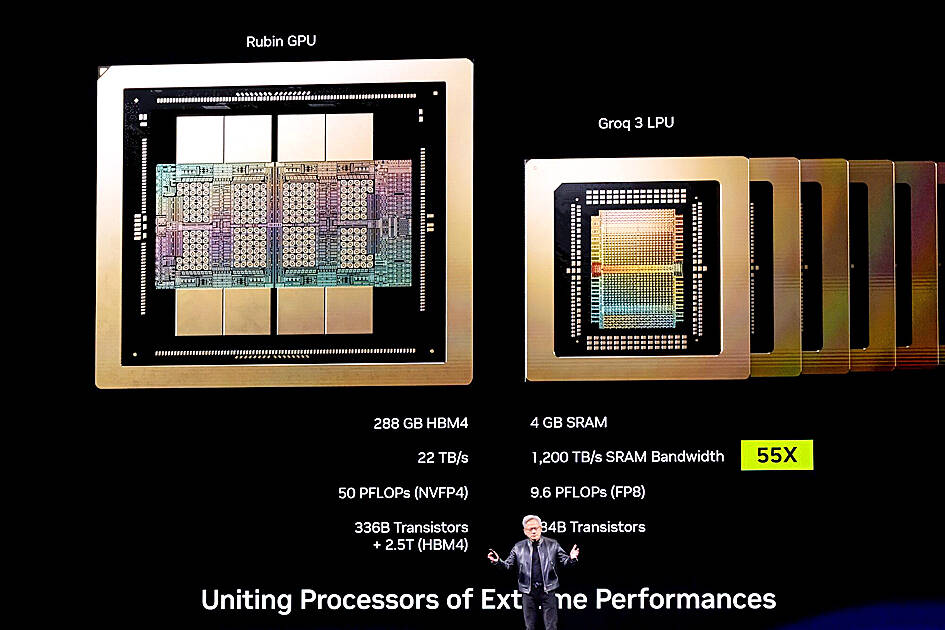
Photo: David Paul Morris, Bloomberg
When Taiwanese authorities apprehended the three defendants — who’ve now been officially detained — they also seized about 50 servers for which they accuse the trio of preparing fraudulent export documents. But at least one shipment had already gone through Taiwan customs, according to the people familiar with the matter, who requested anonymity to speak about an ongoing criminal investigation.
That earlier shipment went to Japan before eventually making it to Hong Kong, a known waypoint for hardware that’s ultimately shipped to mainland China, the people said.
The people declined to specify the amount of hardware that Taiwan authorities believe was successfully smuggled. The defendants also allegedly planned to use Japan as an intermediary location for the batch of servers that Taiwan officials seized last week, according to the people.
The probe may be the first known instance of prosecutors targeting an AI-chip smuggling route through Japan, a close ally of the US and cornerstone of American defense strategy in the Asia-Pacific. Other cases have focused on diversion via Southeast Asia, including the biggest such indictment in the US.
Japan is one of many locations in Asia where Chinese companies access American AI chips — by renting hardware that’s owned by foreign firms and installed in overseas data centers. That setup is generally permitted under US export control rules, which were first imposed in 2022 over concerns that advanced AI could lend Beijing a military edge.
But many in Washington have long been convinced that Chinese firms have also managed to procure smuggled hardware within their home country. And after years of relative quiet on the chip export control enforcement front, American prosecutors are now pursuing at least five criminal cases related to semiconductor diversion.
That’s on top of chip export fraud cases in Taiwan and Singapore, which don’t have their own semiconductor export controls and instead rely on local laws to address the issue.
Taiwan authorities haven’t accused Nvidia or Super Micro of any wrongdoing. Nvidia didn’t respond to a request for comment for this story, while Super Micro declined to comment.

After several years flying high as Asia’s best Nvidia Corp proxy, Taiwan Semiconductor Manufacturing Co (TSMC, 台積電) is increasingly vying with other artificial intelligence (AI) stocks for investor attention. Stock traders are chasing a wider array of beneficiaries as mainstream usage of AI creates demand for hardware beyond the most-advanced chips TSMC makes for Nvidia. Subthemes from the deepening memory crunch to advances in robotics are also luring bids. At the same time, investment caps on single stocks are pushing funds to diversify, while retail investors long familiar with TSMC through its US depositary receipts are being offered a broader set of

Netherlands-based semiconductor equipment supplier ASML Holding NV yesterday said that it is planning to hire an additional 1,000 people in Taiwan this year in response to growing demand from clients. ASML had previously planned to recruit 600 people this year, but that the plan has been adjusted upward, ASML vice president and ASML Taiwan general manager Grace Wang (汪佳慧) told reporters. ASML has a workforce of more than 4,500 in Taiwan, accounting for about 10 percent of its global total, Wang said. This year’s recruitment campaign would focus on adding people in the customer support, manufacturing and supply chain domains to assist ASML
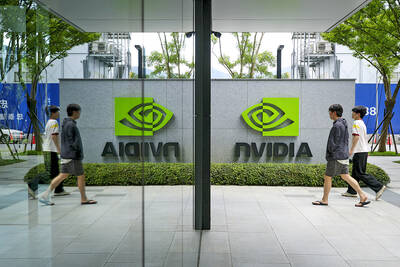
UNDER MICROSCOPE: Taiwan detained three people who allegedly conspired to buy servers in Taiwan and export them using fraudulent documentation, prosecutors said Nvidia Corp chief executive officer Jensen Huang (黃仁勳) on Saturday urged Super Micro Computer Inc to tighten up on compliance after Taiwan detained three people this week for allegedly making fraudulent declarations about artificial intelligence (AI) servers made by its US partner. The development marked the nation’s first crackdown on semiconductor smuggling, which grew after the US slapped restrictions on exports of high-end chips such as Nvidia AI accelerators to China. Nvidia is “rigorous” in explaining regulations to all of its partners, Huang told reporters after arriving in Taipei. “Ultimately Super Micro has to run their own company,” he said in response to

Nvidia Corp yesterday announced that CEO Jensen Huang (黃仁勳) would attend an employee meeting in Taipei tomorrow to celebrate the launch of the company’s Taiwan headquarters project. Huang would attend a gathering at the site of Nvidia’s planned headquarters in Beitou Shilin Technology Park (北投士林科技園區), the company said in a statement. After arriving in Taiwan on Saturday last week, Huang told reporters that he plans to meet with Quanta Computer Inc (廣達) chairman Barry Lam (林百里) and Taiwan Semiconductor Manufacturing Co (TSMC, 台積電) chairman C.C. Wei (魏哲家), and would attend the groundbreaking ceremony for Nvidia’s Taiwan headquarters tomorrow. Nvidia has not yet applied


 RSS
RSS