


Hon Hai Precision Industry Co (鴻海精密) yesterday posted 26.51 percent quarterly growth in revenue for last quarter to NT$2.6 trillion (US$82.44 billion), the strongest on record for the period and above expectations, but the company forecast a slight revenue dip this quarter due to seasonal factors.
On an annual basis, revenue last quarter grew 22.07 percent, the company said.
Analysts on average estimated about NT$2.4 trillion increase.
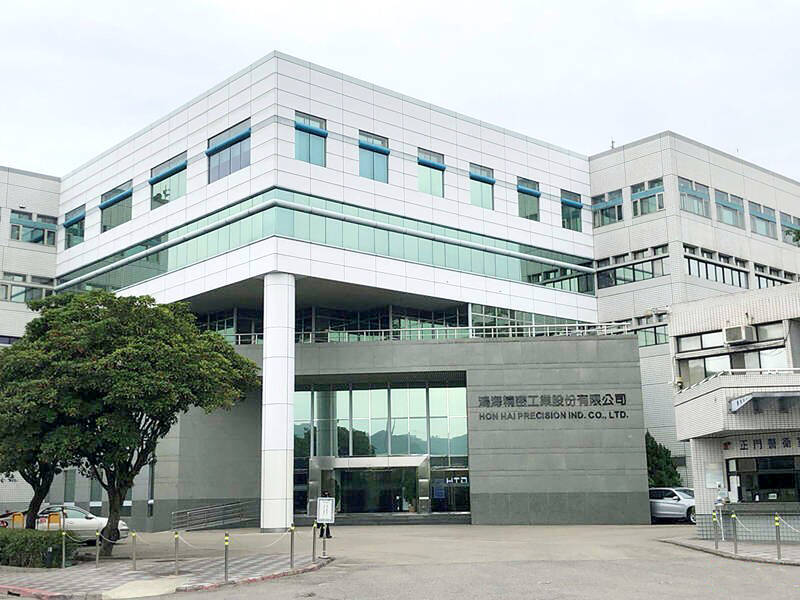
Photo: Fang Wei-chieh, Taipei Times
Hon Hai, which assembles servers for Nvidia Corp and iPhones for Apple Inc, is expanding its capacity in the US, adding artificial intelligence (AI) server production in Wisconsin and Texas, where it operates established campuses.
This quarter is traditionally a low season for information and communication technology, but that is expected to be partially offset by the continued rise in AI server rack shipments, Hon Hai said.
First-quarter revenue growth could also be hurt by a high comparison base last year, but sales could still come closer to the higher end of the previous five-year range, the company added.
Hon Hai in November last year said it remains bullish about this year, driven by strong growth in its cloud and networking products.
Last quarter, cloud and networking products — primarily servers — registered a robust year-on-year increase in revenue, in line with the company’s guidance, and electronic components also posted strong sales growth, the company said.
However, smart consumer electronics revenue edged down slightly from a year earlier owing to exchange rate fluctuations, it said, adding that computing products also retreated due to softening demand.
Overall, Hon Hai last year reported robust revenue growth of 18.07 percent year-on-year to NT$8.1 trillion, a record high and better than its earlier forecast, up from NT$6.86 trillion the previous year, the company said.
It was the first time the company’s annual revenue increased by more than NT$1 trillion from a year earlier, thanks to strong growth in cloud and networking products, Hon Hai said.
Growth in its AI server revenue is expected to continue this year and the next two to three years, supported by rising capital expenditure from major cloud service providers, it said.
Capital expenditures from Microsoft Corp, Alphabet Inc, Amazon.com Inc and Meta Platforms Inc are expected to rise 34 percent to about US$440 billion combined over the next year, data compiled by Bloomberg showed.
Meanwhile, chip firms such as Nvidia and memory partner Micron Technology Inc have reaffirmed expectations that AI demand would remain solid in the coming quarters.
Additional reporting by Bloomberg

Cairo’s new monorail slices across the city skyline, running above the familiar chaos of blaring horns and aging buses’ exhaust fumes that mark rush hour below. The US$4.5 billion monorail, opened this month, is among Egypt’s most prominent new transport projects, part of a debt-funded infrastructure drive criticized for sapping state finances while bringing limited benefits to most of the country’s 109 million people. “It feels like you’re in a different country,” said Ramy Sayed, a restaurant manager, aboard a driverless Innovia 300 train. “No noise, no traffic, we’re not used to this.” The eastern line runs 56km from the bustling middle-class
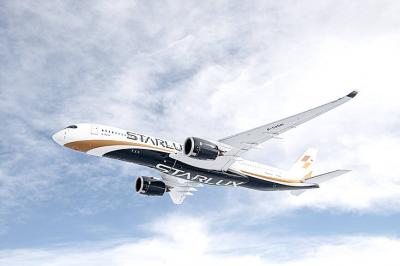
Starlux Airlines Co (星宇航空) today unveiled a long-haul network expansion plan at a shareholders’ meeting in Taipei, including direct flights to Barcelona, Spain, and Zurich, Switzerland, as well as a service connecting Taipei, Sydney and New Zealand. Starlux is to become the first Taiwanese carrier to offer non-stop services to the two European cities, while the inaugural oceanic route is expected to expand transit opportunities within the Australia-New Zealand market, Starlux said. Flight services to Chicago, Dallas, Washington and New York are under evaluation, the airline added. Prior to the shareholders’ meeting, the airline earlier this year announced that it would be

Taiwanese firms have increased investment in the Philippines in recent years as Manila’s ties with Washington deepen and global supply chains continue to shift away from China, an expert at the Chung-Hua Institution for Economic Research (CIER, 中華經濟研究院) said yesterday. The Philippines had not been among Taiwanese investors’ top choices in Southeast Asia, CIER Taiwan ASEAN Studies Center director Kristy Hsu (徐遵慈) said at a seminar in Taipei. However, Taiwan’s investment in the country has grown significantly since the COVID-19 pandemic, reaching US $257 million last year, a high in recent years, she said. Although Taiwan’s total investment in the Philippines still lags
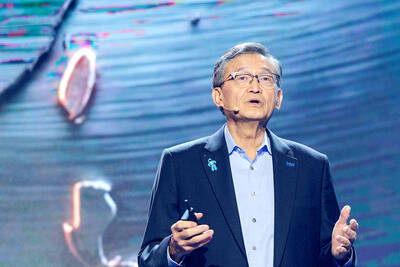
Intel Corp regards Taiwan Semiconductor Manufacturing Co (TSMC, 台積電) as a longstanding partner, as the US chipmaker would continue outsourcing production of advanced chips to TSMC, Intel chief executive officer Lip-Bu Tan (陳立武) said yesterday. “I don’t look at people as competitors. I look at the collaboration... Nvidia is also, you know, a good friend,” Tan told a news conference following his keynote speech at the Computex trade show in Taipei. “It’s a very trusted partnership for us... We are a big, top customer for them, and we’re going to continue doing that,” he said, referring to TSMC, the world’s largest foundry


 RSS
RSS