


The global smartphone market is expected to contract 12.9 percent this year due to the unprecedented memorychip shortage, marking “a crisis like no other,” researcher International Data Corp (IDC) said.
The new forecast, a dramatic revision down from earlier estimates, gives the latest accounting of the ongoing memory crunch that is affecting every corner of the electronics industry. The demand for advanced memory to power artificial intelligence (AI) tasks has drained global supply until well into next year and jeopardizes the business model of many smartphone makers.
IDC forecast about 1.1 billion mobile shipments this year, down from 1.26 billion the prior year and erasing years of gradual gains.

Photo: Bloomberg
Smartphone manufacturers are adapting to the elevated component costs by reining in specifications, eliminating unprofitable entry-level models and pushing consumers to buy more premium devices.
“The tariffs and [COVID-19] pandemic crisis seem a joke compared to this,” IDC senior research director Nabila Popal said. “The smartphone market will witness a seismic shift by the time this crisis is over — in size, average selling prices and competitive landscape. We don’t expect the situation to ease up until mid-2027, at least.”
Another research firm, Counterpoint, yesterday issued a similarly dire forecast, predicting a decline of 12.4 percent for smartphone sales this year, citing a “full-scale supply shock” related to memory chips.
This year “is shaping up to be the worst year in smartphone history,” Counterpoint analyst Yang Wang (汪洋) said. “The industry has never seen a drop this steep.”
The spiking cost of chips — both DRAM for handling processing tasks and NAND for storage — is affecting already thin profit margins for many Android device brands. Chinese players such as Xiaomi Corp (小米) and Oppo (歐珀) engage in a fierce battle for consumers, spending heavily on the top components, to secure a larger share of the domestic market and burnish their credentials on the global stage.
Their entry-level devices are most exposed to the new cost pressures, as memory represents a larger share of their cost of materials, IDC said.
“We just wish there was more memory,” said Cristiano Amon, chief executive officer of Qualcomm Inc, the biggest provider of mobile processors, after reporting earnings this week. “That issue is not just the price. The issue is just availability. So I think the memory availability will determine the overall size of the handset market.”
Premium handsets, such as the bulk of Apple Inc’s iPhone lineup, would weather the crisis better, although companies such as Xiaomi and Lenovo Group Ltd (聯想) have warned that consumer prices might have to rise.
The memory shortage is set to extend into next year and even when supply is replenished, returning to the old pricing structures now appears unlikely.
“The days of cheap smartphones are gone, as even when the crisis is over, we don’t expect memory prices to go back down to 2025 levels,” Popal said.
Last year, there were about 170 million smartphones shipped that cost below US$100, a segment that IDC said is now uneconomical to maintain.

Cairo’s new monorail slices across the city skyline, running above the familiar chaos of blaring horns and aging buses’ exhaust fumes that mark rush hour below. The US$4.5 billion monorail, opened this month, is among Egypt’s most prominent new transport projects, part of a debt-funded infrastructure drive criticized for sapping state finances while bringing limited benefits to most of the country’s 109 million people. “It feels like you’re in a different country,” said Ramy Sayed, a restaurant manager, aboard a driverless Innovia 300 train. “No noise, no traffic, we’re not used to this.” The eastern line runs 56km from the bustling middle-class

Starlux Airlines Co (星宇航空) today unveiled a long-haul network expansion plan at a shareholders’ meeting in Taipei, including direct flights to Barcelona, Spain, and Zurich, Switzerland, as well as a service connecting Taipei, Sydney and New Zealand. Starlux is to become the first Taiwanese carrier to offer non-stop services to the two European cities, while the inaugural oceanic route is expected to expand transit opportunities within the Australia-New Zealand market, Starlux said. Flight services to Chicago, Dallas, Washington and New York are under evaluation, the airline added. Prior to the shareholders’ meeting, the airline earlier this year announced that it would be

Taiwanese prosecutors suspect that three people successfully smuggled at least one shipment of Nvidia Corp artificial intelligence (AI) chips to China after first exporting them to Japan, people familiar with the matter said. The trio was detained last week by the Keelung District Prosecutors’ Office for allegedly falsifying documents related to exports of Super Micro Computer Inc servers containing advanced Nvidia chips, which the US has barred from sale to China without a license from Washington. The move marked Taiwan’s first public crackdown on AI chip diversion after years of pressure from the US to take a more active role in curtailing
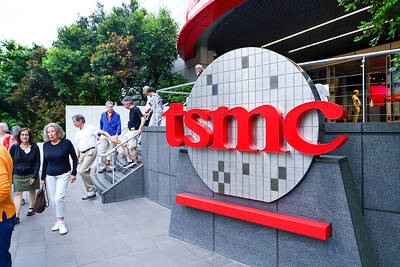
Taiwan Semiconductor Manufacturing Co (TSMC, 台積電) employee bonuses are likely to grow more than 30 percent this year, in line with the past few years as the company’s profits continue to set new records, an anonymous source cited TSMC chairman C.C. Wei (魏哲家) as saying yesterday. TSMC, the world’s largest contract chipmaker, is committed to taking care of its workers, the source said, citing Wei’s meeting with employees yesterday morning. Wei also expressed gratitude to employees for their contribution to the company’s improving bottom line, the source added. Since 2023, TSMC’s employee bonuses have grown at an annual rate of


 RSS
RSS