

Yageo Corp (國巨), the world’s third-largest supplier of multilayer ceramic capacitors, has formed a strategic alliance with Hon Hai Precision Industry Co (鴻海精密) to develop key electronic components for electric vehicles and digital healthcare, it said yesterday.
The alliance is to help Yageo boost its revenue from high-end components for vehicles and industrial, medical and aerospace devices, as well as those used in 5G and Internet-of-Things devices, the company said.
The companies signed the strategic alliance agreement at Yageo’s headquarters in New Taipei City’s Sindian District (新店).
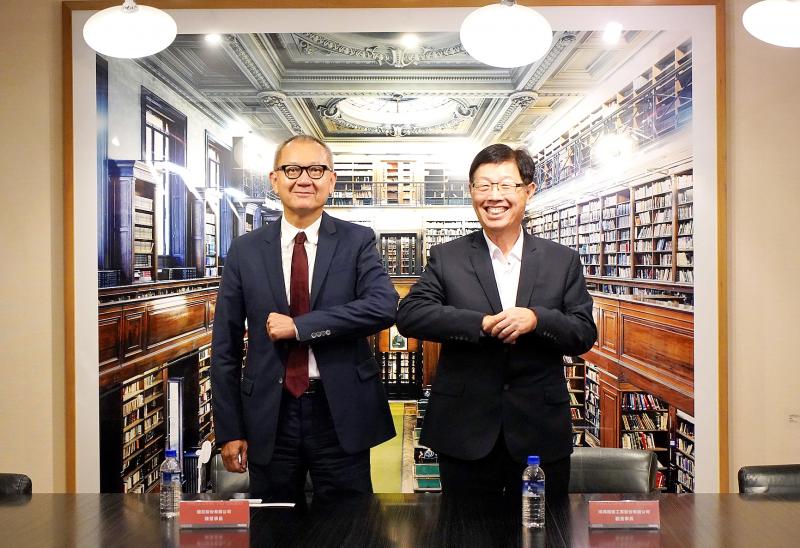
Photo courtesy of Yageo Corp
Their cooperation is to start this quarter, the companies said in a joint statement.
“Through the cooperation with Hon Hai, we are able to enlarge our mutual technological benefits and resource sharing to maximize the value of both groups and see multiple growths in the future,” Yageo chairman Pierre Chen (陳泰銘) said.
The passive components maker would invest resources in advancing new technology development platforms for Hon Hai to provide customized and advanced electronic components primarily used in electric vehicles, medical treatment, artificial intelligence, robots and 5G devices.
The combination of global production, and operational and technical capabilities of high-end key electronic components would provide them win-win results and create even higher value, the statement said.
Yageo would not only focus on supplying the high-end 5G, automotive, industrial, aerospace and medical segments, but also provide its expertise and one-stop shopping platform for special semiconductor packaging and testing services, following a series of mergers and acquisitions, such as Fort Lauderdale, Florida-based Kemet Corp, it said.
“Through this strategic alliance, we will focus more on the development of new customers and products with joint resources to meet global customers’ needs in supporting the supply chain and functional design development, and come up with more value-added solutions,” Hon Hai chairman Young Liu (劉揚偉) said in the statement.
Yageo has 15 design and research and development centers and 42 manufacturing sites around the world and is a provider of quality design-in services.
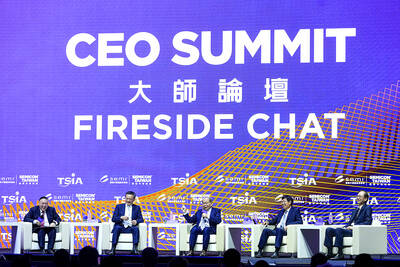
Taiwan Semiconductor Manufacturing Co (TSMC, 台積電) is accelerating capacity expansion fivefold this year, but it is still unable to keep up with the booming demand for artificial intelligence (AI), TSMC deputy cochief operating officer Cliff Hou (侯永清) said yesterday. This year alone, the company is building 25 chip manufacturing fabs and advanced packaging facilities worldwide, including 13 plants in Taiwan, which is unprecedented, Hou said at a CEO Summit fireside chat at Semicon Taiwan in Taipei. In the past, the company was able to build five or six factories a year, said Hou, who is also chairman of the Taiwan Semiconductor Industry
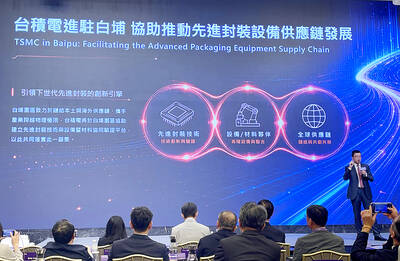
EXPANSION: The 3-hectare site would include small clean rooms and laboratories as well as a world-class training base for advanced packaging talent, the company said Taiwan Semiconductor Manufacturing Co (TSMC, 台積電) is to establish a presence in the Baipu Industrial Park (白埔產業園區) in Kaohsiung to accelerate the testing and validation of semiconductor materials and equipment, a company executive said on Tuesday. The company is working with the Ministry of Economic Affairs and the Kaohsiung City Government on the plan, which is expected to improve validation efficiency by 25 to 50 percent, TSMC vice president of advanced packaging technology and service Jun He (何軍) said at a 3D IC global summit held ahead of the Semicon Taiwan trade show, which opened in Taipei yesterday. TSMC would also conduct
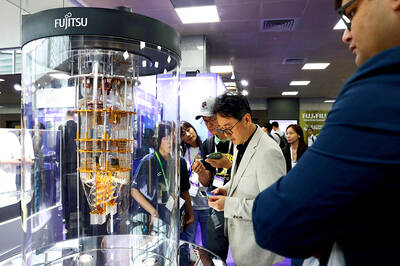
Visitors look at a 64-qubit superconducting quantum computer on display at the Fujitsu booth at the Semicon Taiwan trade show in Taipei yesterday.

Silicon photonics would play a dominant role next year and make chip-level co-packaged optics (CPO) packaging possible, Taiwan Semiconductor Manufacturing Co (TSMC, 台積電) said yesterday. “For years, critics questioned the reliability of CPO. The doubts are being thoroughly dismantled by real-world data and market validation,” TSMC vice president of advanced packaging technology development K.C. Hsu (徐國晉) said at a SEMI forum in Taipei. The company is on track to enter production of CPO later this year, Hsu said in another forum arranged by Imec in Taipei yesterday, about four months after TSMC announced its progress in CPO development in May.


 RSS
RSS