


The US and Britain have inserted covert intelligence agents into Libya to make contact with rebels and to gather data to guide coalition air strikes, a report said on Wednesday.
The White House refused to comment on the apparent shadow war in Libya, and also declined to discuss another report that US President Barack Obama had signed a secret order allowing CIA operations in the country.
A senior US official did, however, warmly welcome the defection to Britain of Libyan Foreign Minister Mussa Kussa, interpreting his flight as a sign that Libyan leader Muammar Qaddafi’s inner circle was beginning to crumble under massive pressure.
The New York Times said the CIA had inserted clandestine agents into Libya to gather data for airstrikes and establish links with rebels, who on Wednesday lost a swathe of captured territory to Qaddafi loyalists.
Obama has insisted no US ground troops will be deployed in the bid to shield civilians in Libya. However, the Times said small groups of covert US agents had been conducting missions inside Libya for several weeks.
It also cited current and former British officials as saying dozens of British special forces and MI6 secret intelligence service agents were also on the ground in Libya collecting data on government forces and weaponry.
ABC News, meanwhile, reported that Obama’s presidential order, or “finding,” authorized covert CIA operations to “aid the effort” in Libya.
Such presidential orders set down a legal framework for conducting covert actions and would generally be required before the launch of clandestine missions. White House spokesman Jay Carney declined to confirm or deny the reports, citing “common practice” not to comment on intelligence matters.
“I will reiterate what the president said yesterday — no decision has been made about providing arms to the opposition or to any group in Libya. We’re not ruling it out or ruling it in,” Carney said. “We’re assessing and reviewing -options for all types of assistance that we could provide to the Libyan people and have consulted directly with the opposition and our international partners about these matters.”
Experts and former US military officers say bombing raids almost always require clandestine “eyes on the ground,” with forward air controllers from special forces or intelligence agencies pointing out targets for warplanes. This was the case in Afghanistan, Iraq, Kosovo, Bosnia and other conflicts, they said.
Intense debate is taking place within the administration, in -Congress and between the US and its coalition partners over the idea of arming rebels in Libya.
Some opponents worry about the leanings of some fighters, especially since NATO’s top commander Admiral James Stavridis said on Tuesday that while most rebels were “responsible,” some showed “flickers” of al-Qaeda or Hezbollah sympathies.
Senior Obama administration officials have said for several days that senior Qaddafi cohorts knew Qaddafi was on borrowed time and were beginning to consider their positions, but there had been little evidence to support their claims.
However, their hopes that Qaddafi’s regime could fall got a huge boost late on Wednesday with the dramatic flight to Britain by Kussa, a former Libyan intelligence chief, who said he was resigning.
“This is a very significant defection and an indication that people around Qaddafi think the writing’s on the wall,” a senior US administration official said on condition of anonymity.
The Obama administration, meanwhile, pressed on with its effort to justify and explain its tactics in the Libyan mission.
US Secretary of State Hillary Clinton, US Secretary of Defense Robert Gates, Director of National Intelligence James Clapper, and the top uniformed US officer, Admiral Mike Mullen, conducted classified briefings on Capitol Hill.
Many lawmakers, especially Republicans, have complained they were not sufficiently consulted about the Libya operation before Obama launched it two weeks ago and have raised sharp questions about US strategy.
Senator Carl Levin, chairman of the Senate Armed Services committee, said the question of possibly arming Libyan rebels needed deep thought.
“It needs cautious consideration and this administration has proceeded with caution generally and I’m sure they will on this one as well,” he said.
Influential Democratic Senator John Kerry said that it was clear that the hard-pressed rebels needed “need some kind of assistance.”
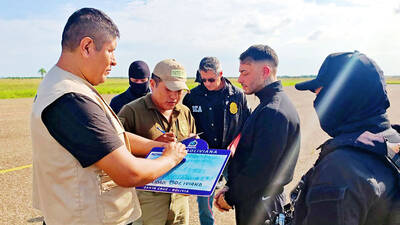
KINGPIN: Marset allegedly laundered the proceeds of his drug enterprise by purchasing and sponsoring professional soccer teams and even put himself in the starting lineups Notorious Latin American narco trafficker Sebastian Marset, who eluded police for years, was handed over to US authorities after his arrest on Friday in Bolivia. Marset, a Uruguayan national who was on the US most-wanted list, was passed to agents of the US Drug Enforcement Administration at Santa Cruz airport in Bolivia, then put on a US airplane, Bolivian state television showed. “The arrest and deportation were carried out pursuant to a court order issued by the US justice system,” Bolivian Minister of Government Marco Antonio Oviedo told reporters. The alleged kingpin was arrested in an upscale neighborhood of Santa
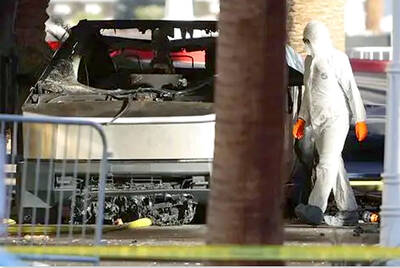
ACTIONABLE ADVICE: The majority of chatbots tested provided guidance on weapons, tactics and target selections, with Perplexity and Meta AI deemed to be the least safe From school shootings to synagogue bombings, leading artificial intelligence (AI) chatbots helped researchers plot violent attacks, according to a study published on Wednesday that highlighted the technology’s potential for real-world harm. Researchers from the nonprofit watchdog Center for Countering Digital Hate and CNN posed as 13-year-old boys in the US and Ireland to test 10 chatbots, including ChatGPT, Google Gemini, Perplexity, Deepseek and Meta AI. Eight of the chatbots assisted the make-believe attackers in more than half the responses, providing advice on “locations to target” and “weapons to use” in an attack, the study said. The chatbots had become a “powerful accelerant for
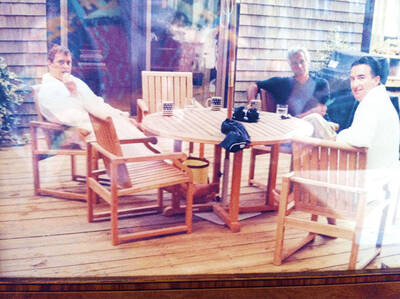
SCANDAL: Other images discovered earlier show Andrew bent over a female and lying across the laps of a number of women, while Mandelson is pictured in his underpants A photograph of former British prince Andrew and veteran politician Peter Mandelson sitting in bathrobes alongside late sex offender Jeffrey Epstein was unearthed on Friday in previously published documents. The image is believed to be the first known photograph of the two men with Epstein. They are currently engulfed in scandal in the UK over their ties to their mutual friend. The undated photograph, first reported by ITV News, shows King Charles III’s disgraced brother and former British ambassador to the US sitting barefoot outside on a wooden deck. They appear to have mugs with a US flag on them
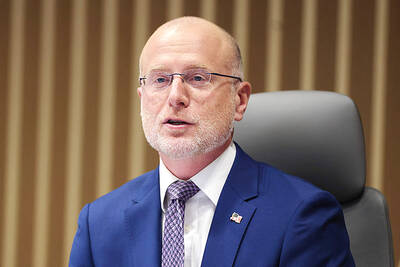
FAKE NEWS? ‘When the government demands the press become a state mouthpiece under the threat of punishment, something has gone very wrong,’ a civic group said The top US broadcast regulator on Saturday threatened media outlets over negative coverage of the Middle East war, after US President Donald Trump slammed critical headlines from the “Fake News Media.” The US president since his first term has derided mainstream media as “fake news” and has sued major outlets over what he sees as unfair coverage. Brendan Carr, head of the US Federal Communications Commission — which oversees the nation’s radio, television and Internet media — said broadcasters risked losing their licenses over news coverage. “The law is clear. Broadcasters must operate in the public interest, and they will


 RSS
RSS