


Israeli Prime Minister Ariel Sharon yesterday invited the opposition Labor Party to open negotiations on joining his government, and officials said they expected the two sides to reach a deal relatively quickly.
A broad-based coalition government with Labor would give Sharon much-needed support as he pushes forward with his contentious plan to withdraw from the Gaza Strip.
But Sharon also risks alienating hard-liners within his Likud Party who oppose a union with the
opposition.
Sharon met opposition leader Shimon Peres privately for one hour yesterday morning. Both sides said the talks had gone well.
"The prime minister turned to Shimon Peres and asked him to open negotiations on Labor joining the government. He asked that they begin as soon as possible," said Yoram Dori, a spokesman for Peres.
Dori said Peres would meet with Labor lawmakers later yesterday to discuss the invitation. The party is scheduled a meeting today, when it is expected to accept the offer.
Officials close to both men said they expected a deal to be reached soon.
Labor lawmaker Haim Ramon said negotiations became a realistic option after three conditions were met: Sharon's government accepted the Gaza withdrawal plan, the ultranationalist National Union left the coalition in protest of the planned pullout and the attorney general decided not to charge Sharon in a corruption case.
"Those were the conditions and now we will open negotiations on a range of issues," he told Israel Radio.
Sharon has turned to Labor after facing increasing opposition to his Gaza plan from far-right coalition partners and hard-liners in his own party. Defections from the government have left him as leader of a fragile minority coalition.
By September next year, the prime minister plans to withdraw from all of the Gaza Strip, where 7,500 Jewish settlers live amid 1.3 million Palestinians, and uproot four isolated settlements in the West Bank.
The withdrawals are part of his "unilateral disengagement" plan, which Sharon says will reduce friction with the Palestinians and boost Israel's securit; he refuses to negotiate directly with the Palestinians.
In a recent interview, Peres said he would not join the government unless Sharon agrees to resume talks with the Palestinians and to commit to a much larger withdrawal from the West Bank.
But the two men are likely to resolve their difference.
Peres, a Nobel peace laureate and a former prime minister now in his 80s, is widely believed to want to return to a position of power.
Sharon has few options as he tries to carry out his plan. Without Labor, his fragile coalition faces a strong risk of collapse.
But Sharon also faces opposition to the move from within his Likud Party. Finance Minister Benjamin Netanyahu has expressed concern that Labor would hamper his economic reforms and Foreign Minister Silvan Shalom could lose his post to Peres.
Addressing a Likud rally on Sunday, Uzi Cohen, a member of the powerful Likud Central Committee, warned Sharon against bringing Labor into the coalition.
"If the Labor party enters the coalition it will bring a cancer into the Likud. Whoever harms Silvan will face the third world war," Cohen said.
The Israeli media speculated yesterday that Sharon would offer Labor a relatively large number of Cabinet posts to entice Peres to give up the foreign post.
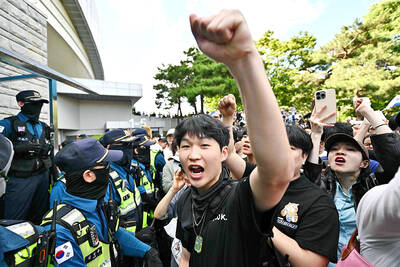
‘ABSURD MISTAKE’: The election commission said that there had been a failure to anticipate turnout after 14 polling stations ran short of ballot papers South Korean riot police yesterday cleared protesters from a Seoul polling station after a 35-hour blockade sparked by a shortage of ballot papers during local elections earlier this week. Wednesday’s election was the first nationwide vote since South Korean President Lee Jae-myung took office following the ouster of Yoon Suk-yeol over his short-lived martial law declaration. Lee’s ruling Democratic Party swept most races, but failed to flip the crucial Seoul mayoral seat. The South Korean National Election Commission apologized, blaming a failure to anticipate turnout after 14 polling stations in Seoul ran short of ballot papers. Some polling stations stayed open until 10pm to

France experienced its hottest spring on record, the French weather service said on Tuesday, after an exceptional early heat wave that also broke highs for the season in England and Wales. Meteo-France said the average nationwide temperature over March to May was 13.8°C — about 1.7°C above the norm, and surpassing records set in 2011 and 2020. “The warmest spring since records began in 1900,” it said in a bulletin. All three months were warmer than average, but the onset of an “unprecedented heatwave” late last month pushed the mercury to highs typically seen at the height of the summer. “Our country had never

A Sherpa guide was found crawling to base camp on Mount Everest a week after he went missing and was reunited with his family, who had given up hope he would return. Dawa Sherpa was last seen on Friday last week descending the mountain, but he did not reach base camp even though his client did. The pair were among the last climbers on the mountain as the climbing season came to an end and the route was dismantled. Dawa was located by a cleaning crew on Thursday morning as he was crawling down the snowy slopes around the Khumbu Icefall, just above
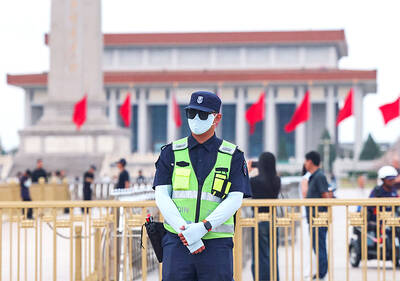
Chinese authorities are snuffing out any remembrance of the deadly 1989 military crackdown on student-led pro-democracy protests in Tiananmen Square, which happened 37 years ago yesterday, in a further tightening of a years-long campaign to erase what happened from public memory. Police told relatives of the victims they would not be allowed to visit a cemetery in Beijing on the anniversary of the crackdown, a person with knowledge of the matter said. Relatives of the victims visited the cemetery on the anniversary for more than 30 years to read memorial statements with police keeping watch, Amnesty International said. Hundreds of people,


 RSS
RSS