


An American museum has come up with a bold way to boost women’s participation in the arts: this year it will only acquire works by females.
The Baltimore Museum of Art, in the state of Maryland, is best known for housing the largest public collection of Matisse works anywhere in the world.
Late last year it attracted major press attention with word that this year it would only purchase works by women, drawing both praise and skepticism.
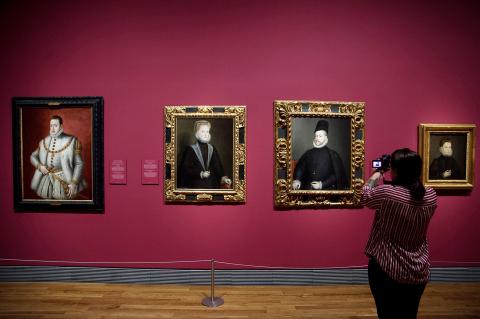
Photo: EPA
“I think it’s a radical and timely decision in 2020, to take the bull by the horns and do this,” the museum’s director Christopher Bedford said.
This year marks the 100th anniversary of the adoption of the 19th Amendment to the US constitution, which gave women the right to vote.
It also gave the museum pause to do some soul-searching: of its 95,000 works, only four percent are by women artists, says Bedford.
“We’re an institution largely built by women leaders,” he said. The museum’s first director was a woman. And it is largely thanks to two women — the Cone sisters — and their friendship with Henri Matisse that the museum boasts such a rich collection of works by the French artist.
CENTURIES OF DISCRIMINATION
So the museum will spend US$2.5 million this year on works by women. It will also reorganize several of its rooms to showcase the work of women and offer 20-odd exhibits of works by female artists. It will, however, continue to accept donations of art done by men.
The BMA is hardly alone in having such a disproportionate amount of art by men. The fame of artists such as Elisabeth Vigee Le Brun, Frida Kahlo and Louise Bourgeois is an exception to the rule.
A study published last year by the scientific journal Plos-One found that in 18 major American museums, 87 percent of the artists whose works were on exhibit were men.
And from 2008 to 2018, of 260,470 works acquired by 26 big museums, only 11 percent were by women, according to a study by the company Artnet and the podcast “In Other Words.”
This is the fruit of centuries-old discrimination that can be either intentional or not, said Bedford. “And unless you call out that habit and consciously find a way to work against it, then you will never have a properly equitable museum,” he said.
‘A TINY STEP’
While the museum’s initiative has been welcomed by many as a good first step, not everyone is sold on it.
Teri Henderson, a curator based in Baltimore, said she questions the museum’s use of the word “radical” to describe its decision to acquire only art by women for a year.
“I have observed that organizations and institutions use the word ‘radical’ as a sort of buzzword without actually implementing any programming or effort that is truly radical,” Henderson said.
“I do know that one year of collecting attached to this interesting choice of word cannot truly rectify the imbalance in the art world and in museums,” she added.
“I do think this year of collecting art by only women could possibly be the first step, but it is a tiny step.”
Bedford agreed that this plan is just a start. “And I’m also hoping that our decision has a reverberating effect across the museum field,” he said.
“And that’s a consciousness-raising act as well. It’s supposed to precipitate an endless action in that direction,” he added, promising also to publish the results of this female-only program in a year.
But Henderson insisted that “many gigantic steps” are needed to rectify the male-female imbalance in the art world.
She said that, for instance, museums need to invest in living artists that reside and work in the surrounding areas if they really want to reflect the richness and diversity of today’s art.
She gave museums this advice: “Stop buying art that isn’t good just because it’s made by well-known white artists. Start taking risks and investing in black and brown living artists.”
Donna Drew Sawyer, chief executive officer of the Baltimore Office of Promotion and The Arts, said she had several questions about the initiative, including the fact that it drew so much attention.
“Why did a male’s call to action seem to resonate so loudly in this instance when women are the subject and have been calling for the same action forever?” Sawyer wrote in the magazine BmoreArt.
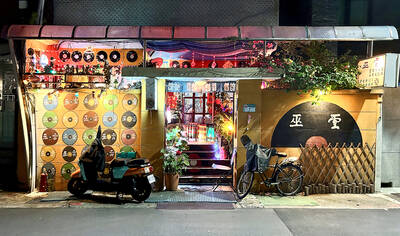
The Lee (李) family migrated to Taiwan in trickles many decades ago. Born in Myanmar, they are ethnically Chinese and their first language is Yunnanese, from China’s Yunnan Province. Today, they run a cozy little restaurant in Taipei’s student stomping ground, near National Taiwan University (NTU), serving up a daily pre-selected menu that pays homage to their blended Yunnan-Burmese heritage, where lemongrass and curry leaves sit beside century egg and pickled woodear mushrooms. Wu Yun (巫雲) is more akin to a family home that has set up tables and chairs and welcomed strangers to cozy up and share a meal
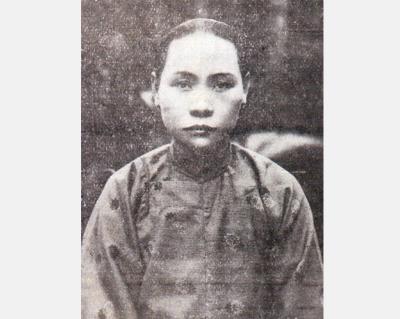
Dec. 8 to Dec. 14 Chang-Lee Te-ho (張李德和) had her father’s words etched into stone as her personal motto: “Even as a woman, you should master at least one art.” She went on to excel in seven — classical poetry, lyrical poetry, calligraphy, painting, music, chess and embroidery — and was also a respected educator, charity organizer and provincial assemblywoman. Among her many monikers was “Poetry Mother” (詩媽). While her father Lee Chao-yuan’s (李昭元) phrasing reflected the social norms of the 1890s, it was relatively progressive for the time. He personally taught Chang-Lee the Chinese classics until she entered public

Last week writer Wei Lingling (魏玲靈) unloaded a remarkably conventional pro-China column in the Wall Street Journal (“From Bush’s Rebuke to Trump’s Whisper: Navigating a Geopolitical Flashpoint,” Dec 2, 2025). Wei alleged that in a phone call, US President Donald Trump advised Japanese Prime Minister Sanae Takaichi not to provoke the People’s Republic of China (PRC) over Taiwan. Wei’s claim was categorically denied by Japanese government sources. Trump’s call to Takaichi, Wei said, was just like the moment in 2003 when former US president George Bush stood next to former Chinese premier Wen Jia-bao (溫家寶) and criticized former president Chen

President William Lai (賴清德) has proposed a NT$1.25 trillion (US$40 billion) special eight-year budget that intends to bolster Taiwan’s national defense, with a “T-Dome” plan to create “an unassailable Taiwan, safeguarded by innovation and technology” as its centerpiece. This is an interesting test for the Chinese Nationalist Party (KMT), and how they handle it will likely provide some answers as to where the party currently stands. Naturally, the Lai administration and his Democratic Progressive Party (DPP) are for it, as are the Americans. The Chinese Communist Party (CCP) is not. The interests and agendas of those three are clear, but


 RSS
RSS