


Napa Valley whiz winemaker Dave Phinney thinks big. Very big.
Premium red-blend trendsetter? Check. Megahit brand builder for labels such as Orin Swift and the Prisoner? Ditto. Iconoclastic entrepreneur in a dozen wine regions around the globe? Yes.
So far, Phinney, 46, has made more than US$150 million from selling those ventures. Now he’s taken on spirits with his Savage & Cooke Distillery, which led to a partnership with billionaire Gaylon Lawrence to transform the San Francisco Bay Area’s Mare Island into a hip booze destination and a sustainable community for 75,000 people.
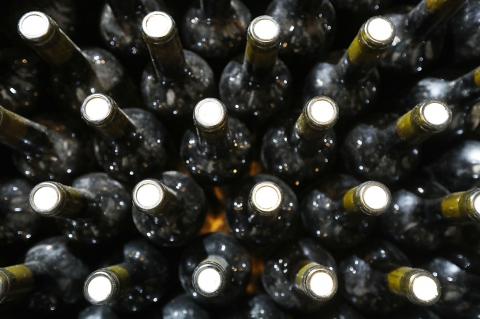
Photo: EPA-EFE
“Designing a city from scratch is a little surreal,” he admits over lunch on a cold and sunny day at a Yonkers, New York, restaurant overlooking the Hudson River. “At heart I’m still a winemaker.”?
Combining a laid-back Napa wine guy look — close-cropped beard, quilted vest, jeans and checked shirt — with the intense focus of a business mogul on a tight schedule, Phinney dives into the backstory of how it all went down.
AN ABANDONED NAVAL BASE
Phinney was looking for a winery space in 2015 when someone suggested he take a look at the abandoned historic brick buildings on Mare Island, once home to the first US naval base on the West Coast. The island (actually a peninsula) is linked by a causeway to the city of Vallejo on San Pablo Bay, an 80-minute ferry ride from San Francisco and a 20-minute drive from the city of Napa.
When the US Navy purchased the island in 1853, Commodore David Farragut (famous for shouting: “Damn the torpedoes. Full speed ahead!”) took charge. The last of the clipper ships were repaired in its yard. Its 18-hole golf course is the oldest west of the Mississippi. But in 1996, Congress shuttered the base. The island fell on hard times.
Smitten by the colorful history, Phinney began leasing buildings in 2016 and decided that instead of housing a winery, they might be better suited for a distillery. Wine distributors had long suggested he could make lots of money with a spirits brand.
“But I’m not that motivated by money,” he says with a shrug.
The idea gained steam because he’d discovered in 2014 that his 300-acre farm in Sonoma’s Alexander Valley had amazing natural springs — “like something pumping out of a hose.”
A blind water tasting and scientific analysis showed its high mineral content was ideal for spirits.
“I started thinking,” he says. “What if we finish whiskey in wine barrels? What if we used heirloom varieties of grain? What if we take a wine approach to spirits?”
What to call the brand? Looking through old Navy files on Mare Island, two names popped out to him: “Savage” and “Cooke.”
HISTORY OF GOOD TASTE
Phinney certainly had the startup funds.
What made him famous was the Prisoner, an outsider, zinfandel-based lush-textured red blend that made its debut in 2000 with a grim label from a Goya etching showing a shackled prisoner. By 2003 it had a cult following, and in 2010, Phinney sold the brand for US$40 million to Huneeus Vintners (which flipped it six years later for $285 million).
But he first made his name with wine brand Orin Swift, which he founded in 1998 and sold to E & J Gallo in 2016 for a reported $100 million. In 2018, Gallo also snapped up his Locations wines — good-value US$20 blends from different countries. Phinney still makes the wines, as well as Orin Swift’s.
Enter Memphis-based billionaire Lawrence, fresh off purchasing Heitz Cellar, one of Napa’s pioneer wineries, in April 2018. (Since then he’s snapped up two more iconic vineyards in the valley.)
The two met on a Wednesday, hit it off, and that Sunday, Phinney found himself on Mare Island with Lawrence.
“His thinking was much bigger than mine,” he says. With real estate broker Sebastian Lane, they formed the Nimitz Group to acquire land and develop it. As of last November, they’d locked up more than 800 acres, including the golf course, according to the Vallejo city manager’s office.
A TASTY TOURIST ATTRACTION
As a booze destination, the island was already on its way, starting with a brewery.
Production, tours and tastings at Savage & Cooke followed last year. The tasting space has a salvaged feel — rough concrete walls, iron girders, old Navy office chairs and a collection of antique chains on the wall. A glass case full of rounds of ammunition and a bust of Mao Zedong (毛澤東) sit beside the bar. Adjoining spaces hold neat rows of aging barrels and polished copper stills.
The success of Phinney’s wines and spirits owes a lot to their bold flavors, rich texture and edgy, sometimes downright weird labels and catchy outre names.
So far, Savage & Cooke has released two tequilas made in Mexico, an American whiskey, a bourbon and a rye, all finished in Phinney’s wine barrels. They’re presented in opaque black bottles with avant-garde photography on the labels. Phinney is already planning a gin using botanicals from Mare Island.?
What’s next for Mare Island? Jason West, a spokesman for Lawrence, injects a note of cautious reality: “We’re still getting our arms around the project. You have to own it first before you can do a real feasibility study.”?
But Phinney is holding on to his vision — a winery for some of his wines, a fried chicken restaurant, a coffee roaster, artists’ studios, even an artisanal shotgun business using walnut for the stocks from trees on one of his Napa properties. Will it all work?
Based on his track record, it’s a good bet.

The Lee (李) family migrated to Taiwan in trickles many decades ago. Born in Myanmar, they are ethnically Chinese and their first language is Yunnanese, from China’s Yunnan Province. Today, they run a cozy little restaurant in Taipei’s student stomping ground, near National Taiwan University (NTU), serving up a daily pre-selected menu that pays homage to their blended Yunnan-Burmese heritage, where lemongrass and curry leaves sit beside century egg and pickled woodear mushrooms. Wu Yun (巫雲) is more akin to a family home that has set up tables and chairs and welcomed strangers to cozy up and share a meal
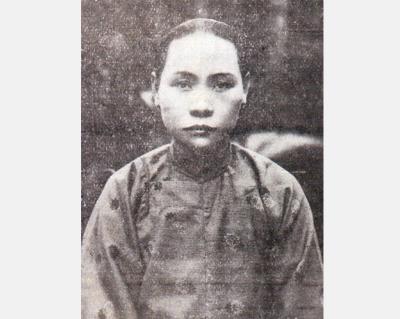
Dec. 8 to Dec. 14 Chang-Lee Te-ho (張李德和) had her father’s words etched into stone as her personal motto: “Even as a woman, you should master at least one art.” She went on to excel in seven — classical poetry, lyrical poetry, calligraphy, painting, music, chess and embroidery — and was also a respected educator, charity organizer and provincial assemblywoman. Among her many monikers was “Poetry Mother” (詩媽). While her father Lee Chao-yuan’s (李昭元) phrasing reflected the social norms of the 1890s, it was relatively progressive for the time. He personally taught Chang-Lee the Chinese classics until she entered public

Last week writer Wei Lingling (魏玲靈) unloaded a remarkably conventional pro-China column in the Wall Street Journal (“From Bush’s Rebuke to Trump’s Whisper: Navigating a Geopolitical Flashpoint,” Dec 2, 2025). Wei alleged that in a phone call, US President Donald Trump advised Japanese Prime Minister Sanae Takaichi not to provoke the People’s Republic of China (PRC) over Taiwan. Wei’s claim was categorically denied by Japanese government sources. Trump’s call to Takaichi, Wei said, was just like the moment in 2003 when former US president George Bush stood next to former Chinese premier Wen Jia-bao (溫家寶) and criticized former president Chen

President William Lai (賴清德) has proposed a NT$1.25 trillion (US$40 billion) special eight-year budget that intends to bolster Taiwan’s national defense, with a “T-Dome” plan to create “an unassailable Taiwan, safeguarded by innovation and technology” as its centerpiece. This is an interesting test for the Chinese Nationalist Party (KMT), and how they handle it will likely provide some answers as to where the party currently stands. Naturally, the Lai administration and his Democratic Progressive Party (DPP) are for it, as are the Americans. The Chinese Communist Party (CCP) is not. The interests and agendas of those three are clear, but


 RSS
RSS