


Lai Hung-chung (賴翃中) graduated from the School of Dance at Taipei National University of the Arts (TNUA, 國立臺北藝術大學) in 2012, but just five years later he founded his own dance company, Hung Dance (翃舞製作) after racking the first of a series of wins at international choreographic competitions.
It was at one of those events in Germany, the International Choreographic Competition Hannover in June 2107, that he met Spanish dancer/choreographer Mario Bermudez Gil, a five-year veteran of the Batsheva Dance Company in Israel, who had founded his own company, Marcat Dance, with his American partner Catherine Coury the year before.
While Hung’s duet, Watcher (守), took both 3rd place and the Critics Award in Hannover, Gil was not so lucky with his duet Alanda, but the two men liked each other’s pieces and the seed for a future collaboration was planted.
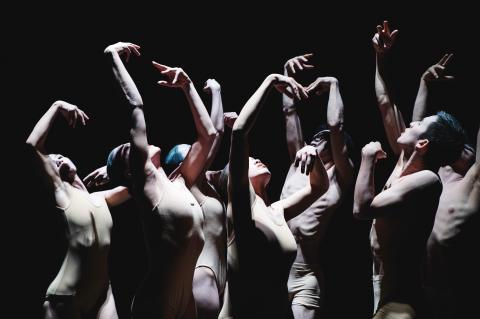
Photo courtesy of Terry Lin
However, as a dancer Gil still ended 2017 on a high note, being named as one of Dance Magazine’s “25 to Watch,” and he has gone on to create works for the National Company of Spain, the National Company of Wales, Scapino Ballet Rotterdam and flamenco star Eva Yerbabuena, in addition to several pieces for his own troupe.
Now Hung Dance can be added to that list, as the company premiers Gil’s latest work, Out of Elegant (優雅之外), at the National Experimental Theater in Taipei this weekend.
The show marks the start of what Lai hopes will be a long line of collaborations with international choreographers, and he said it is one of his most anticipated projects, which is saying something, since last month Hung Dance launched its Stray Birds Platform (漂鳥舞蹈平台) at the Taiwan Traditional Theatre Center’s Experimental Theater to showcase the works of young Taiwanese choreographers and dancers.
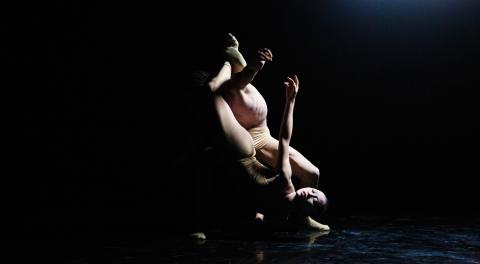
Photo courtesy of Terry Lin
Lai said Out of Elegant, set on seven dancers to a score by Jose Pablo Polo, is the story of creatures, perhaps from a distant land or another planet, who are struggling to survive in unfamiliar terrain.
Gil’s goal was to create a unique movement language specific to this piece that would allow each dancer to explore their body and physicality, Lai said.
Unlike Lai, Gil did not start studying dance until he was 20, but after studying at the Andaluz Dance Center in Seville, Spain, he moved to New York City to work with the Galin Dance Company for two years before relocating to Tel Aviv to join Batsheva.
That he and the 32-year-old Gil come from different cultures and have very distinct dance styles and philosophies was one of the reason’s he wanted to invite him to create a full-length work for his troupe, Lai said.
Gil’s choreography is known for its dynamic physicality and deep emotional impact.
Lai said that he hoped Gil’s style of physical training and dance presentation would help his dancers gain a more multifaceted technique.

The Lee (李) family migrated to Taiwan in trickles many decades ago. Born in Myanmar, they are ethnically Chinese and their first language is Yunnanese, from China’s Yunnan Province. Today, they run a cozy little restaurant in Taipei’s student stomping ground, near National Taiwan University (NTU), serving up a daily pre-selected menu that pays homage to their blended Yunnan-Burmese heritage, where lemongrass and curry leaves sit beside century egg and pickled woodear mushrooms. Wu Yun (巫雲) is more akin to a family home that has set up tables and chairs and welcomed strangers to cozy up and share a meal
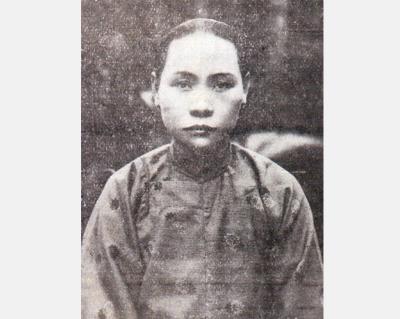
Dec. 8 to Dec. 14 Chang-Lee Te-ho (張李德和) had her father’s words etched into stone as her personal motto: “Even as a woman, you should master at least one art.” She went on to excel in seven — classical poetry, lyrical poetry, calligraphy, painting, music, chess and embroidery — and was also a respected educator, charity organizer and provincial assemblywoman. Among her many monikers was “Poetry Mother” (詩媽). While her father Lee Chao-yuan’s (李昭元) phrasing reflected the social norms of the 1890s, it was relatively progressive for the time. He personally taught Chang-Lee the Chinese classics until she entered public

Last week writer Wei Lingling (魏玲靈) unloaded a remarkably conventional pro-China column in the Wall Street Journal (“From Bush’s Rebuke to Trump’s Whisper: Navigating a Geopolitical Flashpoint,” Dec 2, 2025). Wei alleged that in a phone call, US President Donald Trump advised Japanese Prime Minister Sanae Takaichi not to provoke the People’s Republic of China (PRC) over Taiwan. Wei’s claim was categorically denied by Japanese government sources. Trump’s call to Takaichi, Wei said, was just like the moment in 2003 when former US president George Bush stood next to former Chinese premier Wen Jia-bao (溫家寶) and criticized former president Chen

President William Lai (賴清德) has proposed a NT$1.25 trillion (US$40 billion) special eight-year budget that intends to bolster Taiwan’s national defense, with a “T-Dome” plan to create “an unassailable Taiwan, safeguarded by innovation and technology” as its centerpiece. This is an interesting test for the Chinese Nationalist Party (KMT), and how they handle it will likely provide some answers as to where the party currently stands. Naturally, the Lai administration and his Democratic Progressive Party (DPP) are for it, as are the Americans. The Chinese Communist Party (CCP) is not. The interests and agendas of those three are clear, but


 RSS
RSS