


In the thick of campaign season for next month’s high-stakes presidential and legislative elections, Reporters Without Borders (RSF) will hold its first conference in Taiwan tomorrow on the theme of “Disinformation: Time for Solutions.”
“As the elections are approaching, the risk of disinformation attacks is getting bigger and bigger,” Cedric Alviani, RSF East Asia bureau head, told the Taipei Times. It’s a risk that “will remain until Taiwan properly addresses the problem of its media environment.”
It’s a media environment “plagued by sensationalism, undeclared advertising and an unhealthy ‘blue-green’ political polarization that hinders journalism in its role as a balancing power, stirring public distrust,” Alviani wrote in an open letter from the RSF published in the Taipei Times last week.
Photo: Reuters
“It is not that Taiwan lacks competent journalists, but most of them have to work under undue pressure and cannot count on legal protection against requests from their management that would go against journalistic ethics,” Alviani wrote.
While good journalistic practice has conventionally meant avoiding becoming part of the news story, in the war against disinformation, journalists find themselves fighting in the trenches, and an integral part of the story themselves.
In Taiwan, that story is combined with front-line exposure to China’s economic rise and growing assertiveness in geopolitics, making it one of the most compelling vectors for tackling disinformation in the 21st century.
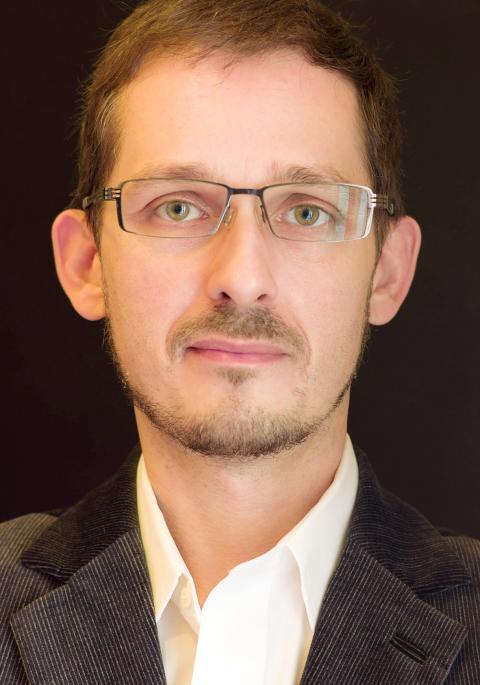
Photo courtesy of Reporters Without Borders
INFORMATION WARFARE
The threat of disinformation is neither new nor unique to Taiwan. Countries around the world have developed heightened awareness and defences since the allegations of Russian interference in the 2016 US presidential election, but propaganda has been around for much of human history.
Now, however, there is “renewed interest in learning about and from Taiwan’s own experiences,” J. Michael Cole, a policy analyst and editor-in-chief of Taiwan Sentinel told the Taipei Times. This is part of a “global awakening to the realities of contact with Beijing.”
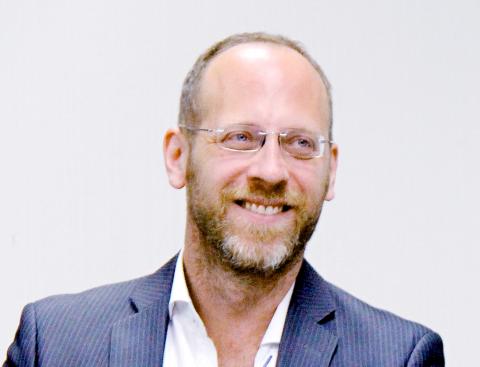
Photo courtesy of Reporters Without Borders
“Taiwan obviously is a special case because of Beijing’s ambitions to annex it,” Cole, a former Taipei Times deputy news editor, added. “It’s one of the very few societies that shares a language and to a certain extent a culture with China, so that creates many more avenues” by which China can exert influence.
Cole, who will deliver a keynote speech on Chinese disinformation in Taiwan, pointed out that one area in which Beijing has proven adept is that of “gray-zone” tactics that may not be illegal under existing laws, but are arguably unethical.
That includes exercising control through media owners with strong commercial interests in China, a prominent example of which was seen in the Financial Times’ reporting that local media outlets The China Times and CtiTV (中天電視) — owned by Taiwanese food conglomerate Want Want China Times Group — took orders from Beijing.
Such tactics have made it even trickier for the government to balance protecting freedom of expression and clamping down effectively on disinformation.
“If Taiwan were not a democracy, it would be quite easy for the government to come up with the solutions,” Cole said. “The last thing that you want to do is go down a road where you start curtailing freedom of expression. By doing so... Beijing wins, because it gets what it wants.”
Echoing the challenge that lies before the government, Alviani, who will deliver a keynote speech on media certification, said that Taiwan’s problematic media environment is “not something that the government itself can change… but we believe some kind of impulse must come from the authorities.”
At the same time, leaving it entirely up to the government to decide what is legitimate and fake news is also an undesirable outcome that potentially hinders journalists’ ability to hold power accountable.
One remaining option is a form of self-regulation emanating from the journalism profession itself, such as the Journalism Trust Initiative by the RSF, which is developing a set of indicators for the trustworthiness of journalism, and seeks to promote and reward compliance with journalistic ethics.
“Taiwan needs to re-establish trust from the people to the media, because the problem so far is that most people in Taiwan do not [differentiate] between a legitimate news Web site and a Web site that would purposely carry misinformation,” Alviani said.
Combining the unique challenges of Chinese designs on Taiwan, as well as Taiwan’s own commitment to democracy and freedom of expression, tomorrow’s conference will be an opportunity to hear insights and solutions from within the journalism profession itself.

The Lee (李) family migrated to Taiwan in trickles many decades ago. Born in Myanmar, they are ethnically Chinese and their first language is Yunnanese, from China’s Yunnan Province. Today, they run a cozy little restaurant in Taipei’s student stomping ground, near National Taiwan University (NTU), serving up a daily pre-selected menu that pays homage to their blended Yunnan-Burmese heritage, where lemongrass and curry leaves sit beside century egg and pickled woodear mushrooms. Wu Yun (巫雲) is more akin to a family home that has set up tables and chairs and welcomed strangers to cozy up and share a meal
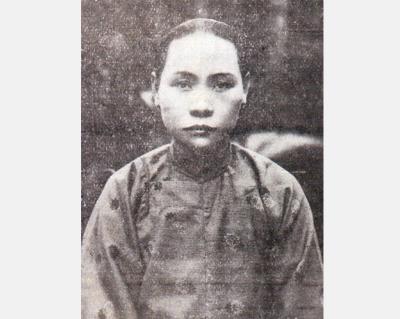
Dec. 8 to Dec. 14 Chang-Lee Te-ho (張李德和) had her father’s words etched into stone as her personal motto: “Even as a woman, you should master at least one art.” She went on to excel in seven — classical poetry, lyrical poetry, calligraphy, painting, music, chess and embroidery — and was also a respected educator, charity organizer and provincial assemblywoman. Among her many monikers was “Poetry Mother” (詩媽). While her father Lee Chao-yuan’s (李昭元) phrasing reflected the social norms of the 1890s, it was relatively progressive for the time. He personally taught Chang-Lee the Chinese classics until she entered public

Last week writer Wei Lingling (魏玲靈) unloaded a remarkably conventional pro-China column in the Wall Street Journal (“From Bush’s Rebuke to Trump’s Whisper: Navigating a Geopolitical Flashpoint,” Dec 2, 2025). Wei alleged that in a phone call, US President Donald Trump advised Japanese Prime Minister Sanae Takaichi not to provoke the People’s Republic of China (PRC) over Taiwan. Wei’s claim was categorically denied by Japanese government sources. Trump’s call to Takaichi, Wei said, was just like the moment in 2003 when former US president George Bush stood next to former Chinese premier Wen Jia-bao (溫家寶) and criticized former president Chen

President William Lai (賴清德) has proposed a NT$1.25 trillion (US$40 billion) special eight-year budget that intends to bolster Taiwan’s national defense, with a “T-Dome” plan to create “an unassailable Taiwan, safeguarded by innovation and technology” as its centerpiece. This is an interesting test for the Chinese Nationalist Party (KMT), and how they handle it will likely provide some answers as to where the party currently stands. Naturally, the Lai administration and his Democratic Progressive Party (DPP) are for it, as are the Americans. The Chinese Communist Party (CCP) is not. The interests and agendas of those three are clear, but


 RSS
RSS