


The Mia Cucina chain of restaurants has long been lauded in Taipei as the pinnacle of Western-style vegan-friendly cuisine, a prime destination for discerning carnists and vegheads alike. Fresh produce, a plethora of choices and authentic flavors are its calling card.
Herbivore Vegan Restaurant, located on the 2nd floor of the posh Shinkong Mitsukoshi in Xinyi District, is the sophomore effort by the same group, and their first entirely plant-based one. Unlike traditional local cuisine, the menu is light on soy products and heavy on fresh greens and intense flavor. Almost too intense, as the saline glaze didn’t leave my tongue for hours after every meal.
The servingware and plating are on point — polished wood, earthy ceramic and rich gold cutlery — and so is the service, exemplified by the waiter who gave me extra napkins when he noticed that I wasn’t using the folded plastic glove that came with the heavenly hummus sandwich, and the waitress who kindly requested more almondmilk on my behalf when the blueberry smoothie turned out too sweet.
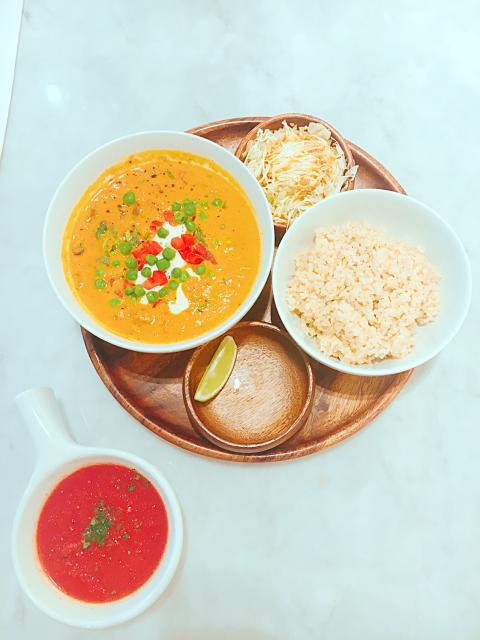
Photo: Darice Chang
My first encounter was through my roommate, a fellow vegan who had gone shortly after opening. “We ordered a bit too much, would you want to try the leftovers?” ended with half a black bean burger and a generous portion of the fattest fluffiest chocolate banana pancake I’ve had in quite awhile. The BBQ burger (NT$360) was the most authentic I’ve had in Taipei — filled with tangy housemade mozzarella barbeque sauce. I knew I had to go.
On my initial foray I had the grilled vegetable hummus sandwich (NT$350) and, because it took them almost 20 minutes to make, a side of the soup of the day (NT$180), which was mushroom barley. I wanted to like the soup, chock-full of thick slices of button mushroom and fat Western celery, finely diced carrots and toothsome kernels of cooked-from-scratch barley, but it tasted like doctored up Campbell soup. Not very classy.
The shining star of the meal was the hummus sandwich, which came neatly sliced into thirds. Two enormous slices of crusty bread, grilled with fragrant olive oil and slathered thickly with basil pesto and chickpea hummus then stuffed with satisfying slices of grilled eggplant, zucchini and marinated red pepper. The menu said it is accompanied by corn salsa, but mine arrived with balsamic infused tomatoes. These, too, were a disappointment: crimson quarters of tasteless fruit slippery with oil and marinated just not-long-enough to impart anything more than a whisper of acidic aroma.
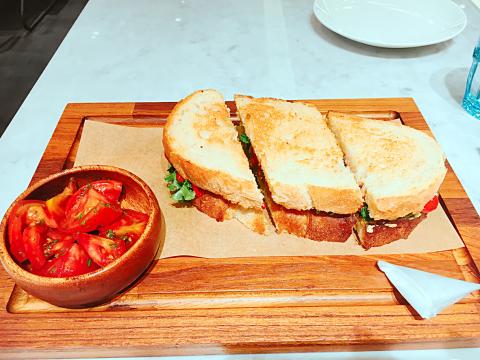
Photo: Darice Chang
A working day led me to try their berry hazelnut smoothie (NT$240), a bright antioxidant-filled concoction rife with blueberries, hazelnut, banana, oats, almond milk and a touch of house-made syrup, which isn’t listed on the menu but was revealed by the waitstaff when it proved too sweet for my taste.
I was a bit disappointed they were using Almond Breeze from a carton instead of making their own milk from scratch, like Plants or Naked Food, especially considering the price. Others diners, however, haven’t found fault with it.
On an outing with friends, both vegan and omnivores, we were delighted by the almond milk cappuccino (NT$160), topped with a thick creamy foam, as well as the sweet potato chickpea coconut curry (NT$430) and mango tofu masala curry (NT$430), which are portioned generously and served with brown rice and a side of roasted tomato soup.
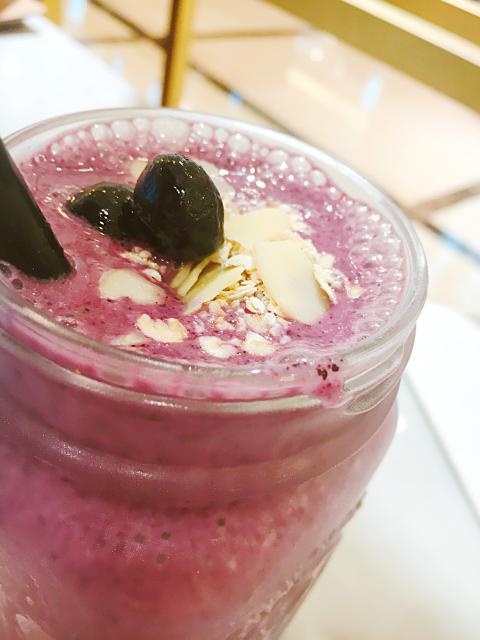
Photo: Darice Chang
Both the curries, thick and full of fresh vegetables, tended to be sweet, per the local preference, but are bettered with the addition of lime. Our adventurous friend decided on a spicy tex mex burger (NT$380), which was dense and flavorful, loaded with avocados and pickled jalapenos and served with fries and an amazing tomato-based spicy-sour dipping sauce.
Dessert options include cakes, candies and pancakes. The strawberry pancake (NT$360) was a favorite and chocolate hazelnut tart (NT$260) was akin to a Ferrero Rocher in French Silk pie form. The crust was especially delightful — tender, full of nutty aroma with a fine crumb. The green tea chocolate caramel truffle (NT$260, 3 pieces) tasted like matcha almond joy with peanut butter drizzle, and was quickly devoured.
Herbivore is without competition in Taipei in terms of atmosphere, bringing pure plant cuisine to new heights. The location and decor says it all: classy and upscale yet casual with beautiful green walls featuring real plants, though a friend was miffed it’s basically in the middle of a mall.
Instgrammers may bemoan the lighting, which is not great for overhead shots, but a true dedicate would bring their own. Or, just enjoy the food. That’s what it’s there for.
Ajay Verma, a consultant gastroenterologist at Kettering general hospital in Northamptonshire, says our gut is a “complex machine.” “It is constantly providing us with the nutrition we need, initially to grow and develop, and then for us to survive, thrive and repair from injury and illness.” How can we keep it functioning well? Put simply: “Make sure what you put into it is balanced, and that you clear out its waste products adequately,” Verma says. “In a general gastroenterology clinic, the most common conditions we see are irritable bowel syndrome (IBS), gastroesophageal reflux disease, inflammatory bowel disease and constipation,” says Nisha
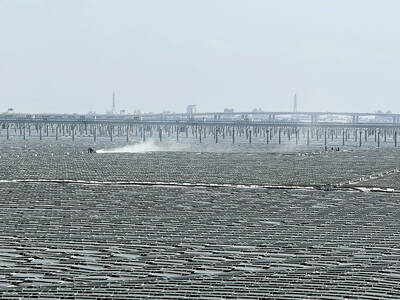
The arithmetic is straightforward and uncomfortable. By the end of 2025, Taiwan had committed itself to a 50-30-20 electricity mix — half natural gas, 30 per cent coal, 20 per cent renewables. The Ministry of Economic Affairs’s (MOEA) own monthly energy reports tell a different story. Natural gas reached 47.8 per cent of generation last year. Coal stood at 35.4 per cent, comfortably above its target ceiling. Renewables came in at 13.1 per cent, well short of the 20 per cent Taipei had pledged a decade earlier. Installed renewable capacity reached roughly half of the 12 gigawatts (GW) the government

Last week US President Donald Trump was asked by a reporter whether he would speak on the phone to the President of Taiwan. “l’ll speak to him. I speak to everybody. We have that situation very well in hand,” Trump said. This marked the second time in a couple of weeks he had said he would talk to the President of Taiwan. In 2016 he famously took a call from then-president Tsai Ing-wen (蔡英文), when he was president-elect. Despite warnings that the apocalypse was nigh because of a phone call, the world quickly forgot about the conversation between two democratically-elected presidents.
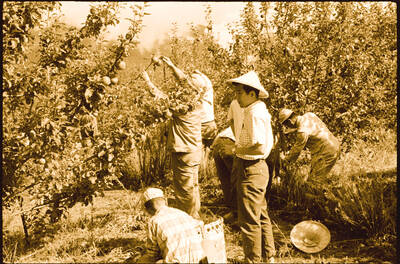
May 25 to May 31 Few believed that apples could be cultivated on a commercial scale in Taiwan’s high mountains. When horticulturalist Cheng Chao-hsiung (程兆熊) first proposed the idea in 1955, both American and Taiwanese colleagues dismissed it as implausible, arguing that temperate fruit could not be reliably grown on a subtropical island, especially on rugged terrain. However, it was this terrain in the Central Mountain Range where many Chinese Civil War veterans were resettled in the late 1950s. With limited job prospects and no family in Taiwan, they were placed on cooperative farms aimed toward self-sufficiency. Some say the conditions


 RSS
RSS