


On display at IT Park Gallery are Hsiao Chu-fang’s (蕭筑方) playful and harried sketches of people going about their daily lives. Wink Wink (眨眨) explores the speed of contemporary life in the city — particularly how everything seems to move by in the blink of an eye. Expressions are slapped onto faces with seemingly little thought and characters are painted with what seems to be a mix of child-like idealism and a matter-of-fact kind of indifference. Although her sketches seem tongue-in-cheek, even a little skittish, they are still valuable observations, or rather, useful fragments which the viewer can piece together to form a greater picture.
■ IT Park Gallery (伊通公園), 2F-3F, 41 Yitong St, Taipei City (台北市伊通街41號2-3樓), tel: (02) 2507-7243. Open Tuesdays to Saturdays from 1pm to 10pm
■ Until Dec. 3
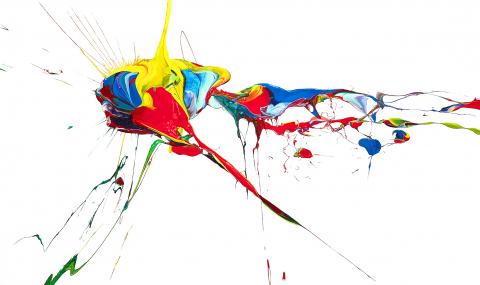
Photo courtesy of Chini Gallery
The works of Spanish cartoonist Joan Cornella, who is known for his tongue-in-cheek brand of black humor, are on view at Hushan 1914 Creative Park, in Joan Cornella: A Solo Exhibition. Because of the sensitive nature of the drawings — decapitated heads, bloodied corpses, little old ladies being beaten up — children under 16 must be accompanied by an adult. Behind the farce and the surrealism, Cornella has a lot to say about hot-topic issues plaguing society today, including gun violence, hate crimes and even selfie culture. Indeed, his selfie comics are some of his most poignant, particularly the one with a couple attempting to pose for a picture but at the end of their selfie stick is a gun. Hopefully it’ll make visitors think twice about wielding their selfie stick at this exhibition.
■ Huashan 1914 Creative Park (華山1914), Warehouse 5B, 1 Bade Rd Sec 1, Taipei City (台北市八德路一段1號), tel: (02) 2358 1914. Open daily from 10am to 9pm, admission: NT$200
■ Until Dec. 11
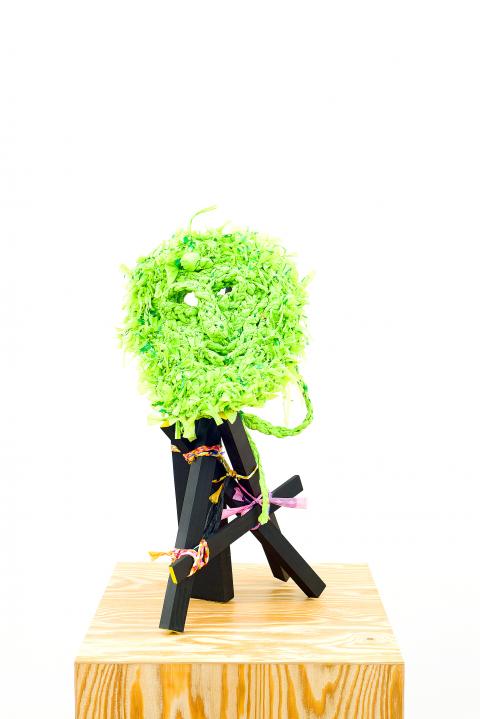
Photo courtesy of Project Fulfill Art Space
Lin Wang-tin (林旺廷) probably identifies with the saying, “good things come in small packages.” Miniature Things (微物), which opens at Waley Art tomorrow, is a series of Lin’s video installations showing minute-sized models of buildings and cityscapes — with details such as people running or canoeing — constructed in a surrealist manner. It appears that Lin is trying to dissect life and human behavior. How do we interact with our surroundings, natural and manmade? How is personal and public space negotiated? What makes us human? These are all questions that can arise when viewing Lin’s videos. Of course, like any good work of art, there is no definitive answer, but forcing us to step back and observe how minuscule our place in the world is definitely helps with putting things in perspective.
■ Waley Art (水谷藝術), 6, Ln 322, Wanda Rd, Taipei City (萬大路322巷6號), tel: (02) 2301-1821. Open daily from 10am to 8pm
■ Opens tomorrow. Until Dec. 18
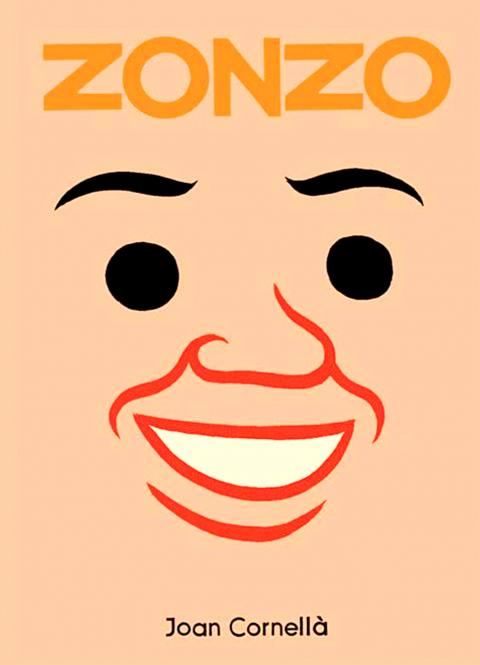
Photo courtesy of Joan Cornella
Chinese calligrapher-turned-sculptor Lu Zhengyuan (盧征遠) is back with a new solo exhibition at Chini Gallery. The Fringe of Consciousness (意識邊緣) features an exhaustive collection of Lu’s colorful, paint-splattered canvases as well as his marble sculptures of garbage bags and pillows. Though Lu’s artwork lacks a definitive style — some of his paintings are eerily realistic while others are purely abstract — what binds it all together is perhaps a sense of humor that he infuses in to all his work. Something always seems to be out of place, for example, a wine glass in the middle of a fruit platter, or a feather resting on a pillow. Perhaps his message is that if we tune in more, we would realize that nothing is what it seems.
■ Chini Gallery (采泥藝術), 48, Lane 128 Jingye 1st Rd, Taipei City (台北市敬業一路128巷48號), tel: (02) 7729-5809. Open Tuesdays to Sundays from 10:30am to 7pm
■ Until Dec. 25
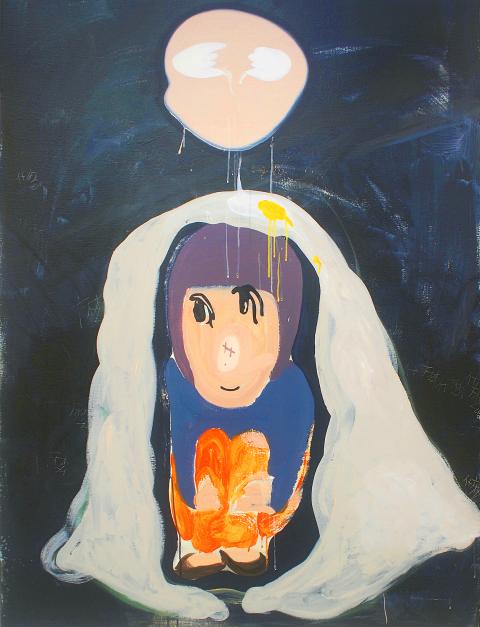
Photo courtesy of IT Park Gallery
Project Fulfill Art Space keeps upping the ante with conceptual artists and 500 Years (五百年), a solo exhibition by Brussels and Shanghai-based artist Heidi Voet, set to open tomorrow, looks highly promising. Voet collects everyday objects — rugs, watches and even fruit — and distorts them in a manner that’s playful and witty. Though they appear random, each object is carefully chosen and comes laden with connotations. Each object is placed in its cultural and historical context over a span of 500 years. Voet does this in order to comment on the effects of globalization we wouldn’t normally think about including social inequality and the imperialistic undertones of certain consumer habits. It all seems absurd but makes perfects sense upon further scrutiny.
■ Project Fulfill Art Space (就在藝術空間), 2, Alley 45, Ln 147, Xinyi Rd Sec 3, Taipei City (台北市信義路三段147巷45弄2號), tel: (02) 2707-6942. Open Tuesdays to Sundays from 1pm to 6pm
■ Opens tomorrow. Until Jan. 8

Photo courtesy of Waley Art

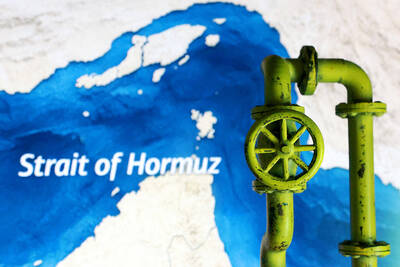
The US war on Iran has illuminated the deep interdependence of Asia on flows of oil and related items as raw materials that become the basis of modern human civilization. Australians and New Zealanders had a wake up call. The crisis also emphasizes how the Philippines is a swatch of islands linked by jet fuel. These revelations have deep implications for an invasion of Taiwan. Much of the commentary on the Taiwan scenario has looked at the disruptions to world trade, which will be in the trillions. However, the Iran war offers additional specific lessons for a Taiwan scenario. An insightful
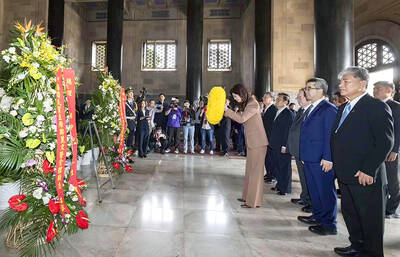
The problem with Marx’s famous remark that history repeats itself, first as tragedy, the second time as farce, is that the first time is usually farce as well. This week Chinese Nationalist Party (KMT) Chair Cheng Li-wun (鄭麗文) made a pilgrimage to the People’s Republic of China (PRC) “to confer, converse and otherwise hob-nob” with Chinese Communist Party (CCP) officials. The visit was an instant international media hit, with major media reporting almost entirely shorn of context. “Taiwan’s main opposition leader landed in China Tuesday for a rare visit aimed at cross-strait ‘peace’”, crowed Agence-France Presse (AFP) from Shanghai. Rare!
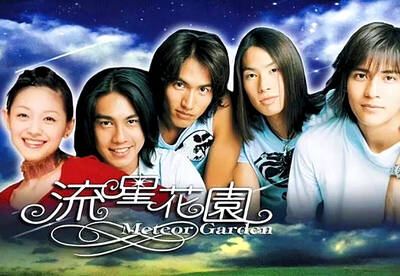
April 6 to April 13 Few expected a Japanese manga adaptation featuring four tall, long-haired heartthrobs and a plucky heroine to transform Taiwan’s television industry. But Meteor Garden (流星花園) took the nation by storm after premiering on April 12, 2001, single-handedly creating the “idol drama” (偶像劇) craze that captivated young viewers across Asia. The show was so successful that Japan produced its own remake in 2005, followed by South Korea, China and Thailand. Other channels quickly followed suit, with more than 50 such shows appearing over the following two years. Departing from the melodramatic
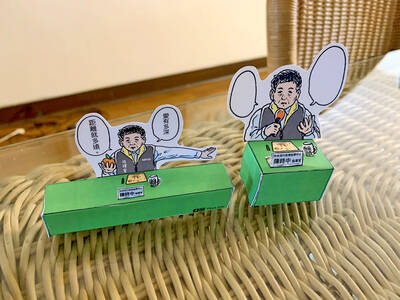
Sunflower movement superstar Lin Fei-fan (林飛帆) once quipped that the Democratic Progressive Party (DPP) could nominate a watermelon to run for Tainan mayor and win. Conversely, the DPP could run a living saint for mayor in Taipei and still lose. In 2022, the DPP ran with the closest thing to a living saint they could find: former Minister of Health and Welfare Chen Shih-chung (陳時中). During the pandemic, his polling was astronomically high, with the approval of his performance reaching as high as 91 percent in one TVBS poll. He was such a phenomenon that people printed out pop-up cartoon


 RSS
RSS