


From time to time, I still think of that amazing lobster roll I had at Ed’s Lobster Bar by the New York City waterfront on my last visit.
So I was pleasantly surprised when I passed by the Lobster Bar in Taipei. However, the restaurant’s higher-end, atmospheric interior, had always deterred me from just popping in for a quick seafood fix.
Eventually, I brought a date. But as soon as we sat down it became apparent that, due to portions and pricing, we should have brought a group so that we could sample the restaurant’s intriguing and diverse menu, which includes far more than its namesake suggests. For example, we didn’t order the seafood paella because there was a minimum order of two portions (NT$420 per portion), and who wants to fill up on rice when there’s lobster?
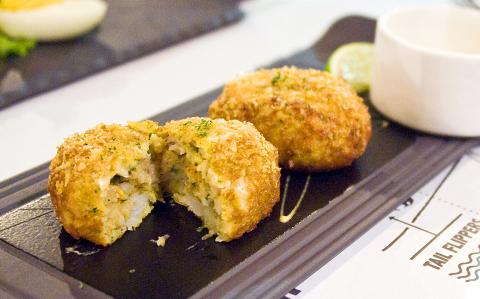
Photo: Han Cheung, Taipei Times
Also, visit early if you want to try the surf and turf burger (NT$680), featuring prime shoulder meat, foie gras and lobster. Alas, they only make 10 of these per day.
For appetizers, we ordered the deviled eggs (NT$280) and the crab cakes (NT$380 for two). The crab cakes were excellent, as each bite contained copious amounts of juicy crab meat with little filler. The abundance of meat, though, caused the bottom of the crab cake to become slightly soggy — but I’m not complaining. They were flavorful yet not greasy, and I didn’t need the lemon or tartar sauce that it was served with.
The deviled eggs were tart and rich, with faint sweet bacon highlights from the slivers on top. This appetizer would be better shared in a group, as with four eggs per order, the savoriness became overwhelming after the first two halves.
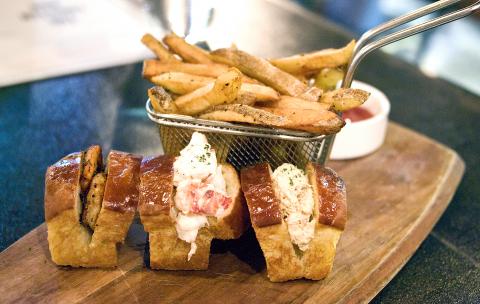
Photo: Han Cheung, Taipei Times
Since we had been talking about sandwiches, the mini rolls (NT$380 for three) were an obvious choice. The bite-sized rolls form all three of the restaurant’s signature seafood: lobster, crab and shrimp. This is where this restaurant really shines.
The generously-portioned lobster salad with a slight dollop of mayo was served in a soft roll and was a harmonious match that melted in my mouth. The crab roll was also in salad form, but with less mayo and not as sweet. The crab didn’t come in chunks like the lobster, constituting a finer texture. With this sandwich, the bread had a firmer texture, making an enjoyable contrast from the previous roll.
The shrimp roll was saltier, which balanced out the other two rolls. This one was my least favorite, as the shrimp was grilled and a bit chewy.
Since we were at a lobster restaurant, we splurged and ordered another entree. This was a mistake. Although filled with the sweet crustacean, the lobster ravioli (NT$620) in lobster sauce somehow felt more like a Chinese wonton than its Italian counterpart. The pasta was unevenly cooked — too firm in some places, overly soft in others and it fell apart quite easily.
The lobster sauce had appealing nutty overtones, but erred on the salty side and, like the noodles, carried more of an Asian than Italian consistency. Abundant garlic slices provided a kick, but as a whole it overpowered the main ingredient.
Later, I surfed the Internet to see what others were saying about Lobster Bar and the anecdotal consensus is that the uni pasta (NT$520) or duck truffle risotto (NT$480) would be a better entree choice despite their lack of, ah, lobster.
Although we didn’t try any alcohol, the menu has a small selection of beers, including the green tea-infused Iki and Hitachino Nest. It also features standard classic cocktails, hot cocktails as well as originals such as Alice in Lobsterland (NT$400, mango puree, cream, eggnog, soda water).
When I left, I wish I had just stuck to what I originally craved. Next time I come, I’m just going to sit by the bar and order a full-sized lobster roll with a beer.
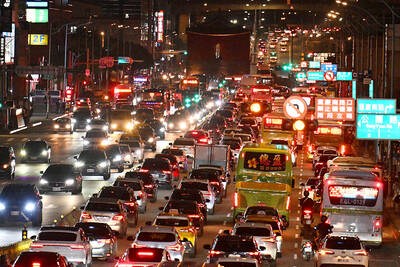
By global standards, the traffic congestion that afflicts Taiwan’s urban areas isn’t horrific. But nor is it something the country can be proud of. According to TomTom, a Dutch developer of location and navigation technologies, last year Taiwan was the sixth most congested country in Asia. Of the 492 towns and cities included in its rankings last year, Taipei was the 74th most congested. Taoyuan ranked 105th, while Hsinchu County (121st), Taichung (142nd), Tainan (173rd), New Taipei City (227th), Kaohsiung (241st) and Keelung (302nd) also featured on the list. Four Japanese cities have slower traffic than Taipei. (Seoul, which has some
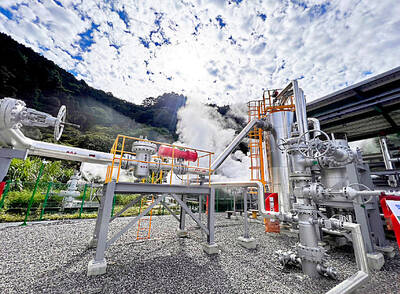
Taiwan’s semiconductor industry consumes electricity at rates that would strain most national grids. Taiwan Semiconductor Manufacturing Co (TSMC) alone accounted for more than 9 percent, or 2,590 megawatts (MW), of the nation’s power demand last year. The factories that produce chips for the world’s phones and servers run around the clock. They cannot tolerate blackouts. Yet Taiwan imports 97 percent of its energy, with liquefied natural gas reserves measured in days. Underground, Taiwan has options. Studies from National Taiwan University estimate recoverable geothermal resources at more than 33,000 MW. Current installed capacity stands below 10 MW. OBSTACLES Despite Taiwan’s significant geothermal potential, the

In our discussions of tourism in Taiwan we often criticize the government’s addiction to promoting food and shopping, while ignoring Taiwan’s underdeveloped trekking and adventure travel opportunities. This discussion, however, is decidedly land-focused. When was the last time a port entered into it? Last week I encountered journalist and travel writer Cameron Dueck, who had sailed to Taiwan in 2023-24, and was full of tales. Like everyone who visits, he and his partner Fiona Ching loved our island nation and had nothing but wonderful experiences on land. But he had little positive to say about the way Taiwan has organized its
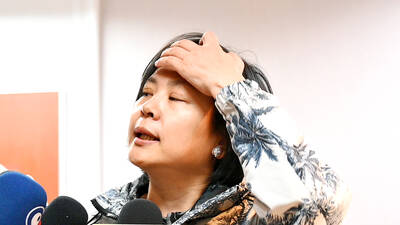
The entire Li Zhenxiu (李貞秀) saga has been an ugly, complicated mess. Born in China’s Hunan Province, she moved to work in Shenzhen, where she met her future Taiwanese husband. Most accounts have her arriving in Taiwan and marrying somewhere between 1993 and 1999. She built a successful career in Taiwan in the tech industry before founding her own company. She also served in high-ranking positions on various environmentally-focused tech associations. She says she was inspired by the founding of the Taiwan People’s Party (TPP) in 2019 by Ko Wen-je (柯文哲), and began volunteering for the party soon after. Ko


 RSS
RSS