


After Art Taipei’s successful run last month, Art Kaohsiung (高雄駁二藝術博覽會) kicks off today for the second year in a row at Pier-2 Art Center and the Chateau de Chine Hotel. Taipei galleries comprise the majority of the 92 galleries participating from around Asia. Liang Gallery (尊彩藝術中心) showcases quirky and colorful artwork from Taiwanese artists who have jettisoned new mediums and art styles from 1927 to the present day — from Yang San-lang’s (楊三郎) impressionistic landscape paintings of his travels around the world to Tsai Chieh-hsin’s (蔡潔莘) whimsical pulp sculptures dyed in rainbow colors. Cafe Showroom provides a good dose of abstract contemporary art created by young artists like Tania Tsong de Opazo, whose use of distorted shapes and angles sync well with the scrappy, mismatched ambiance of Pier-2’s warehouses.
■ Pier-2 Art Center (駁二藝術特區), 1 Dayong Rd, Greater Kaohsiung (高雄市大勇路1號), tel: (07) 228-8936; Chateau de Chine Hotel (翰品酒店), 43, Daren Rd, Greater Kaohsiung (高雄市大仁路43號), tel: (07) 521-7388. Art Kaohsiung is open today and tomorrow from 11am to 7pm and Sunday from 11am to 6pm
■ Until Sunday
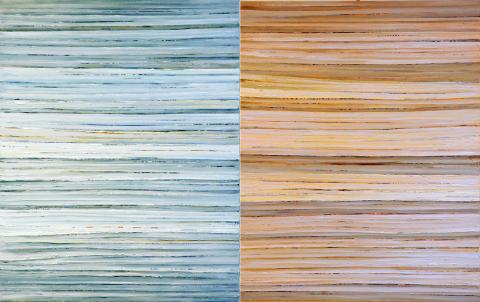
Photo Courtesy of Art Issue Projects
RT_sampler is an interactive, participatory cross-stitch project devised by Australian artist Claire Bushby. Started in 2012, the idea was to examine how individuals use social media platforms to hash out their personal musings. Participants simply screenshot a tweet and cross stitch it — and it’s amusing to see how much people can overshare in under 140 characters. Some of these cross-stitches are currently on display at Treasure Hill Artist Village where Bushby also held cross-stitch workshops.
■ Treasure Hill Artist Village, Gallery 13 (寶藏巖國際藝術村13號展間), 2, Alley 14, Ln 230, Dingzhou Rd Sec 3, Taipei City (台北市汀州路三段230巷14弄2號), tel: (02) 2364-5313. Open Tuesday to Sundays from 11am to 6pm, closed Mondays and Wednesdays
■ Until Dec. 18
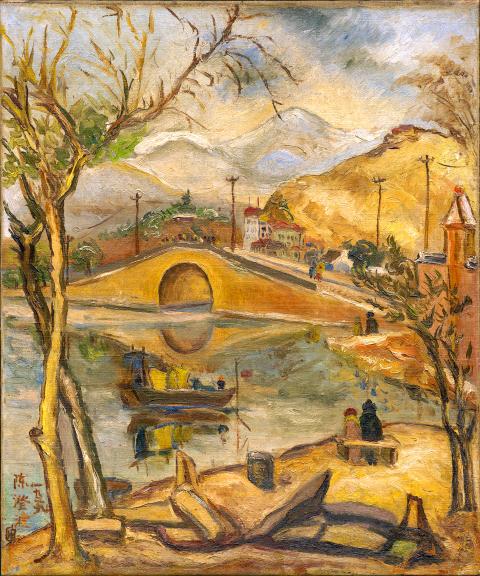
Photo Courtesy of the National Palace Museum
Away from the Long Night (遠離長夜) is an exhibition by Shi Jin-hua (石晉華), Song Dong (宋冬), Yee I-Lann (于一蘭) and Yin Xiuzhen (尹秀珍) which collectively explores the different, contrasting relationships between the self and society. Scrambled words, body parts and second-hand clothing are common motifs in all of the artists’ work. A diabetic since age 17, the Penghu-born Shi’s obsession with scales and measurements, as well as his quest to seek scientific ways to quantify human emotion is evident in his work. On display are photos captured from his performance piece, the Hugging Project where the artist hugged other resident artists at New York’s MOMA PS1 and got them to record on his arm where their fingertips touched his arm.
■ Mind Set Art Center (安卓藝術), 16-1, Xinsheng S Rd Sec 3, Taipei City (台北市新生南路三段16-1號), tel: (02) 2365-6008. Open Tuesdays to Sundays from 2pm to 6pm
■ Until Dec. 31
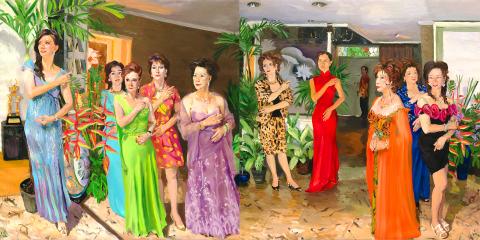
Photo Courtesy of Eslite Gallery
Wu I-Chien’s (吳怡蒨) collages may seem minimalistic, but her process in creating them is painstaking and methodological. The mixing and layering of paint and found objects parallels human behavior being multilayered and multidimensional — what you see on the surface is not what you get. On another dimension, the layering is also representative of how we live in an era of information overload — too much to information process and a lack of filtering systems to process it. Wu’s collages are on display at Art Issue Projects in the aptly-named solo exhibition, Reiterate (再敘述).
■ Art Issue Projects (藝術計劃), 32, Ln 407, Tiding Blvd Sec 2, Taipei City (台北市堤頂大道二段407巷32號), tel: (02) 2659-7737. Open Tuesdays to Sundays from 11am to 6pm
■ Opens tomorrow. Until Jan 14
A few years ago, Chinese artist Liu Xiao-dong (劉小東) visited Indonesia and was deeply stuck by the obvious displays of wealth alongside poverty in a country coming to grips with its history of violence against ethnic Chinese. Although people may choose to forget, Liu believes that memory is preserved in nature through trees and plants. His paintings of fallen coconuts looking like skulls, as well as portraits of high society women in gowns and big hairdos, amongst others, are on display starting tomorrow at Taipei’s Eslite Gallery in an exhibition entitled Liu Xiao-dong in Indonesia (劉小東在印度尼西亞).
■ Eslite Gallery (誠品畫廊), 5F, 11 Songgao Rd, Taipei City (台北市松高路11號5樓), tel: (02) 8789-3388. Open Tuesdays to Sundays from 11am to 7pm
■ Opens tomorrow. Until Jan. 18
The sleepy former British tea merchant warehouse by the Tamsui river which was recently revamped into the bustling Tamsui Cultural Park earlier this year is currently showcasing the Miniature Chinese Dough Art Exhibition (中華捏麵人藝術特展). Organized by the Chinese Global Culture Company, the exhibition consists of miniature figurines made out of dough, constructed to resemble scenes from the bygone days of Chinese hutongs and imperial palaces. The lifelike details of each figurine brings out the beauty of the declining art, resonating with the adage that good things come in tiny packages.
■ Tamsui Cultural Park (淡水文化園區) 22, Bitou Street, New Taipei City (新北市鼻頭街22號), tel: (02) 2622-1928. Open daily from 9am to 6pm
■ Until Feb. 28
Hidden Talent (藏鋒) is a special exhibition at the National Palace Museum featuring the works of the late Chen Cheng-po (陳澄波). The artist was shot dead in public in his native Chiayi by the Chinese Nationalist Party (KMT) military during the 228 Incident in 1947. Before his death, Chen was a prolific artist. Having lived in Shanghai where he picked up the skills of traditional Chinese brush painting, Chen used those skills to paint impressionistic nature scenes of his beloved Chiayi, as well as abstract portraitures of nude women.
■ National Palace Museum (國立故宮博物院), 221 Zhishan Rd Sec 2, Taipei City (台北市至善路二段221號), tel: (02) 2881-2021. Open daily from 9am to 5pm. Regular admission: NT$250
■ Until March 30
Ajay Verma, a consultant gastroenterologist at Kettering general hospital in Northamptonshire, says our gut is a “complex machine.” “It is constantly providing us with the nutrition we need, initially to grow and develop, and then for us to survive, thrive and repair from injury and illness.” How can we keep it functioning well? Put simply: “Make sure what you put into it is balanced, and that you clear out its waste products adequately,” Verma says. “In a general gastroenterology clinic, the most common conditions we see are irritable bowel syndrome (IBS), gastroesophageal reflux disease, inflammatory bowel disease and constipation,” says Nisha
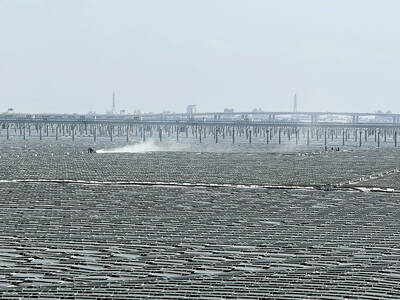
The arithmetic is straightforward and uncomfortable. By the end of 2025, Taiwan had committed itself to a 50-30-20 electricity mix — half natural gas, 30 per cent coal, 20 per cent renewables. The Ministry of Economic Affairs’s (MOEA) own monthly energy reports tell a different story. Natural gas reached 47.8 per cent of generation last year. Coal stood at 35.4 per cent, comfortably above its target ceiling. Renewables came in at 13.1 per cent, well short of the 20 per cent Taipei had pledged a decade earlier. Installed renewable capacity reached roughly half of the 12 gigawatts (GW) the government

Last week US President Donald Trump was asked by a reporter whether he would speak on the phone to the President of Taiwan. “l’ll speak to him. I speak to everybody. We have that situation very well in hand,” Trump said. This marked the second time in a couple of weeks he had said he would talk to the President of Taiwan. In 2016 he famously took a call from then-president Tsai Ing-wen (蔡英文), when he was president-elect. Despite warnings that the apocalypse was nigh because of a phone call, the world quickly forgot about the conversation between two democratically-elected presidents.
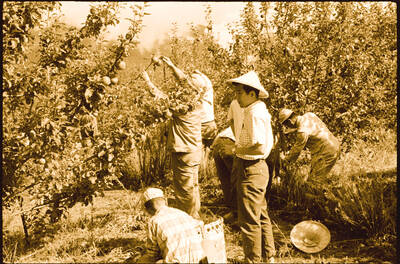
May 25 to May 31 Few believed that apples could be cultivated on a commercial scale in Taiwan’s high mountains. When horticulturalist Cheng Chao-hsiung (程兆熊) first proposed the idea in 1955, both American and Taiwanese colleagues dismissed it as implausible, arguing that temperate fruit could not be reliably grown on a subtropical island, especially on rugged terrain. However, it was this terrain in the Central Mountain Range where many Chinese Civil War veterans were resettled in the late 1950s. With limited job prospects and no family in Taiwan, they were placed on cooperative farms aimed toward self-sufficiency. Some say the conditions


 RSS
RSS