


Is Japan the most culturally specific country on Earth? Each time I go there I marvel at the eccentricities: the taxi and bus drivers with their gloves, the ritual of the onsen bath house and the incessant bowing. Nowhere else induces in me such feelings of amused amazement.
David Pilling is an Anglo expert on Japan. Some might say that’s an oxymoron, but he is at least one of those foreign correspondents who does not have to try very hard to show his knowledge. Pilling spent most of the first decade of the 21st century in Tokyo and went back to cover the aftermath of the 2011 earthquake. The result is an authoritative and entertaining attempt to explain the mysteries of the shimaguni, the island nation, and its centuries-old determination to withstand outside influences.
The story begins and ends with the disaster that struck the coastal city of Sendai and destroyed the Fukushima nuclear station, with consequences for hundreds of miles around. The author points to systemic failures in the nuclear industry, a combination of the use of casual labor and a management culture that encouraged unquestioning loyalty over robust risk-assessment.

Some still struggle to take in the idea that Japan could be anything but efficient. But Pilling helps to explain the extent to which a business model that served the country so well during the great recovery after the second world war has also been at the heart of its more recent economic stagnation.
The postwar Japanese company was modeled as a social organization and most continue to be this to this day. Teams of graduates are recruited each year on the assumption that they will stay with the same firm until retirement. It is, the author suggests, a form of indoctrination, turning them into obedient employees. “It was a career escalator determined not by merit but by length of service, a system that encouraged loyalty and cooperation, not a battle among employees to prove who was most worthy of advancement.”
For women, the prospect of promotion or even meaningful employment remains slim. Women still single at 25 have long been referred to disparagingly as “Christmas cake,” an item that plummets in value after Dec. 25. Home and hearth are assumed, the wife to wait quietly each weekday night until the “salary man” gets home after a heavy evening’s drinking. The after-party drink, niji kai often involves the boss and his team going to a massage parlor, discussing corporate strategy while being entertained carnally by hostesses. This might give a new meaning to the term bonding exercise. Suffice to say, it is not easy, Pilling notes, for female employees to be on the inside track.
The author deftly manages the trick of illustrating grand sweep with small anecdote. Thus during the earthquake, the first response in one supermarket of neatly uniformed staff was to use their hands, arms and bodies to prevent bottles of soy sauce and packets of miso soup from toppling to the floor. For months after the quake, the electricity grid in Tokyo was kept low, to prevent blackouts. Office workers might have been sweltering in the summer without air conditioning, but the lavatory seats were still heated. “Where else in the world?” you might well ask.
The answer lies in history. For centuries, Japan cut itself off; it was sakoku, a closed country. Another useful word is nihonjinron, the concept of a racially homogenous society. Only two million out of a population of 127 million are descended from a different ethnicity, most of them Koreans. This statistic is important when considering Japan’s terrible war record.
As for Japan’s refusal to face up to its war record, the author says the Americans are partly to blame. In order to reestablish order, US occupying forces restored the power of the emperor. They also imposed strict censorship, to keep discussion of Hiroshima and Nagasaki to a minimum. This in turn made it harder to discuss the terrible actions of Japanese forces in China, Singapore and elsewhere.
From the early 1950s until the late 1980s, Japan was the economy to fear. It is easy to forget, however, how dire it looked in 1945. Starving Tokyo residents would clamber on trains to the countryside to forage for food, eating the leaves off potato plants. Girls lined up to sleep with American GIs in return for nylon stockings or canned food. Then it all took off, corporate giants unleashing Honda cars and Sony stereos on a western world that responded in awe and fear. The Japanese scoffed at the “British disease,” a feckless and work-shy nation, and the “American disease,” a society riddled with violent crime, drugs and divorce.
In the mid-1980s, hubris reached a peak. Some of the stories might have been apocryphal, but in this land of the high yen, restaurant diners would sprinkle gold leaf on their food like salt and pepper.
Then came the slowdown, years of no growth or slow growth. Korea overtook Japan with its cool tech products; China usurped it with its global power and influence.
So what is left?
The notion of Japan in crisis is a strange one. Little of the old confidence remains; a succession of weak and unimaginative governments has made little impact. There is much head-scratching about a corporate culture that is long past its sell-by date. Yet this is not a country afflicted by overt poverty or social dislocation. Crime remains extremely low, as do prison rates.
Pilling is optimistic about Japan’s future. He puts faith in a younger generation trying to break the shackles and a relatively new and dynamic government under Shinzo Abe. Hopes are high that Abenomics will propel Japan back into sunnier uplands.
No matter how speedy or sluggish the growth, the most remarkable aspect of Japan is its refusal to embrace globalization beyond a veneer of McDonalds and Krispy Kremes (where the queue stretches round the block).
Like many uninitiated travelers to the country, I remain enthralled and disconcerted in equal measure. This book makes a good fist of disentangling the curious charms of the Japanese and for helping outsiders to understand them a little better.

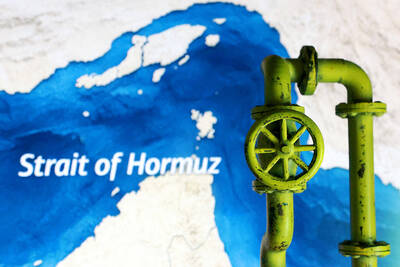
The US war on Iran has illuminated the deep interdependence of Asia on flows of oil and related items as raw materials that become the basis of modern human civilization. Australians and New Zealanders had a wake up call. The crisis also emphasizes how the Philippines is a swatch of islands linked by jet fuel. These revelations have deep implications for an invasion of Taiwan. Much of the commentary on the Taiwan scenario has looked at the disruptions to world trade, which will be in the trillions. However, the Iran war offers additional specific lessons for a Taiwan scenario. An insightful

The problem with Marx’s famous remark that history repeats itself, first as tragedy, the second time as farce, is that the first time is usually farce as well. This week Chinese Nationalist Party (KMT) Chair Cheng Li-wun (鄭麗文) made a pilgrimage to the People’s Republic of China (PRC) “to confer, converse and otherwise hob-nob” with Chinese Communist Party (CCP) officials. The visit was an instant international media hit, with major media reporting almost entirely shorn of context. “Taiwan’s main opposition leader landed in China Tuesday for a rare visit aimed at cross-strait ‘peace’”, crowed Agence-France Presse (AFP) from Shanghai. Rare!
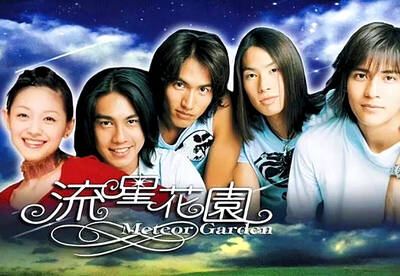
April 6 to April 13 Few expected a Japanese manga adaptation featuring four tall, long-haired heartthrobs and a plucky heroine to transform Taiwan’s television industry. But Meteor Garden (流星花園) took the nation by storm after premiering on April 12, 2001, single-handedly creating the “idol drama” (偶像劇) craze that captivated young viewers across Asia. The show was so successful that Japan produced its own remake in 2005, followed by South Korea, China and Thailand. Other channels quickly followed suit, with more than 50 such shows appearing over the following two years. Departing from the melodramatic
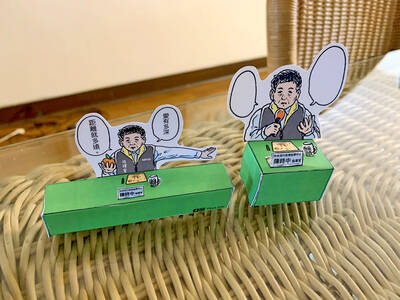
Sunflower movement superstar Lin Fei-fan (林飛帆) once quipped that the Democratic Progressive Party (DPP) could nominate a watermelon to run for Tainan mayor and win. Conversely, the DPP could run a living saint for mayor in Taipei and still lose. In 2022, the DPP ran with the closest thing to a living saint they could find: former Minister of Health and Welfare Chen Shih-chung (陳時中). During the pandemic, his polling was astronomically high, with the approval of his performance reaching as high as 91 percent in one TVBS poll. He was such a phenomenon that people printed out pop-up cartoon


 RSS
RSS