


The sounds, sights and smells of nature have always been a key element to attending a performance by U-Theatre (優人神鼓) at their mountain home on Laoquanshan (老泉山) in Muzha (木柵), Taipei.
Same goes for the hike up the path from the road to the complex. The path is steep, winding and not well lit, which makes flashlights a must for coming back down. What is needed going up, however, is the mantra: “It’s not much farther, we can sit down once there [pause to grab a view breaths while pretending to admire the view] and the show will be more than worth it.”
Since Zen practice and awareness are central tenets of the almost ascetic drumming group, which is famous for its meditation-based movements and long walks around Taiwan and in other countries, encouraging audience members to focus “in the moment” as they huff and puff up the path is all part of the experience.
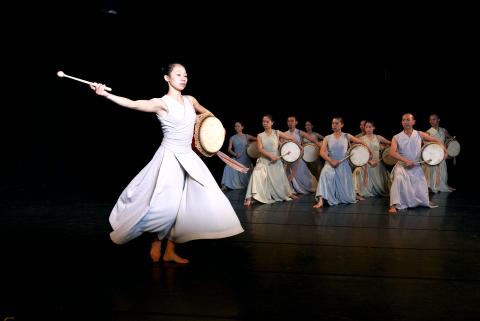
Photo courtesy of U-Theatre
However, this year the troupe is giving people something else to focus on besides pain and shortness of breath.
On the way up to watch Sound of Light (感光。優), the audience will see the illustrations from the Ten Ox Herding Pictures, a sequence of 10 poems and pictures depicting the stages of Zen practice.
They tell of a man who goes looking for his ox, his struggles to tame it (and thereby himself ) and his eventual return home a changed person.
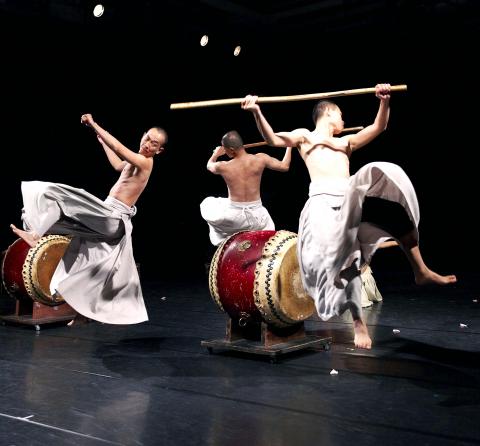
Photo courtesy of U-Theatre
The illustrations will be specially lit, and there will be a real ox, company founder and artistic director Liu Ruo-yu (劉若瑀) said.
The actual 50-minute show itself, divided into four segments, will also incorporate more lighting elements than usual, she said, adding that the goal was to get the audience to “feel the light” as they hear (and feel) the drumming.
The main themes for the music and choreography were also derived from the Ten Ox Herding Pictures.
The show is being coproduced by the Coretronic Culture and Arts Foundation, which was founded last year to encourage light-related research and artistic creations using light and shadows.
As with all their Laoquanshan shows, the troupe is encouraging its audience to use public transportation instead of driving up the mountain. It has arranged for shuttle buses from the Taipei Zoo MRT Station (捷運動物園站) exit 2; look for a staff member wearing a U-Theatre T-shirt or holding a placard. The shuttles will return to the MRT station after the show.

Ajay Verma, a consultant gastroenterologist at Kettering general hospital in Northamptonshire, says our gut is a “complex machine.” “It is constantly providing us with the nutrition we need, initially to grow and develop, and then for us to survive, thrive and repair from injury and illness.” How can we keep it functioning well? Put simply: “Make sure what you put into it is balanced, and that you clear out its waste products adequately,” Verma says. “In a general gastroenterology clinic, the most common conditions we see are irritable bowel syndrome (IBS), gastroesophageal reflux disease, inflammatory bowel disease and constipation,” says Nisha

And so, in the wake of US President Donald Trump’s trip to the People’s Republic of China (PRC), all the experts on the Strait of Hormuz suddenly became experts on US-China-Taiwan relations. The Internet has certainly expanded human knowledge. Lots of these sudden experts made noise this week about Trump’s words after the meeting with PRC dictator Xi Jin-ping (習近平). Trump is going to sell out Taiwan! Longtime Taiwan commentator J. Michael Cole summed the situation up neatly in the Guardian: “We need to keep in mind that he has a tendency to say many things — sometimes contradicting himself within

Last week US President Donald Trump was asked by a reporter whether he would speak on the phone to the President of Taiwan. “l’ll speak to him. I speak to everybody. We have that situation very well in hand,” Trump said. This marked the second time in a couple of weeks he had said he would talk to the President of Taiwan. In 2016 he famously took a call from then-president Tsai Ing-wen (蔡英文), when he was president-elect. Despite warnings that the apocalypse was nigh because of a phone call, the world quickly forgot about the conversation between two democratically-elected presidents.
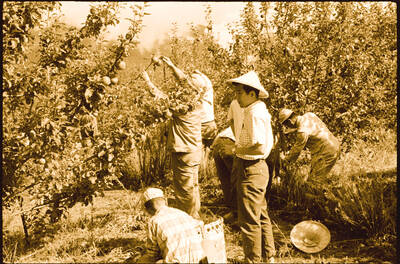
May 25 to May 31 Few believed that apples could be cultivated on a commercial scale in Taiwan’s high mountains. When horticulturalist Cheng Chao-hsiung (程兆熊) first proposed the idea in 1955, both American and Taiwanese colleagues dismissed it as implausible, arguing that temperate fruit could not be reliably grown on a subtropical island, especially on rugged terrain. However, it was this terrain in the Central Mountain Range where many Chinese Civil War veterans were resettled in the late 1950s. With limited job prospects and no family in Taiwan, they were placed on cooperative farms aimed toward self-sufficiency. Some say the conditions


 RSS
RSS