


Kung fu mixes with Indiana Jones, and Jay Chou (周杰倫) and Lin Chi-ling (林志玲) are in the lead roles. The Treasure Hunter sounds like a film that can’t go wrong. That is until old-time slapstick comedy whiz Chu Yen-ping (朱延平) manages to spoil the Chinese version of this ancient civilization adventure with an utterly nonsensical story plagued with stale humor and dull, silly dialogue.
In a role tailor-made for the Mando-pop king to show off his aloof charm, Chou plays Ciao Fei, a treasure hunter and kung fu master. The hero is in search of a map that will lead him to a lost city brimming with riches. His companions on the journey include city gal-cum love interest Lan Ting (played by Lin), Chinese thespian Chen Daoming’s (陳道明) deadpan archaeologist, and comic sidekick Pork Rib played by Eric Tsang (曾志偉).
Chou’s real-life pal Will Liu () plays the mummy-man villain. There is also the group of thugs termed the Sandstorm Legion who never make it back to the screen after pulling down a dingy bar at the beginning of the movie.
Even more puzzling is the laughable Eagle of the Desert, who is supposed to be a mysterious guardian of all things in the arid region, who suddenly and inexplicably exits the movie with the girl he loves.
The film possesses no plot other than a mad scrambling to grab the treasure map. The romance between Chou and Lin doesn’t work either. The onscreen love is killed prematurely by a plethora of coy, mushy dialogue and feeble flirting. The good news is that despite the poorly written script, baby-voiced Lin manages to play her babe-to-ogle-at role with dignity. Chou is his usual self as a one-expression hero looking good with the aid of an over-the-top wire-fu show.
The final verdict: It is best to avoid The Treasure Hunter unless you want to have a good laugh at the movie.
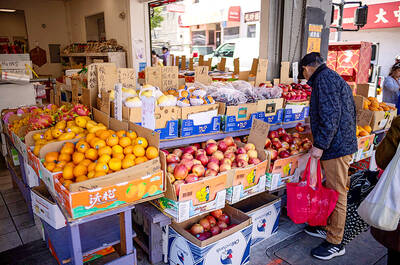
Ajay Verma, a consultant gastroenterologist at Kettering general hospital in Northamptonshire, says our gut is a “complex machine.” “It is constantly providing us with the nutrition we need, initially to grow and develop, and then for us to survive, thrive and repair from injury and illness.” How can we keep it functioning well? Put simply: “Make sure what you put into it is balanced, and that you clear out its waste products adequately,” Verma says. “In a general gastroenterology clinic, the most common conditions we see are irritable bowel syndrome (IBS), gastroesophageal reflux disease, inflammatory bowel disease and constipation,” says Nisha

And so, in the wake of US President Donald Trump’s trip to the People’s Republic of China (PRC), all the experts on the Strait of Hormuz suddenly became experts on US-China-Taiwan relations. The Internet has certainly expanded human knowledge. Lots of these sudden experts made noise this week about Trump’s words after the meeting with PRC dictator Xi Jin-ping (習近平). Trump is going to sell out Taiwan! Longtime Taiwan commentator J. Michael Cole summed the situation up neatly in the Guardian: “We need to keep in mind that he has a tendency to say many things — sometimes contradicting himself within

Last week US President Donald Trump was asked by a reporter whether he would speak on the phone to the President of Taiwan. “l’ll speak to him. I speak to everybody. We have that situation very well in hand,” Trump said. This marked the second time in a couple of weeks he had said he would talk to the President of Taiwan. In 2016 he famously took a call from then-president Tsai Ing-wen (蔡英文), when he was president-elect. Despite warnings that the apocalypse was nigh because of a phone call, the world quickly forgot about the conversation between two democratically-elected presidents.
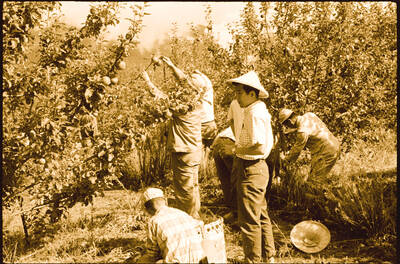
May 25 to May 31 Few believed that apples could be cultivated on a commercial scale in Taiwan’s high mountains. When horticulturalist Cheng Chao-hsiung (程兆熊) first proposed the idea in 1955, both American and Taiwanese colleagues dismissed it as implausible, arguing that temperate fruit could not be reliably grown on a subtropical island, especially on rugged terrain. However, it was this terrain in the Central Mountain Range where many Chinese Civil War veterans were resettled in the late 1950s. With limited job prospects and no family in Taiwan, they were placed on cooperative farms aimed toward self-sufficiency. Some say the conditions


 RSS
RSS