


VIEW THIS PAGE Spending US$300,000 and six months to construct a full-size replica junk and then setting fire to it may seem extravagant, but the residents of Pingtung County’s Donggang Township (東港) undertake the ritual once every three years. The burning is the climax of the “Wang boat” festival, an important religious observance centered around Donggang’s Donglong Temple (東隆宮), one of about eight temples in Taiwan that venerate the deity “Wang Yeh.”
According to legend, Wen Wang-yeh (溫王爺) was a seventh-century Chinese dynastic official who was given the posthumous title of “God’s naval patrolman” by the emperor after dying in an accident while on a marine patrol.
The emperor, whose life Wang had once saved, ordered celebrations to be held in his honor.
Donglong Temple was constructed around the turn of the 18th century after locals saw signs that Wang wanted to settle in Taiwan.
Wang boat festivities usually last a week, with the boat making several “inspection” trips around the town before it is meticulously loaded with cargo — food, livestock (models, not real animals), clothes and provisions for the 36-strong crew of deities — and taken to Jhenhai Park (鎮海公園) for its spectacular demise.
The festival was originally initiated to protect local inhabitants from pestilence, but nowadays is more of a general prayer for good fortune.
While it may not be as high-profile as the celebrations held for Wang Yeh’s more famous cohort, Matzu, the event is taken very seriously by Donggang residents, many of whom take several days off work to join in. Townsfolk swear that the ritual is responsible for unexplained phenomena, with Peter Hsiao (蕭枝林), the temple’s public relations chief, attributing the change of direction in Typhoon Parma last month, which spared Taiwan a direct hit, to Wang Yeh.
The festivities are growing in popularity. An estimated 120,000 participants, including international and domestic tourists, descended on Donggang on Oct. 16 for the final day of this year’s festival.
The good news for those that didn’t catch
the Donggang festival is that you haven’t missed the boat.
Sanlong Temple (三隆宮) on Siao Liouciou (小琉球), a small island around 30 minutes by boat from Donggang Harbor, holds its much smaller Wang Yeh festival from today to its fiery finale early on Wednesday morning.
Besides the festival, Siao Liouciou is a great place to spend a long weekend and get away from it all as it offers clear blue seas, fresh ocean air and most importantly, peace and quiet.
IF YOU GO
Getting there:
» Donggang is around an hour by bus from Kaohsiung’s HSR Zuoying Station (高鐵左營車站) and Kaoshiung TRA Station (高雄車站)
» Public and private ferries sail from Donggang Harbor to Siao Liouciou throughout the day
» Tickets cost NT$410 for a return (NT$210 for children) and the journey takes about 30 minutes. Call (08) 833-7493 or (08) 832-5806 for details
» Boats also leave infrequently from Kaohsiung’s True Love Pier at weekends. Call (07) 521-5838 for details
Getting around:
» If you haven’t already arranged a pick-up, scooter touts will be waiting at the harbor when you disembark. Scooters cost around NT$300 per 24 hours
» Bikes can also be rented from many hotels or the tourist center for around NT$200 per day
Where to stay:
» Located on a cliff top away from the main port, Ba Tsun Villas (八村Villas館, www.8v.com.tw) is a great place to curl up with a book for a day or two. It has spacious, well-decorated doubles looking out to sea over a large, beautifully maintained lawn starting from NT$3,600 per night on weekdays
» Package deals that include a ferry ticket, scooter rental, breakfast and a BBQ dinner, and use of the spa are also available, starting from NT$1,900 per person for groups of eight and NT$2,600 per person for couples
» For a more traditional minsu (民宿) experience, Coral Bed and Breakfast (珊瑚假期, www.coralbnb.idv.tw) situated in the main town has simple doubles starting at NT$2,000 per night on weekdays
Where to eat:
» As you would expect, seafood is the order of the day on Siao Liouciou. The Hundred Seas Restaurant (百海餐廳, 民族路六號, tel: (08) 861-2591) has some unique and tasty signature dishes including mixed seaweed and betel nut flower (海菜涼拌檳榔花) and “Siao liouciou pizza,” a kind of crunchy batter disc made with shrimp (蜂巢蝦)
Things to do/see:
» Venice Beach (蛤板灣沙灘) is a sheltered beach and a good place to spend an hour or two collecting shells and hunting hermit crabs
» Beauty Cave (美人洞) is the place to look out for Siao Liouciou’s turtles at either dawn or dusk
» Colorful Liouciou (彩色琉球, www.cfliouciou.com.tw) organizes snorkeling trips (NT$300) and also rents canoes (NT$150 for 30 minutes)
Dapeng Bay:
» Five minutes from Donggang is Dapeng Bay, which used to be a massive oyster-farming center until the late 1990s when the government paid off the farmers with the intent of developing the bay as a tourist destination. The tourism dream hasn’t quite taken off yet, but there are still a few things to do that make it worth a half-day visit
Places to visit:
» An 18km round-the-bay bicycle path has recently been completed and makes for a pleasant way to spend a couple of hours. Just make sure you take a hat and sun block as there is little shade. Bikes can be rented from near the Dapeng Bay National Scenic Area Office, tel: (08) 833-8100, located next to the bay. Canoeing, pedalos and a range of other activities are also available
Oyster culture:
» Dapeng Bay is the place to sample Taiwan’s signature oyster omelet (蚵仔煎), although you need to take a boat ride to do so. One-hour boat trips including a history of the bay (in Chinese only) and a stop at Dapeng Bay’s oyster shell island and its floating restaurant cost NT$200. Boats leave from Ren Peng Ocean Water Park (仁鵬海洋親水牧場, ueu.com.tw/ueujp/index-2.htm)
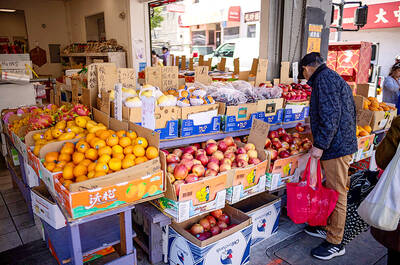
Ajay Verma, a consultant gastroenterologist at Kettering general hospital in Northamptonshire, says our gut is a “complex machine.” “It is constantly providing us with the nutrition we need, initially to grow and develop, and then for us to survive, thrive and repair from injury and illness.” How can we keep it functioning well? Put simply: “Make sure what you put into it is balanced, and that you clear out its waste products adequately,” Verma says. “In a general gastroenterology clinic, the most common conditions we see are irritable bowel syndrome (IBS), gastroesophageal reflux disease, inflammatory bowel disease and constipation,” says Nisha
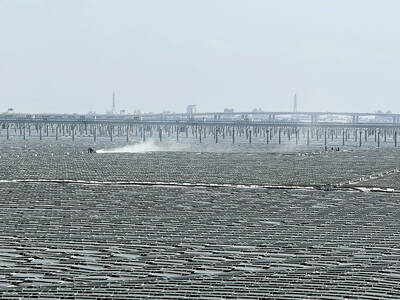
The arithmetic is straightforward and uncomfortable. By the end of 2025, Taiwan had committed itself to a 50-30-20 electricity mix — half natural gas, 30 per cent coal, 20 per cent renewables. The Ministry of Economic Affairs’s (MOEA) own monthly energy reports tell a different story. Natural gas reached 47.8 per cent of generation last year. Coal stood at 35.4 per cent, comfortably above its target ceiling. Renewables came in at 13.1 per cent, well short of the 20 per cent Taipei had pledged a decade earlier. Installed renewable capacity reached roughly half of the 12 gigawatts (GW) the government

Last week US President Donald Trump was asked by a reporter whether he would speak on the phone to the President of Taiwan. “l’ll speak to him. I speak to everybody. We have that situation very well in hand,” Trump said. This marked the second time in a couple of weeks he had said he would talk to the President of Taiwan. In 2016 he famously took a call from then-president Tsai Ing-wen (蔡英文), when he was president-elect. Despite warnings that the apocalypse was nigh because of a phone call, the world quickly forgot about the conversation between two democratically-elected presidents.
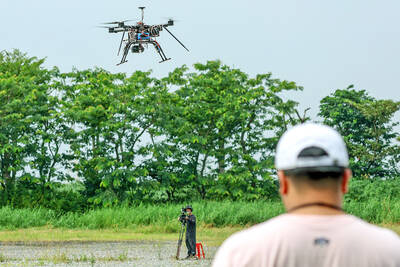
Taiwan’s drone exports are taking off, fuelled by the war in Ukraine, as Taiwanese companies seek a stake in the fast-growing global market for unmanned aerial vehicles (UAV). Low-cost drones used for reconnaissance and strikes are in high demand as governments around the world boost defense spending in the face of intensifying conflicts. A relative new player in the increasingly competitive industry, Taiwan’s pitch is to be an “Asian hub” for the production of UAVs and components free of Chinese materials, or “non-red.” That means its UAVs can be up to three times more expensive than their Chinese competitors, like the world’s biggest


 RSS
RSS