


Around the same time that Philip Larkin claimed, in an ironic tone, that sexual intercourse began in 1963, the ultra-Catholic Irish politician Oliver J Flanagan insisted, in all seriousness, that there had been no sex in Ireland before television. Flanagan’s claim was idiotic but not entirely nonsensical. It all depends, as former US president Bill Clinton and many others could explain, what you mean by sex. If sex is a physical function, it is a reasonable assumption that it had been up and running for some time before the arrival of the goggle box. If, though, sex is a publicly acknowledged source of mutual pleasure, there is some truth in the notion that it was largely absent from the Irish state between its foundation in 1922 and the gradual process of liberalization that began in the 1960s.
There is a word that crops up twice in Diarmaid Ferriter’s groundbreaking study of the control of sexuality by church and state in 20th-century Ireland: badness. The first time, it is in a quote from the statement of a domestic servant raped by two men in Dublin in 1900: “He got hold of me by the arm and asked me was there any chance of something, which I understood to mean badness.” The second is from a 1928 novel in which an Irish servant in England has had consensual sex: “But, of course, it was badness and she was bad ...”
That the same word should cover a violent assault and an episode of pleasure reveals the essence of the Irish problem with sex. When all sex is badness, the difference between rape and consent, between mutual affection and cruel exploitation, is blurred. This in turn means, as Ferriter shows, that a society in which sex is identified with shame becomes neither innocent nor moral. It becomes, rather, both deeply cruel and extravagantly hypocritical.
Before the mid-19th century, the Irish were not more notably neurotic about sex than anybody else. The traumatic famine of the 1840s, however, had huge and long-lasting effects. The perception that the famine had been caused by overpopulation caused a shift in the nature of the rural economy. Land must no longer be subdivided. The eldest son would not marry until he could inherit the farm. The other children would be condemned to celibacy or emigration. By the end of the World War II, Ireland had one of the lowest marriage rates in the world: 65 percent of the population were single.
This was the context in which Ireland received a double whammy of Puritanism: Victorian respectability from England and a particularly rigid form of Catholicism from Rome. These mutually reinforcing ideologies were strengthened by the rise of nationalism. Irish purity and chastity were contrasted to a supposed English decadence. While none of these elements was unique to Ireland, the combination produced a particularly toxic combination of class snobbery, misogyny, hysteria and self-delusion.
The great achievement of Ferriter’s sober but riveting account is to destroy this self-delusion once and for all. There are still social conservatives who believe that there really was a time of innocence before economic modernity and liberalism opened the door to permissiveness, pornography and perversion. The truth, undeniable after a reading of Occasions of Sin, is that long before the door was opened there were very nasty things going on behind it.
It is hard to think of anything more that Irish governments and the Catholic church could have done in their efforts to control sexual behavior. The state banned contraceptives, divorce, abortion and even adoption. It implemented sweeping censorship of literature and cinema. The church, for its part, mobilized a powerful array of social and psychological weapons, preaching in effect that sex was the only sin. When a journalist wrote to the powerful archbishop of Dublin, John Charles McQuaid, in 1970, wondering whether the church was overly obsessed with sex, to the exclusion of issues such as poverty, lack of education and low welfare rates, he replied indignantly that “sex ... is a sin and is the concern of the church.”
Yet none of this stopped sex. It merely tended to make it furtive, exploitative, unsafe and shrouded in shame. With typical subtlety, one Catholic pamphlet of 1960 urged girls to adopt the acronym Fear: “If kisses are Frequent, Enduring, and Ardent, there can be hardly any just Reason for them.”
The other side of this hysterical hatred of the body was brutality. Drawing on court files and official records, Ferriter explores the high levels of child sexual abuse (both in church-run institutions and in the family), infanticide, prostitution and venereal diseases, the vulnerability of servants to assault by their employers and the steady stream of unmarried mothers entering church-run homes or escaping to England. He details the consequences for women of the ban on contraceptives: even in the mid-1960s, a fifth of all Irish mothers had seven or more children.
Keeping up appearances was crucial. There was an obsession with the idea that Ireland’s chastity was under assault from England, both as the source of evil literature and ideas, and as the place where innocent Irish emigrants would be corrupted. In 1956, when the London-based Observer newspaper published a series on sex, and would not agree to keep papers out of Ireland, the Irish newsagents’ association decreed that “it would not do to let them in.” In 1960, McQuaid complained about an ad in the same nasty rag showing a mother and daughter wearing their new bras. Less comically, the idea of banning women under 21 from emigrating to England was seriously discussed at the highest levels of church and state.
In many respects, it is more remarkable that this system continued for as long as it did than that it collapsed so rapidly in the 1990s. As late as 1974, the attorney general, Declan Costello, was urging that the possession of a contraceptive by an unmarried person be made a criminal offence. In 1991, the Virgin Megastore in Dublin was prosecuted for selling condoms. And even now, abortion law decrees that a woman may not terminate her pregnancy in Ireland but has a constitutional right to do so in Britain.
Sexual liberation may not be the answer to all prayers. The dismantling of the system of sexual suppression has not made Ireland into a utopia of love and bliss. It would be nice to think that there might be some golden mean between brutal repression and in-your-face, commercialized sexuality. But for anyone tempted by the sin of nostalgia, Ferriter’s superbly researched narrative is a powerful prophylactic.

This is the year that the demographic crisis will begin to impact people’s lives. This will create pressures on treatment and hiring of foreigners. Regardless of whatever technological breakthroughs happen, the real value will come from digesting and productively applying existing technologies in new and creative ways. INTRODUCING BASIC SERVICES BREAKDOWNS At some point soon, we will begin to witness a breakdown in basic services. Initially, it will be limited and sporadic, but the frequency and newsworthiness of the incidents will only continue to accelerate dramatically in the coming years. Here in central Taiwan, many basic services are severely understaffed, and
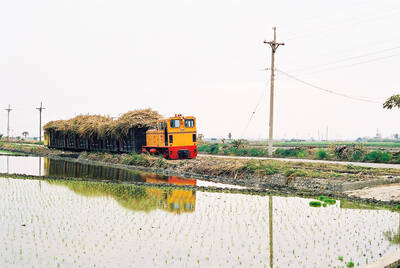
Jan. 5 to Jan. 11 Of the more than 3,000km of sugar railway that once criss-crossed central and southern Taiwan, just 16.1km remain in operation today. By the time Dafydd Fell began photographing the network in earnest in 1994, it was already well past its heyday. The system had been significantly cut back, leaving behind abandoned stations, rusting rolling stock and crumbling facilities. This reduction continued during the five years of his documentation, adding urgency to his task. As passenger services had already ceased by then, Fell had to wait for the sugarcane harvest season each year, which typically ran from
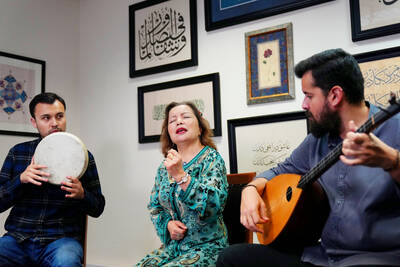
It is a soulful folk song, filled with feeling and history: A love-stricken young man tells God about his hopes and dreams of happiness. Generations of Uighurs, the Turkic ethnic minority in China’s Xinjiang region, have played it at parties and weddings. But today, if they download it, play it or share it online, they risk ending up in prison. Besh pede, a popular Uighur folk ballad, is among dozens of Uighur-language songs that have been deemed “problematic” by Xinjiang authorities, according to a recording of a meeting held by police and other local officials in the historic city of Kashgar in

It’s a good thing that 2025 is over. Yes, I fully expect we will look back on the year with nostalgia, once we have experienced this year and 2027. Traditionally at New Years much discourse is devoted to discussing what happened the previous year. Let’s have a look at what didn’t happen. Many bad things did not happen. The People’s Republic of China (PRC) did not attack Taiwan. We didn’t have a massive, destructive earthquake or drought. We didn’t have a major human pandemic. No widespread unemployment or other destructive social events. Nothing serious was done about Taiwan’s swelling birth rate catastrophe.


 RSS
RSS