


The tiny Rat has given way to the mighty Ox as the lunar calendar marks the beginning of a new year. The Ox, or as some would prefer it, the water buffalo, is a comfortingly solid and reliable zodiac sign for a time of economic uncertainty, though it is unlikely to be heralding the emergence of a bull market any time soon.
Astrology.com lauds the virtues of the Ox, saying that those born under this sign are plodding and methodical, preferring a step-by-step approach to solving problems. They never lose sight of their goal, and are smart, trustworthy, caring and honorable.
Despite these fine qualities, one local graphic designer lamented in his (or her) blog that oxen featured in very few popular auspicious sayings and only had a very small number of homophones, mostly of obscure words. This made the designing of catchy logos for the New Year a matter of some frustration.
Of course the phrase on all the hoardings, which might loosely be translated as “take the world by the horns” (“牛”轉乾坤), makes use of one of the few viable homophones, and has been pretty much worked to death. Otherwise, oxen feature in a large number of rather unflattering sayings, such as “playing the lute to an ox” (對牛彈琴), the Chinese version of “to cast pearls before swine,” or “putting an ox and a stallion in the same stable” (牛驥同皁), referring to extreme disparities in quality between two people.
Worse still, the ox is probably best-known in literature as the object of the butcher’s attentions. One of the best-known stories featuring an ox is attributed to the Daoist philosopher Zhuangzi (莊子), in which an ox is dissected by a butcher as a parable of how to live life with a Zen-like attitude. The story of Butcher Ding and the Secret of Caring for Life (庖丁解牛) sees the ox as a symbol of the world and all that is in it, and the butcher as the individual cutting his way through its innumerable complexities.
For all its strength, the ox seems to be generally at the sharp end of life and death, which is probably why PETA is using the Year of the Ox as an opportunity to encourage vegetarianism, or at least abstinence “from beef, cheese and other cow-based foods.”
Apart from reiterating the sensitivity, honesty and strength symbolized by the astrological sign, they point out that cows recognize individual members of their herd, care for their calves, and “have advanced cognitive abilities.” Judging from the crowds snapping up finely sliced cow bits for New Year’s Eve hot pots, PETA still has a long way to go in Taiwan. The “mouth-watering, healthy vegan alternatives to beef and dairy products” promoted by Rebecca Chui of PETA Asia-Pacific were conspicuous by their absence on hypermarket shelves.
In fact, some Taiwanese do not eat beef, though not out of any commitment to vegetarianism. Nor is this restricted to people who are born in the Year of the Ox. Although the idea of not eating the zodiac animal under which one is born might sound rather appealing in an atavistic sort of way, the disinclination in Taiwan is most often due to people having a background in agriculture. The ox, or water buffalo, was the constant companion in the arduous labor of the farmer, and to many it seems wrong to put such an important helpmate on the butcher’s block. It is not uncommon in Taiwan for people to ask dining companions if they eat beef, to avoid offending this particular sensibility when ordering.
The ability to endure hardship and its stubborn nature are amply testified to in popular sayings. “The ox plows the field, the horse eats the grain” (牛耕田,馬吃�?s a phrase that highlights the oxen’s sad lot in life, but this certainly doesn’t mean that the beast is content to be led by the nose. Another popular saying is that “the ox will not drink if you force his head down to the water” (牛不吃水強按頭), a variation on the phrase, “you can lead a horse to water, but you can’t make it drink.”
According to HKFengshui.com, people born in the Year of the Ox can expect a difficult year under their star sign, with many reversals of fortune. The Web site recommends that all major decisions be postponed until 2010. Other zodiac signs that need to watch out during the Year of the Ox are Sheep, Dog, Horse and Dragon, all of whom fall under an evil star for the coming year. The practice of pacifying the god Taisui (太歲) is recommended to avoid the worst of the bad fortune, especially as this Year of the Ox is long, with a leap fifth month.
The practice of introducing a leap month every few years is used to rectify slight discrepancies that creep into the lunar calendar. As a result, the Year of the Ox will have 13 months (384 days) and will end on Feb. 14, 2010.
It’s a long year ahead, and one that is likely to require all our bovine qualities to get through. So from the staff at the Taipei Times, we wish you a happy and prosperous Lunar New Year.
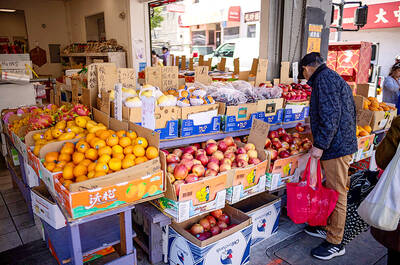
Ajay Verma, a consultant gastroenterologist at Kettering general hospital in Northamptonshire, says our gut is a “complex machine.” “It is constantly providing us with the nutrition we need, initially to grow and develop, and then for us to survive, thrive and repair from injury and illness.” How can we keep it functioning well? Put simply: “Make sure what you put into it is balanced, and that you clear out its waste products adequately,” Verma says. “In a general gastroenterology clinic, the most common conditions we see are irritable bowel syndrome (IBS), gastroesophageal reflux disease, inflammatory bowel disease and constipation,” says Nisha

And so, in the wake of US President Donald Trump’s trip to the People’s Republic of China (PRC), all the experts on the Strait of Hormuz suddenly became experts on US-China-Taiwan relations. The Internet has certainly expanded human knowledge. Lots of these sudden experts made noise this week about Trump’s words after the meeting with PRC dictator Xi Jin-ping (習近平). Trump is going to sell out Taiwan! Longtime Taiwan commentator J. Michael Cole summed the situation up neatly in the Guardian: “We need to keep in mind that he has a tendency to say many things — sometimes contradicting himself within

Last week US President Donald Trump was asked by a reporter whether he would speak on the phone to the President of Taiwan. “l’ll speak to him. I speak to everybody. We have that situation very well in hand,” Trump said. This marked the second time in a couple of weeks he had said he would talk to the President of Taiwan. In 2016 he famously took a call from then-president Tsai Ing-wen (蔡英文), when he was president-elect. Despite warnings that the apocalypse was nigh because of a phone call, the world quickly forgot about the conversation between two democratically-elected presidents.
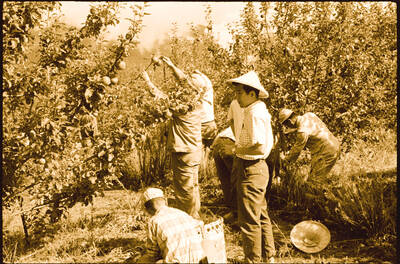
May 25 to May 31 Few believed that apples could be cultivated on a commercial scale in Taiwan’s high mountains. When horticulturalist Cheng Chao-hsiung (程兆熊) first proposed the idea in 1955, both American and Taiwanese colleagues dismissed it as implausible, arguing that temperate fruit could not be reliably grown on a subtropical island, especially on rugged terrain. However, it was this terrain in the Central Mountain Range where many Chinese Civil War veterans were resettled in the late 1950s. With limited job prospects and no family in Taiwan, they were placed on cooperative farms aimed toward self-sufficiency. Some say the conditions


 RSS
RSS