


“The first law for a secret agent is to get his geography right,” Ian Fleming wrote in The Man With the Golden Gun. And so it is for anyone following the trail of the man who created the world’s most famous secret agent through his adopted island of Jamaica, a journey that starts near Kingston on the tiny spit of beach called the Palisadoes that connects the city to Norman Manley International Airport.
Most of the traffic heads into the capital, but if you steer westward, snaking around the contours of dunes on the poorly paved street toward the peninsula’s dead end, you’ll find Morgan’s Harbour Hotel in Port Royal.
Only 8km from the airport, you are already deep into Ian Fleming’s Jamaica.
Fleming, the British intelligence officer turned newspaper man turned spy novelist born 100 years ago this year, spent winters on his Caribbean getaway for almost two decades. The airport and the Palisadoes both feature in James Bond novels; the hotel is where Bond chose to lay his head in Golden Gun. It was on Jamaica that Fleming wrote more than a dozen novels and short stories featuring Agent 007. Of these once best-selling volumes of action pulp, Dr No, Live and Let Die, The Man With the Golden Gun and the short story Octopussy are largely or partly set in Jamaica, and the films based on the first two were also shot there.
The island was Fleming’s retreat, artist colony and passion, and he repeatedly sent Bond, an incarnation of Walter Mitty-esque wish fulfillment, on assignment there. The legendary spy experienced the island as Fleming did — beautiful and underdeveloped with enough exoticism, history and potential for danger to justify it as a backdrop for postwar espionage adventure.
Fleming’s Jamaica is a Venn diagram of three overlapping spheres: the author’s actual Jamaica of the 1950s and early 1960s (when the island was a British colony rapidly becoming a hot spot for the rich and famous); the semi-fictional Jamaica as seen through James Bond; and Jamaica as a location for the 007 film franchise.
While the rural interior of the country has changed little in the last 50 years, the huge, buffet-to-beach inclusive resorts and a blighted downtown Kingston, once high on the jet-setters’ dance cards, would now discourage Fleming. He lived in Jamaica when you could get there by banana boat, and he described Negril on the west coast as a “five-mile crescent of unbroken, soft, white gold sand, fringed for all its dazzling length with leaning palm trees.”
In 1947 Fleming wrote a portrait of his adopted home in Horizon magazine, influential enough to fuel a postwar tourist boomlet among well-heeled Britons and Americans. “I have examined a large part of the world,” he wrote. “After looking at all these, I spent four days in Jamaica in July 1943. July is the beginning of the hot season, and it rained in rods every day at noon, yet I swore that if I survived the contest I would go back to Jamaica, buy a piece of land, build a house and live in it as much as my job would allow.” He did just that, as foreign manager for Kemsley Newspapers.
The Palisadoes at night is still as Fleming described it in Dr No, a “long cactus-fringed road” with “the steady zing of the crickets, the rush of warm, scented air ... the necklace of yellow lights shimmering across the harbour.” Not so Morgan’s Harbour Hotel, now an estranged and shabbily furnished cousin of the “romantic little hotel” from Golden Gun.
Kingston, reached by the road used in the first car chase in Dr No, sits beside bright blue waters and beaches littered with broken boats and the rusting remains of bygone industry. It feels like an early Bond film — vibrant, colorful and a bit disconcerting. What Kingston does not resemble, for the most part, is itself from the Fleming days. Justine Henzell, a Kingston native whose father, Perry, was a writer of the reggae-fueled movie The Harder They Come ..., was my guide to the city. As we wandered downtown, Henzell pointed out the urban shadows of former elegance, including an empty lot by the water where the Myrtle Bank Hotel, once one of the Caribbean’s most glamorous, had stood. The vacant space now borders a parking lot where hundreds of young people reveled to loud dancehall beats in the middle of a Sunday afternoon.
When Fleming made his first visit to the island — 65 years ago to the month when I was there — he chose to stay in the cooler climes of the Blue Mountains. I followed his lead that evening and took the B1 road, which curls itself up into the mountains. My destination was Strawberry Hill, an 18th-century coffee plantation turned resort owned by Chris Blackwell, the founder of Island Records. A Jamaican native, Blackwell is part of Fleming lore himself, thanks to his mother, Blanche Blackwell, who was, depending on your source, either the writer’s close friend or his mistress and muse. That connection helped Blackwell, at age 24, land a gig as a location manager for Dr No (you can spot him dancing in a bar scene filmed at Morgan’s Harbour), and his resort franchise includes the Fleming home on the North Coast.
Over a breakfast of scrambled eggs and Blue Mountain coffee (the same morning fare Fleming preferred and Bond nearly always enjoyed) on the balcony of a private bungalow, guests overlook the same vista Bond did in Live and Let Die, where he “had his breakfast on the veranda and gazed down on the sunlit panorama of Kingston and Port Royal.”
Most of Fleming’s days in Jamaica, though, were spent on the northern coast, best reached by the A3, or Junction Road, “that runs across the thin waist of Jamaica.” Bond and his local sidekick Quarrel travel the same route in Live and Let Die to get to the secret island lair of the villainous genius Mr Big.
The mountainous interior of the island, “like the central ridges of a crocodile’s armor” as Fleming put it in Live and Let Die, is a constant pull on the steering wheel, back and forth, through little villages, past cliffside sundries shops and on numerous detours into rutted, gravel-spattered dirt roads. It’s a relief to reach the other side and spill into the ramshackle town of Port Maria, its pristine aquiline bay punctuated by the diminutive and uninhabited Cabarita Island, which inspired Surprise Island, the fictional hideout of Mr Big.
Fleming and his wife, Ann, were married in Port Maria’s town hall, which still stands. She didn’t share her husband’s love of Jamaica, never staying as long as he did. But his best man and local neighbor, Noel Coward, was equally smitten with the place. Coward was a year-round island resident and a tax exile who died there in 1973. The home he built, Blue Harbour, is a compound of seaside bungalows overlooking Port Maria’s bay. Guests can now stay there if they can find it. The only marker is a small, faded sign pointing down a heavily potholed road leading to a rusty white gate.
Judging by the decor and electrical wiring, Blue Harbour has pretty much been left untouched. But despite its rough edges, provincial food and generally musty condition, it has three things going for it: a stunning perch over the sea, a cliffside saltwater pool and a rich history. You can imagine a rotating cast of celebrities like Errol Flynn (who also lived on the North Coast), Katharine Hepburn, Elizabeth Taylor, James Mason and Laurence Olivier, all lounging poolside. The living room is hung with pictures of celebrities like Sean Connery, Alec Guinness clowning in the pool in Arabian headdress, and a group shot that included the Flemings.
The scene became too much for Coward, who relocated to a higher perch above Blue Harbour. His retreat from his retreat, Firefly, is now a museum and his gravesite. His friends gave their homes colorful names as well. Fleming’s haven, about 16km west, was Goldeneye, named for a wartime operation he was involved in, and now one of the most exclusive resorts on the island. Between the two writers lived Blanche Blackwell, at Bolt.
Of his mother’s relationship with Fleming, Chris Blackwell simply told me that she was a good friend of his and was very fond of him. As a thank you gift for a stay at Goldeneye, Blackwell gave Fleming a small boat she had christened Octopussy. She may have also been an inspiration for Honeychile Rider, the Bond girl from Dr No, who, like Blackwell, was the Jamaica-born child of an old island family and a passionate student of sea life.
Situated in the small town of Oracabessa, once a banana port, Goldeneye is an unassuming patch of land with stone paths and trees planted by former famous guests. Handwritten signs mark the mango planted by Pierce Brosnan, the lime tree by Harrison Ford, the royal palms by the Clintons. Set among them are three villas that, with Fleming’s original house and a restaurant overlooking the ocean, make up the current property. Where the restaurant sits, a gazebo once stood. Fleming liked to take notes in it, and it once served as a command station when Prime Minister Anthony Eden of Britain visited Goldeneye in 1956 (another boon for Jamaican public relations).
The Honeychile villa, just over a small fence from Fleming’s house, is nicely appointed with a plush bed draped in mosquito netting, a claw-foot tub and an outdoor shower built into a large banyan tree. The bedroom is flanked by a second house with a patio overlooking the sea and a bookshelf housing a nearly complete set of the Bond stories. It is hard to imagine the resort retaining that kind of casual intimacy when Goldeneye’s 40-hectare residential development currently under construction is finished in the coming years.
Goldeneye is the mecca of any Fleming pilgrimage, but not the heart of it. In Horizon, he wrote about the other elements that made his life in Jamaica fulfilling, from the food (“delicious and limitless”) to the weather, calypso and, most important, the people. Fleming wrote that the locals “will surprise and charm you,” which they often did during my time there.
Ajay Verma, a consultant gastroenterologist at Kettering general hospital in Northamptonshire, says our gut is a “complex machine.” “It is constantly providing us with the nutrition we need, initially to grow and develop, and then for us to survive, thrive and repair from injury and illness.” How can we keep it functioning well? Put simply: “Make sure what you put into it is balanced, and that you clear out its waste products adequately,” Verma says. “In a general gastroenterology clinic, the most common conditions we see are irritable bowel syndrome (IBS), gastroesophageal reflux disease, inflammatory bowel disease and constipation,” says Nisha

And so, in the wake of US President Donald Trump’s trip to the People’s Republic of China (PRC), all the experts on the Strait of Hormuz suddenly became experts on US-China-Taiwan relations. The Internet has certainly expanded human knowledge. Lots of these sudden experts made noise this week about Trump’s words after the meeting with PRC dictator Xi Jin-ping (習近平). Trump is going to sell out Taiwan! Longtime Taiwan commentator J. Michael Cole summed the situation up neatly in the Guardian: “We need to keep in mind that he has a tendency to say many things — sometimes contradicting himself within

Last week US President Donald Trump was asked by a reporter whether he would speak on the phone to the President of Taiwan. “l’ll speak to him. I speak to everybody. We have that situation very well in hand,” Trump said. This marked the second time in a couple of weeks he had said he would talk to the President of Taiwan. In 2016 he famously took a call from then-president Tsai Ing-wen (蔡英文), when he was president-elect. Despite warnings that the apocalypse was nigh because of a phone call, the world quickly forgot about the conversation between two democratically-elected presidents.
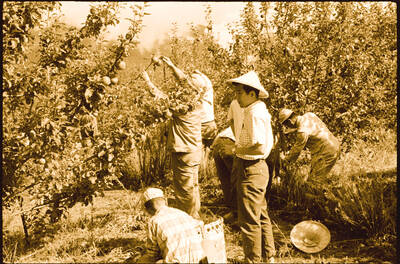
May 25 to May 31 Few believed that apples could be cultivated on a commercial scale in Taiwan’s high mountains. When horticulturalist Cheng Chao-hsiung (程兆熊) first proposed the idea in 1955, both American and Taiwanese colleagues dismissed it as implausible, arguing that temperate fruit could not be reliably grown on a subtropical island, especially on rugged terrain. However, it was this terrain in the Central Mountain Range where many Chinese Civil War veterans were resettled in the late 1950s. With limited job prospects and no family in Taiwan, they were placed on cooperative farms aimed toward self-sufficiency. Some say the conditions


 RSS
RSS