


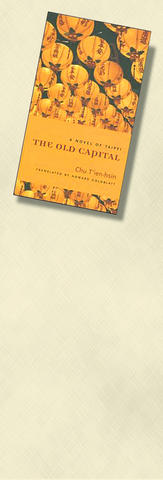
Chu Tien-hsin (朱天心) is one of Taiwan's most celebrated prose stylists. The Old Capital: A Novel of Taipei was published in Chinese in 1997, and now appears in an outstanding English translation by Howard Goldblatt as the 14th book in Columbia's Modern Chinese Literature from Taiwan series.
It consists of four stories followed by a novella, the last with the simple title The Old Capital. Quite where A Novel of Taipei comes in isn't clear. But this final item is far and away the most substantial, though also the most taxing, of the five texts. The first four in some ways ease you into its difficulties, though, in that they accustom you to Chu's discursive, almost stream-of-consciousness style. They're also set wholly or partly in Taipei, and that too helps brace the reader for what's to come.
Chu's method is essentially to allow her narrating voices to ramble. The first piece, Death in Venice, for instance, comes from the ill-disciplined pen of a male author. Venice turns out to be the name of a Taipei coffee shop, and death is what the writer (who's also just returned from a trip to the actual place) bestows on one of his characters while he's working there.
The second item, Man of La Mancha, consists of the garrulous musings of a gay Taipei man on either the philosophical problem of identity or whatever else happens to come into his mind. There are references to former US president Bill Clinton's underwear, penile implants and a nice attack on credit cards. What do those people who hold everyone else up at supermarkets think they're doing? Establishing their status? Can't they see, the man asks, that they're nothing better than debtors? (Do gays tend to pay cash, incidentally? Possibly).
Third comes Breakfast at Tiffany's, a meditation on wealth, money and commodity fetishization by a female member of Generation X, complete with quotes from Karl Marx's Economic and Philosophical Manuscripts of 1844. The speaker's declared intention of buying a diamond doesn't sit very easily with her awareness of what she calls "the false individualism of consumer capitalist ethics," let alone her extensive knowledge of the history of diamond mining. But the story's great fun nonetheless.
Fourth is Hungarian Water, seemingly an early name for perfume. Its narrator is a fashionable, married, middle-aged man who meets a friend in yet another Taipei coffee shop. They there embark on a dialogue about scent and scents covering the next 40 pages. Sweat-soaked army uniforms, pig manure, pickled mangoes, citronella, organic coffee, curry rice, camphor and the aroma of pencil shavings all feature, plus the idea that an extra-marital affair depends on a man finding a woman who wears a perfume his wife has never tried. Scents are claimed to unite memory and desire, an idea reminiscent of the opening of T.S. Eliot's The Waste Land - a work that will come to serve as a model for the final, highly ambitious mega-narrative.
And it's The Old Capital that makes or breaks this collection. It's essentially a montage, almost a huge scrapbook, pushed into the shape of someone's wanderings round modern Taipei - or is it old Kyoto, modern Tokyo, or perhaps Taipei under Japanese occupation? The mystification is intentional, however, because what is being conjured up is actually a surreal dream world.
Basically this is an attempt at a modernist masterpiece, something on the lines of Ezra Pound's Cantos or - the closest parallel - a Taiwanese prose version of The Waste Land. Unacknowledged extracts from classic and other texts are incorporated, in this translation helpfully in italics and with Eliot-like notes, but in the original Chinese apparently without any such assistance. Lost idylls are juxtaposed Eliot-style with modern horrors, one of which is the MRT station of Jiantan (something I've always rather admired). Prosaic guidebook information is slung in alongside poetic laments, and a series of refrains deceive the by now confused reader into believing he's finally grasped some handy means of orientation.
This, in other words, is a text that's pleading aloud to be catapulted fully-dressed into the academic literary canon. Even so, there's much for the ordinary reader to enjoy, especially if you know Taipei well. Exact addresses are detailed - 7 and 9 Ln 91, Renai Road Sec 2 , for instance, are offered the chance of literary immortality on the grounds that their owners haven't chosen to cement in the ox-eye openings in their courtyard walls or their skylights. The habit of Taipei sausage-sellers of offering customers the chance to gamble double-or-quits on their snack is lovingly pasted in. Gusts of fetid wind and St Christopher's Church needn't necessarily evoke Eliot, and you learn there were massive protests when Da-An Park was created over a previously residential area.
Even so, much of The Old Capital is so reminiscent of Western high-art classics of the early 20th century that it's hard to take seriously as a contemporary work. But to give credit where it's due, nothing else like it has ever appeared locally, certainly not in English translation. And as Taiwan has opted to mimic the West so extensively, and Taipei is now in so many ways "Asia-meets-the-US," you can hardly expect its writers to remain wholly immune to such copy-cat tactics.
It may, of course, be that Chu is unaware of her debt to the past. But given the highly allusive nature of the other four items in this volume, this remains unlikely.
Despite these reservations, the entire book is an important, and indeed a major contribution to Taiwanese literature in English, and at the same time an unusually fascinating read for any Taipei resident.

If a leisurely afternoon of high-end dining and watching the scenery roll by from the comfort of a plush armchair sounds like a good time to you, consider a trip on the Sea Breeze (海風號). This culinary, cultural and scenic experience is the perfect setting for a date, a celebratory outing with a small group of friends or a relaxing solo ride. The price tag is steep, especially if you consider the short distance the train actually covers over the 3.5-hour journey. But what you’re paying for on the Sea Breeze isn’t transportation; it’s the comfort, the service, the exclusivity, the
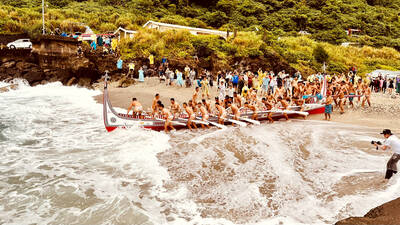
June 15 to June 21 According to legend, a giant from Orchid Island (Lanyu, 蘭嶼) named Si Mangangavang once built a large tatala canoe capable of carrying 16 people. He set sail southward to the Batanes in the Philippines, where he traded with the local Ivatan people. One of the goods they coveted was cowhide, which the Tao people of Orchid Island used to make armor. Through continued trade, the Tao and Ivatan forged close ties, and Si Mangangavang became good friends with a Batanes giant named Si Vakag. This story, collected in a 1998 book by ethnologist Yu Guang-hong (余光弘)
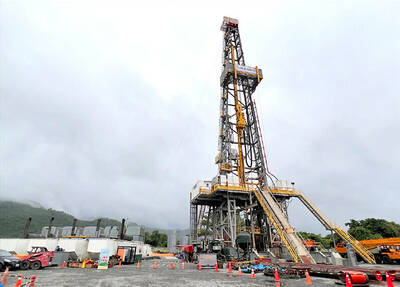
Taiwan’s renewable shortfall is a problem of execution, not resources. Japan’s long-cycle, joined-up energy planning is the model worth studying — but what Taiwan can borrow is the institutional machinery, not the politics. When Nvidia CEO Jensen Huang (黃仁勳) used his visit to Taipei last month to warn that the country needs far more electricity, he was naming a constraint its own planners already know well: Taiwan Power Co (Taipower, 台電) expects demand from the semiconductor and artificial intelligence (AI) sector alone to exceed 5 gigawatts (GW) by 2030. The harder question is not whether to build more capacity but which
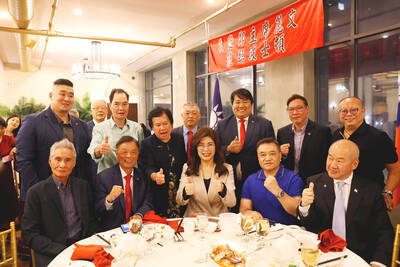
One of the wildest things about the reception of Chinese Nationalist Party (KMT) Chair Cheng Li-wun (鄭麗文) in the international media is the way her words are presented without being contextualized, let alone challenged. The Financial Times, for example, interviewing her during her visit to New York, said that she blamed the halt to exchanges between Taiwan and the People’s Republic of China (PRC) for raising tensions. “There has been no dialogue, so you can see that the situation is almost on the brink of war,” the Financial Times quoted her as saying, without any hint that the PRC, not


 RSS
RSS