


The traditional idea of massage parlors is either a seedy den of iniquity where women provide extra services or a cramped establishment manned by hefty masseuses who make customers squirm with pain. And though massage therapy is as old as Chinese culture, today's market is dictating that centers take their business in a different direction.
As urbanites become more health conscious and traditional massage parlors look for ways to attract more customers, the industry is going up market. Often billed as "spas" or "health centers," these parlors are taking the traditional massage and adding all kinds of other incentives to attract consumers.
New market
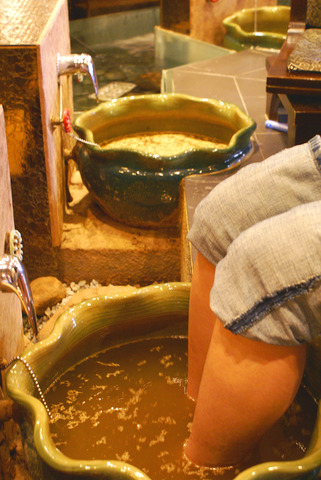
PHOTO: NOAH BUCHAN, TAIPEI TIMES
"The skill is old but the market is new," said Frank Li (李明軒), manager of media relations at the two-year-old Foot Massage Center (6星集足體養身會館) located at 76 Nanjing E Rd Sec 5, Taipei (台北市南京東路五段76號).
With three locations in Taipei, the Foot Massage Center markets itself as a relaxing oasis in an urban jungle. Strategies the center uses to attract a high-income clientele include employing masseuses trained in "service etiquette," wireless Internet connection and valet parking.
On a recent visit, three expensively dressed middle-aged women were having their feet soaked in a warm water solution of herbs and Chinese medicine — the opening ritual before feet are massaged. Shoulder and neck massages were provided during the soaking session, "to harmonize the flow of qi."
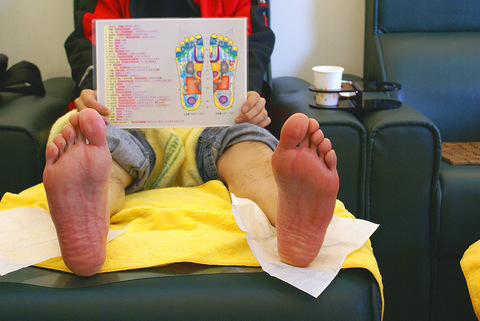
PHOTO: NOAH BUCHAN, TAIPEI TIMES
According to Li, the center on Nanjing East Road caters to around 300 customers a day, and with the other two locations 170 masseuses cater to over 20,000 clients per month. With 30 beds for full-body massage and another 30 for foot massage, this location is doing brisk business.
Dating back thousands of years, foot massage therapy, or reflexology, is based on the premise that energy, called qi, flows throughout the body. Pain felt in the body, whether caused by overwork, stress or a person's lifestyle is defined as a blockage of qi. By asking the customer where on their body they feel pain, the masseuse is then able to alleviate pain by massaging specific parts of the foot that are related to the painful organ or body part.
The foot massage industry in Taiwan is regulated by Article 37 of the Disabled Protection Law (身心障礙者保護法) and stipulates that only visually impaired people can legally obtain licenses to practice as masseurs. As the government has yet to regulate the industry as a whole, the Foot Massage Center has created its own association of masseuses and regulates itself through testing and training. Members are expected to demonstrate their mettle to a range of massage experts on a monthly basis that includes a Japanese and English proficiency test.
Another center catering to those with high disposable incomes is the Fullcome Blind Massage Center (護康按摩中心). Opened in 1995, the center is located across the street from the Xingtian Temple (行天宮) on Mingquan East Road. The waiting room is large and overlooks the temple across the street.
In addition to traditional massage, the center also offers a scented oil massage. With just under 1,000 customers per month spending between NT$700 and NT$1,400 per session, the 30 masseuses are kept busy.
Manager Lin Tzu-hsiu (林姿秀) says all her masseuses are trained and certified by the government. "Taiwan is one of the few countries, where the visually impaired have a special right to be licensed as masseurs," she said. She added that though it is inevitable that the market will open up, blind masseuses are still the most highly sought after because of the rigorous training they are expected to go through and the difficult exams and tests they need to pass before becoming certified masseuses.
If the Fullcome center is similar to the Foot Massage Center in its appeal to higher-end clients, the more common massage parlors operated by the visually impaired are typically Spartan affairs.
Shih Yang-chieh (施養杰) received over a year of training before becoming a licensed masseuse. The visually impaired albino, who runs a simple and clean shop close to the Yuanshan MRT station, says that business has remained steady over the past few years.
"Our clients usually live in this area and for the most part are working class or office workers," he said.
Shih's massage parlor is perfect for those on a budget or who care little for the environment where they receive a massage. Foot, neck and back massages are NT$200 each, and a full-body massage is NT$600 — a bargain considering the high level of skill of the practitioners.
If the environment of the higher and lower-end parlors is different, the purpose of most remains the same. "We want to make our customers feel relaxed in a comfortable atmosphere," Lin said.
No pain, no gain
Immediate comfort isn't what the masseuses at Taichitong (太極堂) are hoping to provide their customers. Indeed, if the customer is resting comfortably in their chair, the masseuses feel they aren't performing their jobs properly.
Located close to the Fullcome massage center, Taichitong is a traditional outlet that caters to locals and Japanese tourists wanting a little pain with their vacation.
"We are the country's number one massage parlor," boasts Chou Hsien-tsung (周顯宗) as customers enter the parlor where he works. Zhou is as much a salesman as he is a masseuse. Though he never made it clear how much training he received as a massage therapist or where it was received, Zhou revealed his arcane knowledge about the finer details of what parts of the foot influence which parts of the body.
According to Chou, for a massage to be effective it has to be painful. To facilitate this, instead of the usual kneading, grinding, pulling and pushing that characterizes a typical massage, he produces a wooden massage instrument with a pointed tip. This he then grinds into the part of the foot that requires therapy.
"This kind of therapy is the most effective," he proclaims, "because we can more precisely place the massage device to the areas of the foot that require it."
Though all massage parlors are clear that customers can determine the level of pain suitable for them, traditionalists scoff at the idea that the customer should dictate the terms of their pain because this is tantamount to reducing the effectiveness of the therapy.
And though Lin agrees that traditional foot massage was meant to be a kind of therapy that had to be painful to be effective, she also adds "today, younger people are afraid of pain so our masseuses have altered their treatment accordingly."

Yesterday, the Democratic Progressive Party (DPP) nominated legislator Puma Shen (沈伯洋) as their Taipei mayoral candidate, the Chinese Nationalist Party (KMT) put their stamp of approval on Wei Ping-cheng (魏平政) as their candidate for Changhua County commissioner and former legislator Tsai Pi-ru (蔡壁如) of the Taiwan People’s Party (TPP) has begun the process to also run in Changhua, though she has not yet been formally nominated. All three news items are bizarre. The DPP has struggled with settling on a Taipei nominee. The only candidate who declared interest was Enoch Wu (吳怡農), but the party seemed determined to nominate anyone
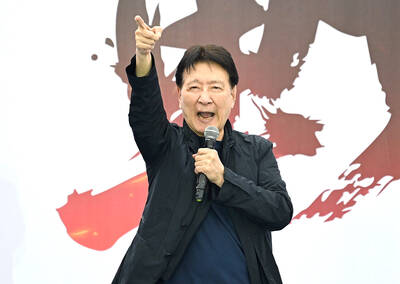
In a sudden move last week, opposition lawmakers of the Chinese Nationalist Party (KMT) and Taiwan People’s Party (TPP) passed a NT$780 billion special defense budget as a preemptive measure to stop either Chinese leader Xi Jinping (習近平) or US President Donald Trump from blocking US arms sales to Taiwan at their summit in Beijing, said KMT heavyweight Jaw Shaw-kong (趙少康), speaking to the Taipei Foreign Correspondents Club on Wednesday night in Taipei. The 76-year-old Jaw, a political talk show host who ran as the KMT’s vice presidential candidate in 2024, says that he personally brokered the deal to resolve
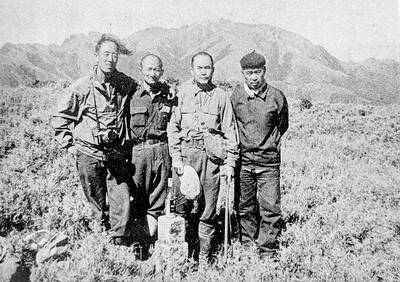
May 18 to May 24 Gathered on Yangtou Mountain (羊頭山) on Dec. 5, 1972, Taiwan’s hiking enthusiasts formally declared the formation of the “100 Peaks Club” (百岳俱樂部) and unveiled the final list of mountains. Famed mountaineer Lin Wen-an (林文安) led this effort for the Chinese Alpine Association (中華山岳協會). Working with other experienced climbers, he chose 100 peaks above 10,000 feet (3,048m) that featured triangulation points and varied in difficulty and character. The list sparked an alpine hiking craze, inspiring many to take up mountaineering and competing to “conquer” the summits. A common misconception is that the 100 Peaks represent Taiwan’s 100 tallest

The Chinese Nationalist Party (KMT), alongside their smaller allies the Taiwan People’s Party (TPP), are often accused of acting on behalf of the Chinese Communist Party (CCP). Some go so far as to call them “traitors.” It is not hard to see why. They regularly pass legislation to stymie the normal functioning of the ruling Democratic Progressive Party’s (DPP) administration, and they have yet to pass this year’s annual budget. They slashed key elements of the government’s proposed NT$1.25 trillion (US$40 billion) special military budget, and in the smaller NT$780 billion package they did pass, it is riddled with provisions that


 RSS
RSS