


Wu Cai-li (吳財立) is all business as he leans over a pile a human bones that he's just taken from an urn, unwrapped and then dumped into a pile on the surface of a shrine. He pauses momentarily to check they are all there and begins to arrange the bones back into a vaguely skeletal form, as though putting together a puzzle.
Wu is in the process of performing a rite of ancestor worship called “picking up the bones” (揀骨). A part of a ritual generally known as double or second burial (二次葬), the bones are placed in an earthenware urn – usually about 20cm high – in their correct anatomical order with the skull at the top. The urn is then re-interred in the ancestral tome, an omega-shaped plot.
Urns awaiting second burial are usually stored outside in a place that has good fengshui, usually near fields or on a hillside. In the past, these urns would often be forgotten and as a result traditional graves in Taiwan are littered with pots containing bones until the ravages of time crack the pots and spill the unwanted bones on to the ground.
Common in Taiwan for at least 200 years, the custom has its origins in Fukien province, China. When farmers and merchants began immigrating to Taiwan in the 18th century, they brought with them their custom of second burial. Over time, the tradition began to spread in Taiwan as it was an inexpensive way of sending the bones back to Fukien for burial in the ancestral tomb.
However, as their roots sank deeper into the islands' soil and people from Fukien began to regard Taiwan as their home, the process of returning the urns to China ceased as family plots were established in Taiwan.
The process, which has changed very little over the centuries, begins with first burial taking place almost immediately after death. Regarded as a temporary grave, the body remains underground for at least seven years.
The length of time allows the flesh to decompose, making it easier for Wu to clean the remaining flesh so that all that is left are the bones. After the flesh is removed, the bones are set out under the sun for three days to dry. They are then “picked up” and placed into a tall urn. The urn is then returned to the family gravesite.
If it happens that the flesh hasn't achieved a level of decomposition suitable for cleaning, Wu sprinkles rice wine over the corpse and dresses it with the leaves of six heads of cabbage. The body is then re-interred. The concoction is enough to ensure sufficient decomposition after an additional three months.
The reason for such an elaborate procedure, according to Wu, is that the soul adheres to the bones and not the flesh. This is why the flesh is dispensed with and the bones are re-buried after cleaning.
A slightly different explanation is given by Lin Ching-chuan (林清泉), an expert on traditional funeral rites. He says that second burial arises due to traditional beliefs in fengshui (geomancy).
According to Lin, the burial chamber – a shallow hole about 30cm deep – is placed behind the tombstone and is laid out according to the principles of fengshui, not unlike the principles used when constructing traditional Chinese homes. But the fengshui of burial is of paramount importance because it is what links the ancestors to descendants.
“Not only the bones, but also the respect shown to the tomb decides the whole family's future,” says Charles Sung (宋世祥), a research assistant at the Institute of Ethnology, Academia Sinica.
Thinking of the future
Lin agrees. “The bones of our ancestors are like gold. If we treat them with respect they will provide our descendants with prosperity and good health. Showing respect to the bones is showing our respect to our ancestors,” he said.
It is fitting that gold is the desired color for the bones to become, as it symbolizes prosperity for future generations. Therefore, it is important that a family handles the bones of their ancestors with proper respect. In addition, the more golden the color of the bones, the healthier the deceased was in life and the greater prosperity future generations can expect.
On the other hand, “if the bones become black after drying, that means the deceased took too much medicine or had a poor diet when they were alive,”
“We also believe that a place that has good fengshui will enable our ancestors to sleep better,” he said. And if the ancestors are sleeping well, so can their descendants.
Taiwan's traditional cemeteries are always a work in progress where new plots are always being constructed, others are falling apart and many are overgrown. Many traditional cemeteries resemble the older districts of Taipei: plots crammed in here and there with paths difficult to negotiate.
Each funeral plot follows the logic of the fengshui master who has determined its location and direction. However, the use of fengshui has resulted in burial mounds being constructed in any place that is perceived to have good fengshui. As a result, it is common to see burial mounds on the side of the road when driving anywhere in Taiwan.
In an effort to reduce the uncontrolled construction of funeral plots and promote cremation, the government revised the Cremation Law (殯葬管理條例) in February 2003. The law restricts where graves can be built and liberalizes the rules for cremation. The effect of this, Wu says, is that picking up the bones and second burial is becoming less common.
“More and more people are requesting their descendents use cremation and place them in this place after they die,” says Lin.
“Cremation is practical. So many Taiwanese are choosing to do it rather than second burial,” added Sung.
For those who are still interested in second burial, however, the park-like crematorium still has specially designed plots high in the mountain for the purpose. They still require the expertise of people like Wu to clean the bones and pick them up. But using a fengshui master to choose the plot can largely be dispensed with as the entire mountain has good fengshui and the plots are pre-arranged.
While bone cleaners still retain an important function in funeral rites, it is becoming less common.
Traditionally, bone cleaning and picking up the bones was passed down from generation to generation, from father to son. “But as time goes on, younger generations are no longer interested in carrying on the tradition of second burial,” said Lin. Thus, not only is the practice becoming less common, but due to the stigma attached to second burial – and death generally – younger people are unwilling to do this as a career.
Because of the intimate contact the practitioner has with death and the dead, it used to be that they were treated with a certain degree of weariness. This is why picking up the bones and bone cleaning often remained in the same family for generations.
While these days there is not such a stigma attached to the job, the practice is still in decline for a further reason. Today, many are reluctant to take up the job because many see it as a job for the poor and un-educated.
Ajay Verma, a consultant gastroenterologist at Kettering general hospital in Northamptonshire, says our gut is a “complex machine.” “It is constantly providing us with the nutrition we need, initially to grow and develop, and then for us to survive, thrive and repair from injury and illness.” How can we keep it functioning well? Put simply: “Make sure what you put into it is balanced, and that you clear out its waste products adequately,” Verma says. “In a general gastroenterology clinic, the most common conditions we see are irritable bowel syndrome (IBS), gastroesophageal reflux disease, inflammatory bowel disease and constipation,” says Nisha

And so, in the wake of US President Donald Trump’s trip to the People’s Republic of China (PRC), all the experts on the Strait of Hormuz suddenly became experts on US-China-Taiwan relations. The Internet has certainly expanded human knowledge. Lots of these sudden experts made noise this week about Trump’s words after the meeting with PRC dictator Xi Jin-ping (習近平). Trump is going to sell out Taiwan! Longtime Taiwan commentator J. Michael Cole summed the situation up neatly in the Guardian: “We need to keep in mind that he has a tendency to say many things — sometimes contradicting himself within

Last week US President Donald Trump was asked by a reporter whether he would speak on the phone to the President of Taiwan. “l’ll speak to him. I speak to everybody. We have that situation very well in hand,” Trump said. This marked the second time in a couple of weeks he had said he would talk to the President of Taiwan. In 2016 he famously took a call from then-president Tsai Ing-wen (蔡英文), when he was president-elect. Despite warnings that the apocalypse was nigh because of a phone call, the world quickly forgot about the conversation between two democratically-elected presidents.
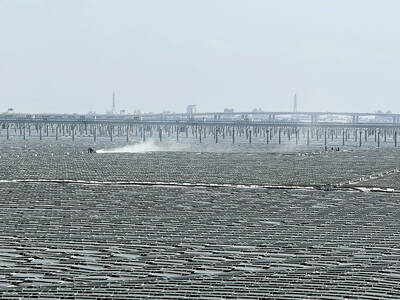
The arithmetic is straightforward and uncomfortable. By the end of 2025, Taiwan had committed itself to a 50-30-20 electricity mix — half natural gas, 30 per cent coal, 20 per cent renewables. The Ministry of Economic Affairs’s (MOEA) own monthly energy reports tell a different story. Natural gas reached 47.8 per cent of generation last year. Coal stood at 35.4 per cent, comfortably above its target ceiling. Renewables came in at 13.1 per cent, well short of the 20 per cent Taipei had pledged a decade earlier. Installed renewable capacity reached roughly half of the 12 gigawatts (GW) the government


 RSS
RSS