


The farewell party for Club 75 yesterday marked the end of Patrick Lee's (李紹榮) days as a club proprietor, freeing up his schedule to pursue art full time. Only a few hours before he closed the bar on Saturday night Lee held an opening for his latest solo exhibition, Simply Symbols at Jeff Hsu's gallery in Taipei.
He studied finance at University and worked in the bar and restaurant industry for over a decade. Never formally trained in art, Lee has been painting since he was 10 years old. Although he treats it more like a hobby, his work generates a sizeable revenue. It is especially popular in Europe where his most recent exhibit at a gallery in Copenhagen, Denmark sold every piece.
The 25 works on display are a continuation of a style Lee has been working with in the last five years. In his words it's a combination of "east and west." In this case the east is illustrated by calligraphy and Chinese symbols while the nude female silhouettes represent the west, or more accurately the western influence on his work.
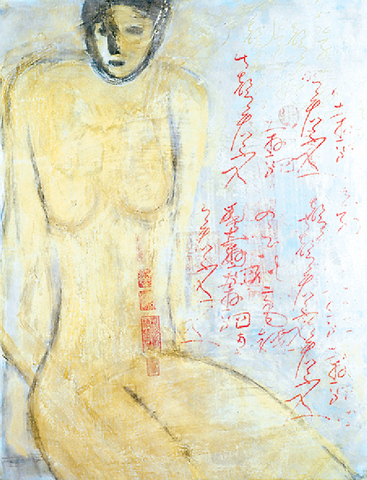
PHOTO COURTESY OF THE ARTIST
The ink stokes used to paint the female figure and the choice of red, black, white and gold colors are characteristic of Chinese brush painting. The calligraphy and chop markings that cover the body compliment the figure. A few of the images invoke memories of Peter Greenaway's The Pillow Book, in which a woman seeks lovers who will use her body like a canvas to write on. The women in Lee's paintings are often without any facial features, and sometimes even without heads. The anonymity gives them a nondescript yet indisputably feminine shape.
The larger pieces are completed on canvases while the smaller pieces use a wooden surface. Both utilize acrylic and oil paints together with metallic powder, silk-screening and calligraphy. The combination is not excessive and the paintings retain a minimalist appearance. The layers of materials create depth and texture, which is more visible in the wooden canvases.
Lee's new work is a major departure from his earlier paintings in the early 1990s that focused on abstract western landscapes. The introduction of Chinese motifs into his work is more recent. Neither the symbols nor the images are imbedded with hidden explanations, according to Lee, who described them as a blend of Chinese and European influences. "There are simply symbols with no hidden meaning," he said.
Each of the works is aesthetically pleasing to look at on its own, but overall the exhibition has a commercial feel. Strong impressions from an individual painting are weakened by the fact that there are 20 other similar ones surrounding it.
What is exceptional, however, is the way Lee made use of the space. An otherwise plain cement room has been transformed with a few Buddhist relics and four large standing red lamp tables to look like a lounge bar. It's possible to assess how and why these artworks would be popular in a club space. Likewise, it's easy to see Lee's interest and eye for interior design.
Exhibition notes:
What: `Simply Symbols: The Solo Exhibition of Patrick Lee'
Where: Jeff Hsu's Art (
Telephone: (02) 8780 8181
When: The exhibition runs until March 27. The gallery is open daily from 11am to 7pm but closed on Mondays.
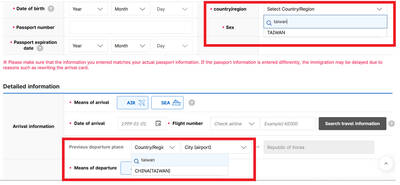
Jason Han says that the e-arrival card spat between South Korea and Taiwan shows that Seoul is signaling adherence to its “one-China” policy, while Taiwan’s response reflects a reciprocal approach. “Attempts to alter the diplomatic status quo often lead to tit-for-tat responses,” the analyst on international affairs tells the Taipei Times, adding that Taiwan may become more cautious in its dealings with South Korea going forward. Taipei has called on Seoul to correct its electronic entry system, which currently lists Taiwan as “China (Taiwan),” warning that reciprocal measures may follow if the wording is not changed before March 31. As of yesterday,
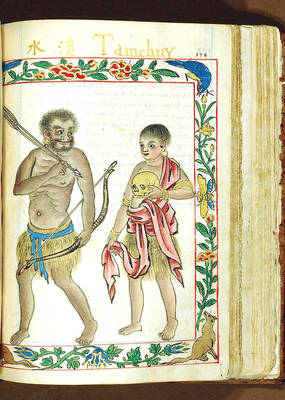
The Portuguese never established a presence on Taiwan, but they must have traded with the indigenous people because later traders reported that the locals referred to parts of deer using Portuguese words. What goods might the Portuguese have offered their indigenous trade partners? Among them must have been slaves, for the Portuguese dealt slaves across Asia. Though we often speak of “Portuguese” ships, imagining them as picturesque vessels manned by pointy-bearded Iberians, in Asia Portuguese shipping between local destinations was crewed by Asian seamen, with a handful of white or Eurasian officers. “Even the great carracks of 1,000-2,000 tons which plied
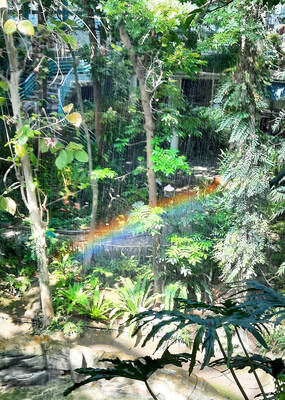
It’s only half the size of its more famous counterpart in Taipei, but the Botanical Garden of the National Museum of Nature Science (NMNS, 國立自然科學博物館植物園) is surely one of urban Taiwan’s most inviting green spaces. Covering 4.5 hectares immediately northeast of the government-run museum in Taichung’s North District (北區), the garden features more than 700 plant species, many of which are labeled in Chinese but not in English. Since its establishment in 1999, the site’s managers have done their best to replicate a number of native ecosystems, dividing the site into eight areas. The name of the Coral Atoll Zone might
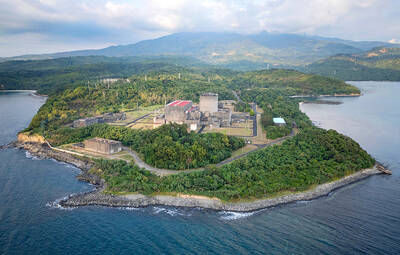
Nuclear power is getting a second look in Southeast Asia as countries prepare to meet surging energy demand as they vie for artificial intelligence-focused data centers. Several Southeast Asian nations are reviving mothballed nuclear plans and setting ambitious targets and nearly half of the region could, if they pursue those goals, have nuclear energy in the 2030s. Even countries without current plans have signaled their interest. Southeast Asia has never produced a single watt of nuclear energy, despite long-held atomic ambitions. But that may soon change as pressure mounts to reduce emissions that contribute to climate change, while meeting growing power needs. The


 RSS
RSS